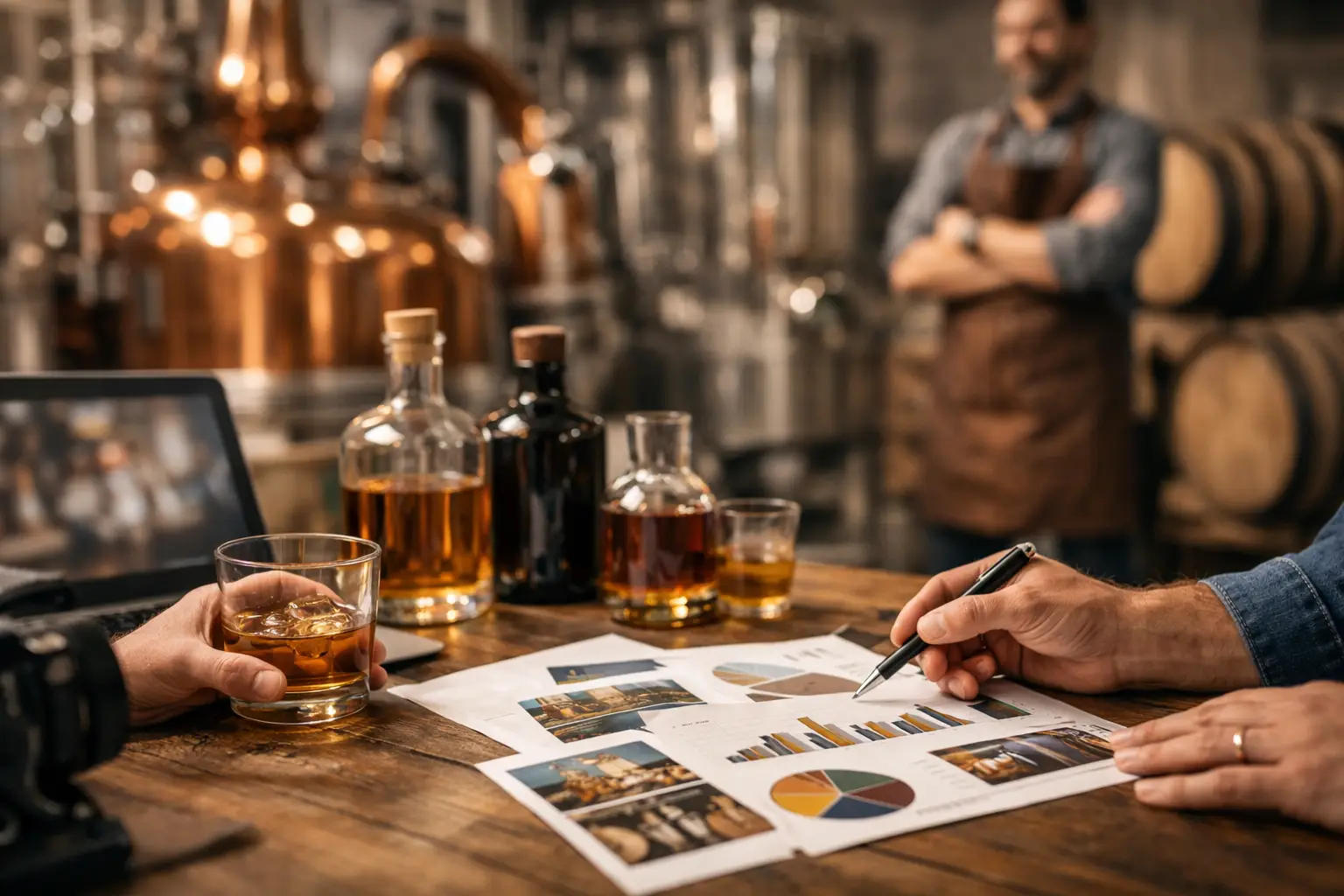
A good bottle might get somebody to stop at your table. A real story is what gets them to remember your name, follow your page, bring friends to the tasting room, and ask for you at their local package store. That is the heart of how to market a distillery: do not dress it up like every other lifestyle brand. Let people see the people, place, grit, and craft behind what is in the jar or bottle.
The spirits business is crowded, from big legacy labels with deep pockets to new brands launching every week. A small distillery cannot always outspend the competition, but it can out-story them. Folks are hungry for something made by real hands, rooted somewhere real, and backed by somebody who can look them in the eye. Your marketing needs to make that truth easy to find.
Start With the Story Only Your Distillery Can Tell
Every distillery has a production process. Not every distillery has a reason people can repeat to their buddies. Your story may start with a family recipe, an old farm, a military background, a local grain supplier, a hard-earned second career, or a community that has supported the business since day one. Find the part that is true, specific, and worth putting front and center.
Do not borrow a backwoods identity if it is not yours. Folks in the heritage spirits world can smell a fake story from a county away. If your operation is polished and modern, own that. If it was built from family land, sweat, and long nights, show the work without turning it into costume. Authenticity is not a filter or a slogan. It is consistency between what you say, what visitors see, and what they taste.
That lesson has been clear throughout the run of Moonshiners. Audiences did not keep watching just for a still or a finished run. They followed Tim Smith, Tickle, Mark and Digger, Amanda, and the rest because each personality brought a different history, humor, challenge, and way of doing things. The equipment mattered, but the people made viewers care. Legal distilleries can take the same lesson without pretending to be television stars.
Write down the answers to a few plain questions: Why did this distillery begin? What does your region contribute? What do you refuse to compromise on? Who are the people doing the work? What should somebody feel when they leave your tasting room? Those answers become the backbone for your website, bottle copy, social media, event conversations, and interviews.
How to Market a Distillery With a Strong Home Base
Before chasing viral videos or paying for a pile of ads, make sure people can find you and understand you online. A customer who hears about your bourbon at a festival or sees a reel from your tasting room should be able to search your name and quickly learn where to buy, where to visit, and what makes you different.
Your website is not a digital brochure collecting dust. It is your home place. It should have clear product information, tasting room hours, location details, event updates, retailer information when applicable, and photos that look like your actual operation. If a visitor has to hunt for basic information, they will often move on to the next stop.
Local search matters just as much as a good-looking homepage. Keep your business listings accurate, answer customer questions, use your town and region naturally in page copy, and encourage happy visitors to leave honest reviews. A distillery in the mountains, on a rural highway, or near a tourist route has a major advantage when it becomes part of a weekend plan. Make it easy for travelers to discover you before they leave home.
Four pieces of content should stay current all year:
- Tasting room and tour details, including seasonal hours and event changes.
- Product photos and short descriptions that tell people what they are buying.
- Founder, distiller, and staff stories that put recognizable faces behind the brand.
- A simple calendar for releases, live music, food trucks, festivals, and community events.
That foundation does not have to be fancy. It has to be accurate, easy to use, and alive. An outdated website says nobody is minding the stillhouse, even when the opposite is true.
Show the Work, Not Just the Bottle
Too many spirits brands post the same thing over and over: a bottle against a dark background, a hand pouring a drink, then another bottle against a dark background. Those photos have a place, especially for retailer promotions, but they cannot carry the whole brand.
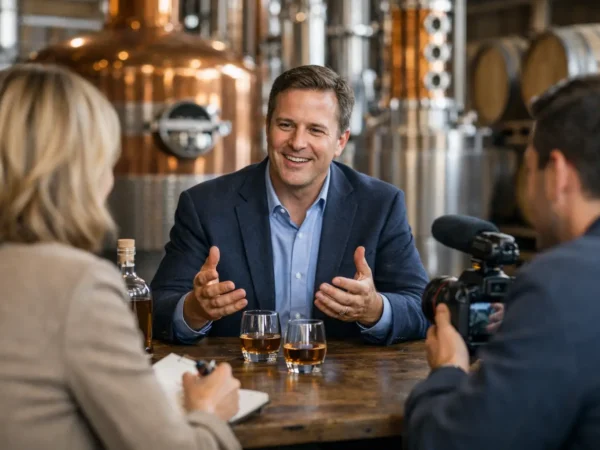
Show the grain coming in. Show the copper. Show a barrel being rolled into place. Let the head distiller explain why a cut was made or why a particular mash bill matters. Put the tasting room manager on camera talking about the drink a first-time visitor should try. Capture the crowd at a release party, the old truck parked out front, the rainy morning before a festival, and the local musician setting up on the porch.
Short video is one of the best tools a distillery has because it lets customers feel the place before they arrive. It does not need a Hollywood production every time. A clear phone video with good sound, a real voice, and a point to make can beat a slick piece with no personality. Still, major product launches, brand films, photography days, and event coverage deserve professional attention. Those are the assets that can work across your site, press materials, sales sheets, social feeds, and paid campaigns for months.
Mix your content. Some posts should sell a bottle or announce an event. Others should educate, entertain, or simply give people a look behind the scenes. If every post is a sales pitch, people tune out. If every post is just scenery, they may enjoy it but never know what to buy. The right balance depends on whether your main goal is tasting room traffic, retail pull-through, distributor attention, or building a personality-led brand.
Build a Local Crowd Before You Chase the Whole Country
A distillery can become a landmark long before it becomes a national name. That local reputation is not small-time marketing. It is the proof that gives every bigger opportunity weight.
Work with nearby restaurants, bartenders, musicians, food vendors, charities, hunting clubs, car shows, and community organizers where it makes sense for your brand. Host experiences people cannot get from a shelf: distiller talks, barrel tastings, cocktail classes, heritage days, release weekends, or music that fits the atmosphere of the place. The best events create photos, videos, customer memories, and a reason to come back.
Treat local bartenders and store staff with respect. They are often the people telling customers what to try when you are not in the room. Bring them in, teach them the story, give them useful product knowledge, and thank them for carrying the flag. Relationships beat a one-time sales pitch every day of the week.
The same goes for media. A local newspaper, regional radio host, tourism office, or country lifestyle creator may bring more qualified visitors than a random page with a huge following. Look for people whose audience actually travels, buys spirits legally, attends events, and cares about your kind of story.
Make the Tasting Room Your Best Marketing Channel
The tasting room is where digital interest becomes a personal connection. A visitor may forget a sponsored post by supper time. They will remember the staff member who knew their name, told them why a whiskey took years to make, and gave them a reason to bring home a bottle.
Train your team to tell the same core story without sounding rehearsed. Make signs easy to read. Keep merchandise worth wearing. Collect email or text signups in a respectful way, then give people a real reason to stay connected: early release news, ticket announcements, special events, and stories from the stillhouse.
Pay attention to what visitors ask. Those questions are free market research. If everybody asks whether you offer tours, your website and social pages should answer it better. If guests keep mentioning one cocktail, feature it. If people are confused about the difference between two products, make a short video and a tasting-room sign that clears it up.
Measure What Brings People Through the Door
Marketing is not just likes and views. A funny clip that reaches a million people may be less valuable than a local event post that brings 75 people to the tasting room on a slow Saturday. Watch website visits, search visibility, email signups, event attendance, review volume, online orders where permitted, and the number of customers saying they found you on social media or through a partner.
Give each campaign one job. A new release may be built to sell tickets. A video series may be built to introduce your distiller. A local search push may be built to increase tour bookings. When everything is trying to do everything, it becomes hard to tell what worked.
If your brand needs a hand turning real-world reputation into a website, video library, search presence, or event coverage, work with folks who understand this business from the inside. Moonshiner Gary has seen firsthand that the best promotion in this community starts with trust, then gives that trust a bigger stage.
Keep your story honest, keep your information current, and keep showing up where your people gather. The bottle may start the conversation, but the character behind it is what keeps the fire burning.


Comments are closed.