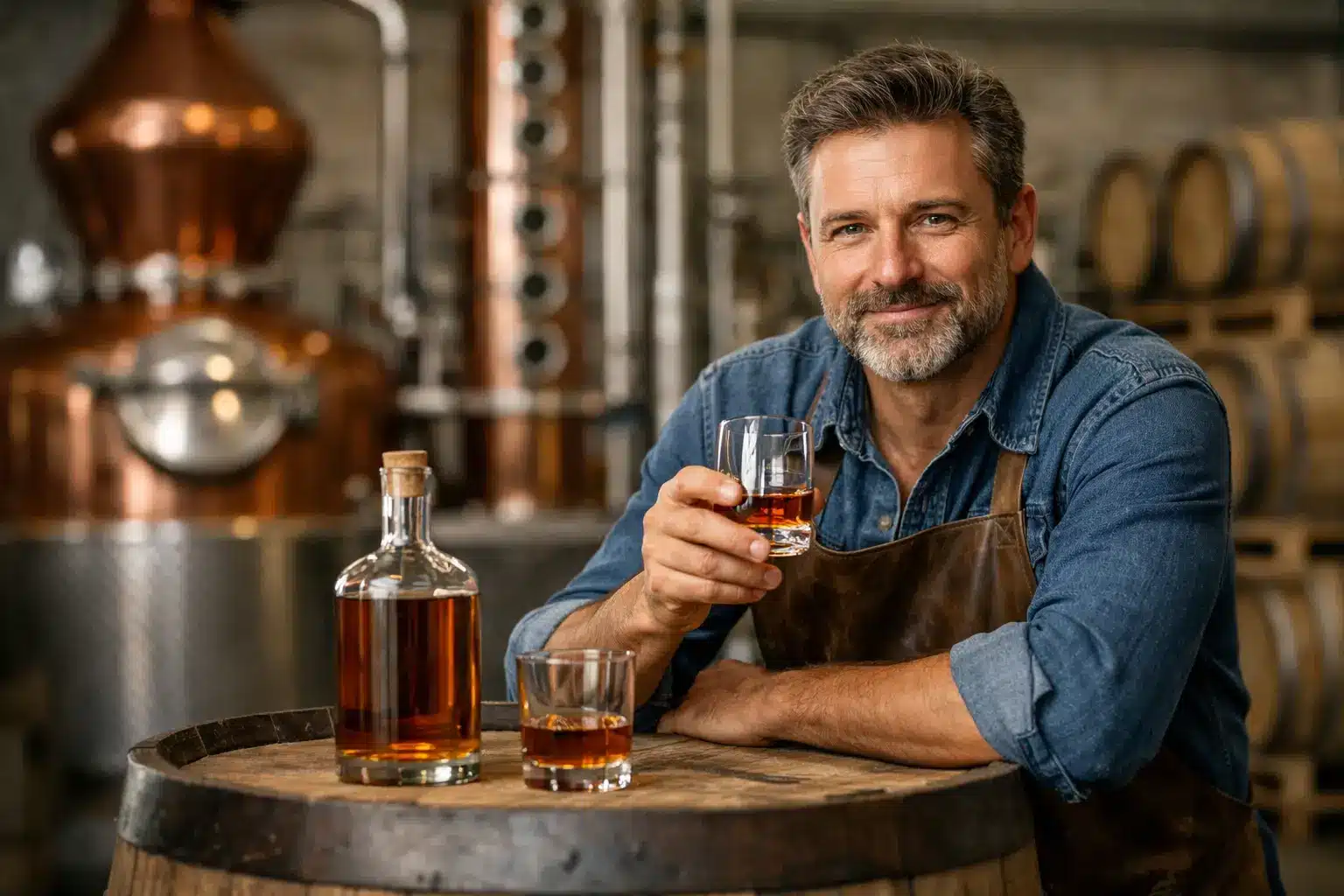

A copper still, a family recipe, and a black-and-white photo of Papaw can make a fine start. But they do not automatically make a founder story folks believe. When people ask how to tell a distillery founder story, the answer is not to make it prettier than it was. It is to find the part of the truth that explains why this person had to build this brand in the first place.
In the heritage spirits business, people can smell fake from the parking lot. They know the difference between a founder who has earned their dirt-under-the-fingernails credibility and a label trying to buy a backwoods accent. Your story has to carry the same kind of proof as the spirit in the bottle: real ingredients, real process, and no watering it down.
Start Where the Founder Changed Direction
Most distillery bios begin too late. They start with, “In 2022, we opened our doors,” then move straight into awards, tasting notes, and a nice-looking building. That is business history. It is not necessarily a founder story.
The real story usually begins at the turn. Maybe the founder was raised around old-timers who made shine for family gatherings, then spent years working a job that never fit. Maybe she learned fermentation from a grandfather, took the legal route, and put everything on the line to build a proper distillery. Maybe the founder was already successful in another field but could not shake the pull of a regional grain, an old recipe, or a piece of family land.
Ask one plain question: What happened that made this person decide they could not keep doing life the same way?
That moment gives the audience something to hold onto. It also keeps the story from becoming a list of credentials. A distillery is not born because someone filed paperwork. It begins when somebody decides the risk is worth taking.
How to Tell a Distillery Founder Story Without Dressing It Up
Authenticity does not mean every detail needs to be rough, illegal, or dramatic. It means the story sounds like the person who lived it. If the founder is quiet and methodical, do not turn them into a loud outlaw character. If their strength is farming, chemistry, hospitality, military service, or rebuilding an old family property, let that be the backbone.
There is a difference between honoring moonshine heritage and using it as a costume. Legal distilleries can speak proudly about Appalachian craft, family knowledge, and the independent spirit behind the trade without claiming a history they do not own. That distinction matters to serious drinkers, old-school makers, and anybody who has heard enough tall tales to know when one has been manufactured.
Use the founder’s own words whenever possible. A short line with a little grit will do more work than three polished paragraphs. If he says, “I wanted to make whiskey my people could afford to drink,” keep that feeling. If she says, “My granddad taught me patience before he taught me anything else,” that is the kind of line people remember.
The job of good storytelling is not to make the founder sound larger than life. It is to show why their life led here.
Put the Craft Where the Claims Are
A founder story becomes believable when the process backs it up. Folks do not need a full textbook on mashing, proofing, barrel entry, or local grain sourcing. They do need enough detail to understand what the founder actually does differently.
Say what is made, where it is made, and why the method matters. Is the corn grown nearby? Is a particular spring, smokehouse, yeast strain, or barrel program part of the identity? Did the founder restore an old building rather than build a showroom from scratch? Does the operation make a clear spirit because that is where the tradition began, or does it focus on aged whiskey because patience is the whole point?
Specifics beat slogans every time. “Handcrafted with tradition” could belong to nearly anybody. “We use non-GMO white corn from the county where my mama grew up and run small batches slow enough to keep the grain character” belongs to somebody.
There is a trade-off here. Too little process makes the story feel empty. Too much makes it read like an equipment manual. Give people the details that reveal character, then let the bottle and the experience carry the rest.
Let the Hard Parts Earn Their Place
A good founder story is not a highlight reel. A distillery is expensive, regulated, and hard on a person. Permits take time. Equipment breaks. Grain prices move. A bad batch can humble you fast. Telling part of that struggle makes success feel earned.
That does not mean airing every private problem or making hardship the brand’s whole personality. Pick the obstacles that shaped the business. Maybe the founder had to work nights while building the place. Maybe a fire, flood, shutdown, or family loss forced a new path. Maybe a first batch did not meet the standard, and dumping it became the moment the brand found its discipline.
The Moonshiners audience has watched that kind of pressure play out for years. Since the show first brought hidden still sites, family recipes, lawmen, and larger-than-life makers into living rooms, viewers have connected with the work behind the legend. As the series grew, personalities such as Tim Smith, Tickle, Mark and Digger, Amanda, Josh, and others showed that the best stories are not about perfection. They are about knowledge, loyalty, mistakes, determination, and the people standing beside you when the run gets rough.
Your founder may not be a television personality, and they do not need to be. But the same rule applies: show the work. That is where trust comes from.
Build the Story Around People, Not Just the Founder
No distillery gets built by one person alone, even when one name is on the bottle. The founder may be the center of the story, but the supporting cast gives it heart. That could be a spouse handling the books, a master distiller refining the recipe, a farmer growing the grain, a hometown bartender pouring the first bottle, or an elder whose lessons are still heard in the tasting room.
These relationships also keep the brand from sounding self-congratulatory. A founder who gives credit feels more grounded than one who claims to have done it all. For regional spirits brands, that community connection is often the real competitive edge. Plenty of people can make a clean label. Not everybody can show a genuine place in the community they want to represent.
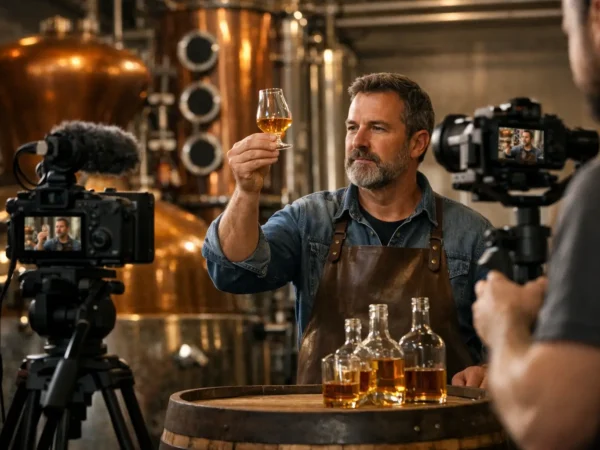
Photography and video are where those relationships come alive. Skip the stiff portrait beside a rack of barrels as your only visual. Show the founder checking a mash, talking with a grower, opening the doors before an event, or laughing with the crew after a long day. A few honest moments can carry more brand weight than a hundred stock images.
Give the Story a Job to Do
A founder story should not live only on an About page where nobody sees it. It should give your website, social media, product launches, press conversations, event appearances, and video content a common thread.
That does not mean copying the same paragraph everywhere. Pull different pieces forward depending on the moment. A short video may focus on the founder’s first memory of the craft. A product page may explain the grain or recipe connection. At a festival, the founder can tell the one hard lesson that makes people lean in. On social media, a photo from the early days can invite customers into the road behind the brand.
Consistency matters, but repetition gets stale. Keep the roots the same while changing the angle. The goal is for somebody to see a post, meet the founder at an event, and visit the website without feeling like they met three different brands.
For distilleries that have the real story but need help putting it where people can find it, that is where experienced media work earns its keep. The right website copy, photography, search visibility, event coverage, and video can turn a good local reputation into something that travels well. Moonshiner Gary has seen firsthand that audiences respond when a personality is presented with respect for both the person and the culture around them.
Keep Adding Chapters
The strongest founder stories are not frozen on opening day. A new release, a hard-won expansion, an award, a partnership with local farmers, or a decision to preserve an old method can all become part of the larger story. Let the brand grow without rewriting its roots every season.
Start with one honest scene: the place, person, or problem that pushed the founder toward the still. Tell it straight, prove it through the craft, and keep showing the work. That is the kind of story folks will carry with them long after the bottle is empty.




Comments are closed.