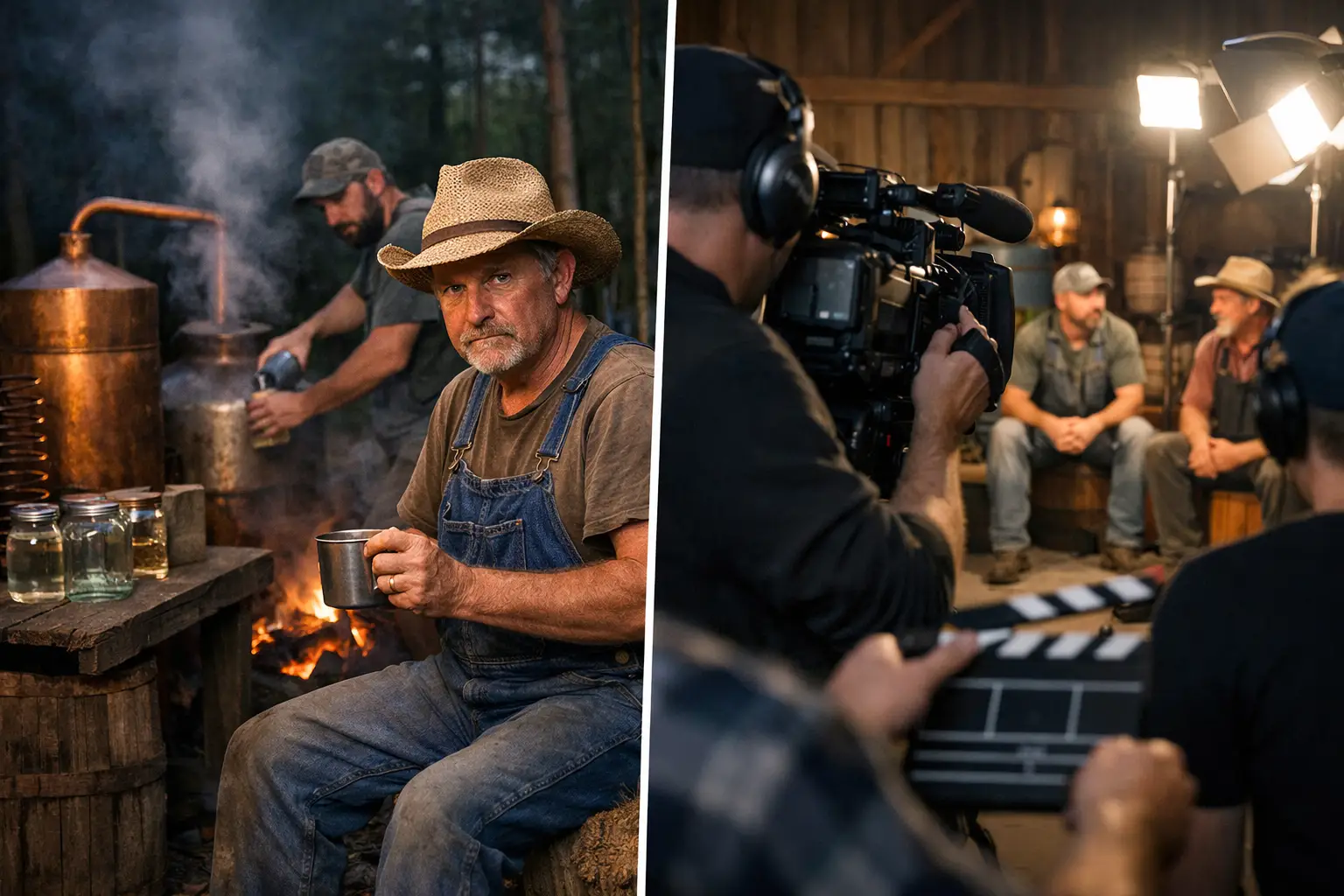
A copper still does not become less real because a camera crew is standing nearby. But when somebody asks, “moonshiners tv show real or fake,” they are usually asking a fair question: Are these folks actual distillers, are the builds legitimate, and does every chase, deadline, and showdown happen exactly as it looks on screen?
The straight answer is this: Moonshiners is built around real people, real distilling knowledge, real family histories, and a real American heritage culture. It is also television. That means producers shape a season, crews plan shoots, scenes may be repeated for coverage, and the story gets edited into an hour that keeps viewers coming back. Those two truths can live in the same woods.
Is the Moonshiners TV Show Real or Fake?
Calling the show completely fake misses the point and sells the cast short. People like Tim Smith, Tickle, Mark Ramsey, Digger Manes, Amanda Bryant, Josh Owens, Howard, and many others did not get their knowledge from a script. Their experience with mash, grain, wood-fired cooking, flavor, equipment, family tradition, and the business around spirits is part of what made the series connect in the first place.
A real distiller can spot the difference between somebody who knows a condenser and somebody who only knows how to point at one. The same goes for the people who grew up around this culture. They recognize the language, the work, the pride in a clean run, and the hard-headed independence that comes with making something by hand.
Still, Moonshiners is not a security-camera record of everyday life. It is a produced reality series. Producers choose which projects make the cut, ask questions that pull out a story, and build episodes around stakes. A season cannot show every routine cleanup, every long wait, or every batch that simply goes according to plan. Good television needs a beginning, a problem, and a payoff.
That does not mean the people are fake. It means the presentation is designed for television.
What the Cameras Change
Reality TV has a job to do: turn real life into a story people can follow. On Moonshiners, that can mean a build is filmed from several angles, conversations are revisited because audio was rough, or a project is organized around a production schedule. Time can feel tighter on television than it does in real life, because an episode has to move.
That is where some viewers get sideways. If a scene is edited for pace, they assume the whole operation was invented. If a cast member explains something for the camera, they call it acting. But explaining your craft to millions of people is not the same as pretending to have one.
There are also practical limits. A production crew cannot casually document illegal activity and act like it is not there. Television productions deal with safety requirements, location agreements, insurance, and legal review. What appears on screen is a crafted version of the moonshine world, not an unfiltered record of every private decision a person makes off camera.
The real answer depends on what part of the show you mean. The people, their skills, their connections, and much of the culture are real. The pacing, conflict, scene construction, and weekly storytelling are television. Anybody telling you it is 100 percent one thing or the other is probably trying to get a louder reaction than the truth deserves.
From Backwoods Curiosity to a National Show
When Moonshiners hit Discovery in 2011, it brought a subject that had long been passed around in family stories, country songs, and local lore into living rooms across the country. Moonshine was already part of Appalachian history and the wider Southern landscape, but most Americans knew it through old stereotypes: mason jars, fast cars, federal agents, and a lot of tall tales.
The show gave viewers faces and names. Tim Smith became known for his deep family connection to the craft and his ability to explain the work with plainspoken confidence. Tickle brought humor and a little wild-card energy. Mark and Digger carried a different kind of appeal – old-school know-how, dry humor, and the feel of two men who would rather be working than posing for a camera.
Over the years, the cast expanded, partnerships changed, and storylines moved beyond the basic image of a hidden still in the woods. Viewers watched flavor experiments, equipment builds, family businesses, racing challenges, branded products, and legal distilling ventures. The show grew because the culture grew. What started as a curiosity became a full-blown heritage spirits conversation.
Some episodes lean hard into pressure: weather is coming, an ingredient is missing, a customer is waiting, or somebody has to finish a build before the clock runs out. That is television doing what television does. Yet the projects still land because the audience enjoys seeing people solve problems with their hands, their experience, and whatever is available in the shop or shed.
The Legal Moonshine Industry Is Real Too
One of the biggest ways Moonshiners changed the conversation was by helping people understand that “moonshine” is not one simple thing. There is unlicensed distilling, which remains illegal. Then there is legal commercial distilling, where licensed distilleries make and sell unaged whiskey and other spirits while following federal, state, and local rules.
That distinction matters. Real legal distillers handle permits, taxes, labeling, equipment standards, distribution rules, insurance, and a pile of compliance work that rarely makes for glamorous television. They also preserve regional recipes, work with local farmers, create jobs, host visitors, and keep old stories alive in a lawful way.
The show helped make heritage spirits more visible, but visibility brings trade-offs. It can attract people who respect the craft, and it can attract people chasing a costume. A mason jar, a beard, and a few backwoods sayings do not make a brand authentic. The real thing is built through knowledge, consistency, relationships, and respect for where the craft came from.
That is why the strongest legal distilleries do more than borrow moonshine imagery. They tell the truth about their process and their people. They show the work. They know their history. And they do not pretend a marketing campaign is a family legacy.
Why Authenticity Still Carries the Show
The best moments in Moonshiners are rarely the loudest ones. They are the moments when a cast member talks about a relative who taught them, recognizes a mistake in a run, or puts real pride into a finished product. That is the part viewers cannot fake for long.
The same rule applies to anyone building a business in the moonshine, country, or heritage spirits space. People can smell borrowed identity from a mile away. A polished website and strong video matter, but they have to be built on something true. Your story, your product, and your connection to the community come first. The media work should help people see that more clearly, not dress it up into something it is not.
That is also why relationship-based storytelling has carried so much weight around this show. When you have worked alongside personalities such as Tim Smith, Tickle, Mark and Digger, Amanda, and others, you learn quickly that the audience responds to the real person behind the public image. Moonshiner Gary has helped bring those stories forward because this community values trust before talk. We Shinin’ is more than a catchphrase when the work behind it is real.
Watch It With Both Eyes Open
So, is Moonshiners real or fake? Watch it as a reality series rooted in a genuine culture, not as a court transcript or an unedited documentary. Enjoy the builds, the characters, the rivalries, and the far-out ideas. Just understand that a television crew turns months of work and a whole lot of life into a story built for one episode.
The deeper value is not whether every moment happened in the exact order it aired. It is that the show gave a national audience a reason to care about a craft many families carried quietly for generations. If you want to know what is real, look past the smoke, listen to the people who have put in the years, and pay attention to who is still standing behind their name when the cameras are gone.



Comments are closed.