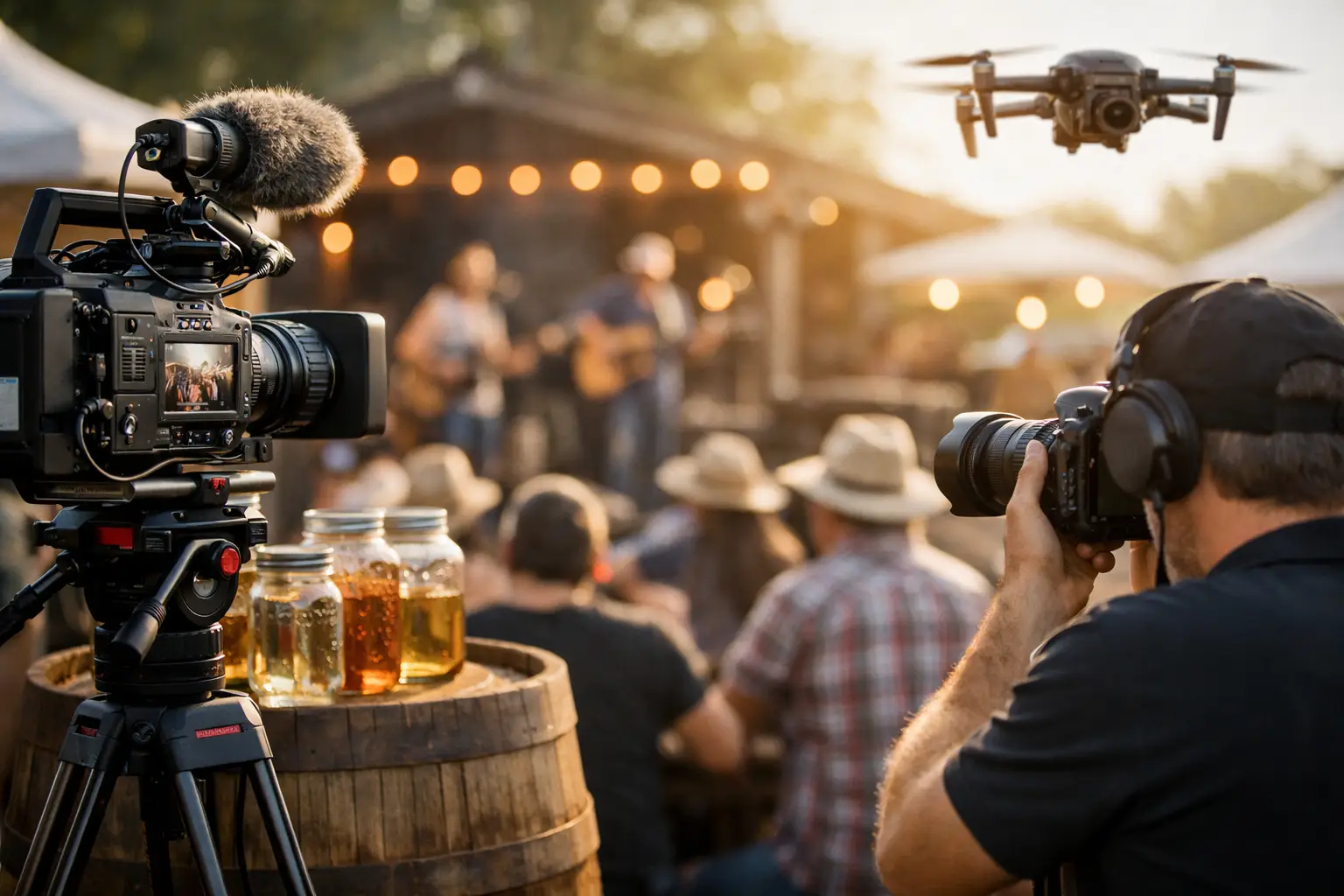
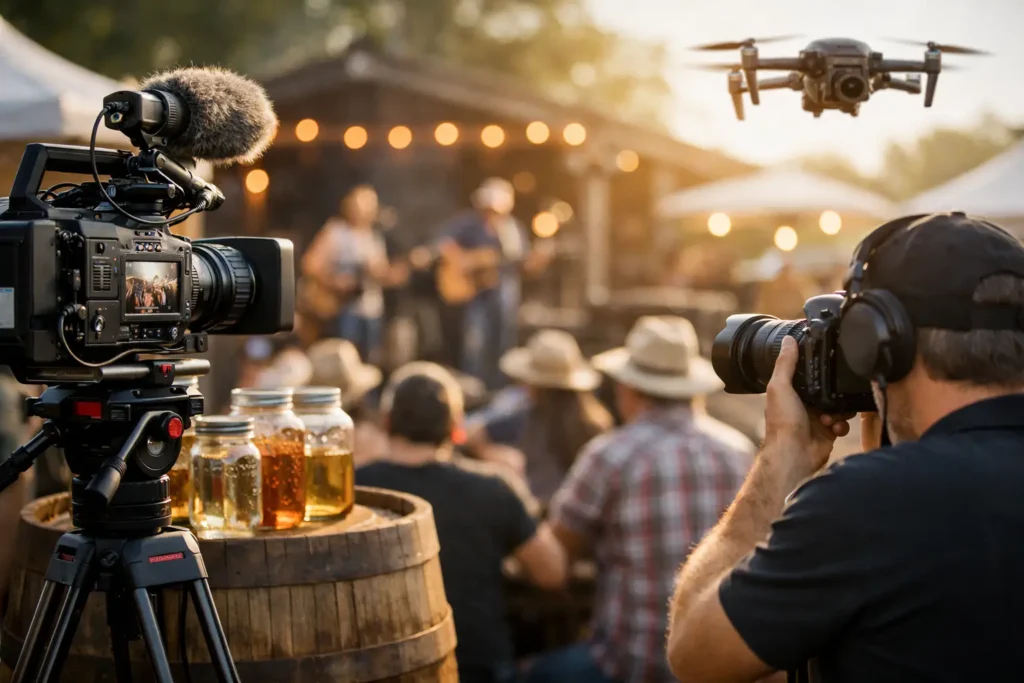
A moonshine festival can sell out the gate, fill the parking field, and still disappear from public memory by Tuesday morning. That is the gap moonshine festival media services are built to close. The right photos, videos, stories, interviews, and social coverage keep the fire burning long after the last band packs up and the last jar gets hauled home.
For a distillery, a vendor, a festival organizer, or a moonshine personality, event media is not just somebody walking around with a camera. It is proof that the crowd showed up, the product mattered, and the culture is alive. It turns one hard-running weekend into material that can promote next year’s event, build a brand, attract sponsors, and give fans something worth sharing.
A Festival Is More Than a Saturday Crowd
Moonshine culture has always had a story to tell. Long before television crews headed into the hills, the craft carried family history, local pride, hard lessons, and plenty of characters who could fill a porch with stories. When Discovery’s Moonshiners hit the screen, viewers got a window into a world that many folks had only heard about through family tales, country songs, and backroad legends.
Over the years, the show gave audiences memorable runs with Tim Smith, Tickle, Mark and Digger, Josh Owens, Howard, Amanda, and others who brought different pieces of that world into view. Some episodes centered on tough builds, risky runs, old recipes, or the pressure of getting product made. Others worked because of the people – their humor, their friendships, their stubbornness, and the way they carried their home place with them.
That visibility helped grow a bigger heritage spirits community. Legal distilleries, craft makers, country artists, collectors, food vendors, and fans now gather at festivals because they want more than a drink. They want the stories, the personalities, the music, the machinery, and the feeling of being part of something real.
A festival promoter has to capture that feeling or lose it. A generic event recap with a few blurry crowd shots will not do the job. The media needs to show the smoke rolling off the food trucks, the shine jars catching the light, the handshake at the booth, the band hitting its first loud note, and the old-timer explaining why his family recipe matters.
What Moonshine Festival Media Services Should Cover
Good event coverage starts before the gates open. The festival needs a clear message, a visual identity, and a plan for what must be captured. Is the goal to sell more tickets next year? Bring in vendors? Give sponsors proof of reach? Help a featured distillery build its own following? Those goals shape the work.
Photography should document the people as much as the place. Wide crowd shots show scale. Close product shots give vendors something useful for their own promotion. Portraits of distillers, performers, and guests bring personality into the story. The strongest galleries do not look staged. They feel like you were there, standing close enough to hear the laughter and smell the mash.
Video gives the event its heartbeat. A short recap reel can work hard on social media, but it should not be the only deliverable. Interviews with featured makers, clips from demonstrations, crowd reactions, and behind-the-scenes footage can become weeks or months of content. A good editor knows when to let the banjo pick, when to cut to the fire, and when to let a moonshiner tell the story in their own words.
Social media coverage needs boots on the ground. Posting a flyer three weeks before the festival is promotion. Capturing live moments while the event is happening is momentum. Quick interviews, vendor spotlights, crowd clips, schedule reminders, and photos from the grounds give people at home a reason to come next time. They also make attendees feel like they are part of the action right then.
Public relations and written content matter, too. A festival with a strong history, a charitable cause, a special guest, or a regional economic impact has a story beyond the lineup. That story can be shaped for local media, sponsors, tourism partners, and the audience searching online for something worth doing that weekend.
The Work Starts Before the First Jar Is Poured
The best event media is planned, not improvised in a muddy field with weak cell service and a dead phone battery. Before the festival, organizers should identify key personalities, sponsor obligations, scheduled demonstrations, must-have vendor shots, and moments that cannot be repeated.
That does not mean every second has to be scripted. Some of the best footage comes from the unexpected – a crowd gathering around a still display, an artist jumping offstage to greet fans, or two old friends telling stories behind a booth. But a crew that knows the lay of the land can catch those moments without missing the basics.
There are trade-offs. A small hometown festival may not need a full production team with multiple cameras, drone footage, interviews, daily edits, and a full press campaign. On the other hand, a large event with sponsors, television personalities, ticket sales, and national reach should not rely on volunteers snapping phone photos between shifts. The scope should match the stakes.
Moonshiner Gary understands that difference because this work comes from inside the community, not from a boardroom that just learned the word moonshine last week. Media planning should respect the people on the grounds, protect the authenticity of the event, and still produce assets that help the business grow.
Make Every Vendor and Sponsor Part of the Story
Sponsors are not just logos on a banner. Vendors are not background scenery. When they have a good experience, they tell other businesses the festival is worth attending. When they receive usable photos, social clips, or a thoughtful feature, they are more likely to share the event with their own audience.
That is where organized coverage pays off. A distillery may need clean product photography and a short interview about its heritage. A barbecue vendor may want a crowd shot that proves the line was long. A sponsor may need branded images that show its support was visible without making the festival feel like a commercial.
The goal is not to plaster logos over every frame. It is to show real participation. Folks can spot fake promotion from a mile away. They respond better when the sponsor is seen supporting the music, the makers, the local community, or the tradition that brought everybody together.
Why the After-Festival Push Matters
Once the gates close, the festival has a short window to stay loud. Post a few strong photos quickly while attendees are still talking about the weekend. Follow that with vendor features, performer clips, a proper recap video, and stories that bring people back into the experience.
Then put the media to work. The best images belong on the next event page, in sponsor decks, in vendor recruitment, and across social channels. Video can support ticket launches, highlight a returning headliner, or introduce new attractions. Written recaps and properly built pages help search visibility for people looking for moonshine events, regional distilleries, and heritage spirits experiences.
Do not let a hundred great moments live only in somebody’s camera roll. That is money, trust, and future attention left sitting in the dark.
Media That Feels Like It Belongs There
A moonshine festival is not a polished corporate conference, and it should not be covered like one. The work has to be professional, but it also needs dirt on its boots. It needs to understand why a copper still draws a crowd, why a family recipe deserves respect, and why fans will drive across state lines to meet the personalities they have watched for years.
That is the real value of moonshine festival media services: they preserve the soul of the gathering while giving the people behind it material that can build the next one bigger and better. Keep the cameras rolling, keep the stories honest, and give folks a reason to say, “We Shinin’,” long after the festival grounds go quiet.


Comments are closed.