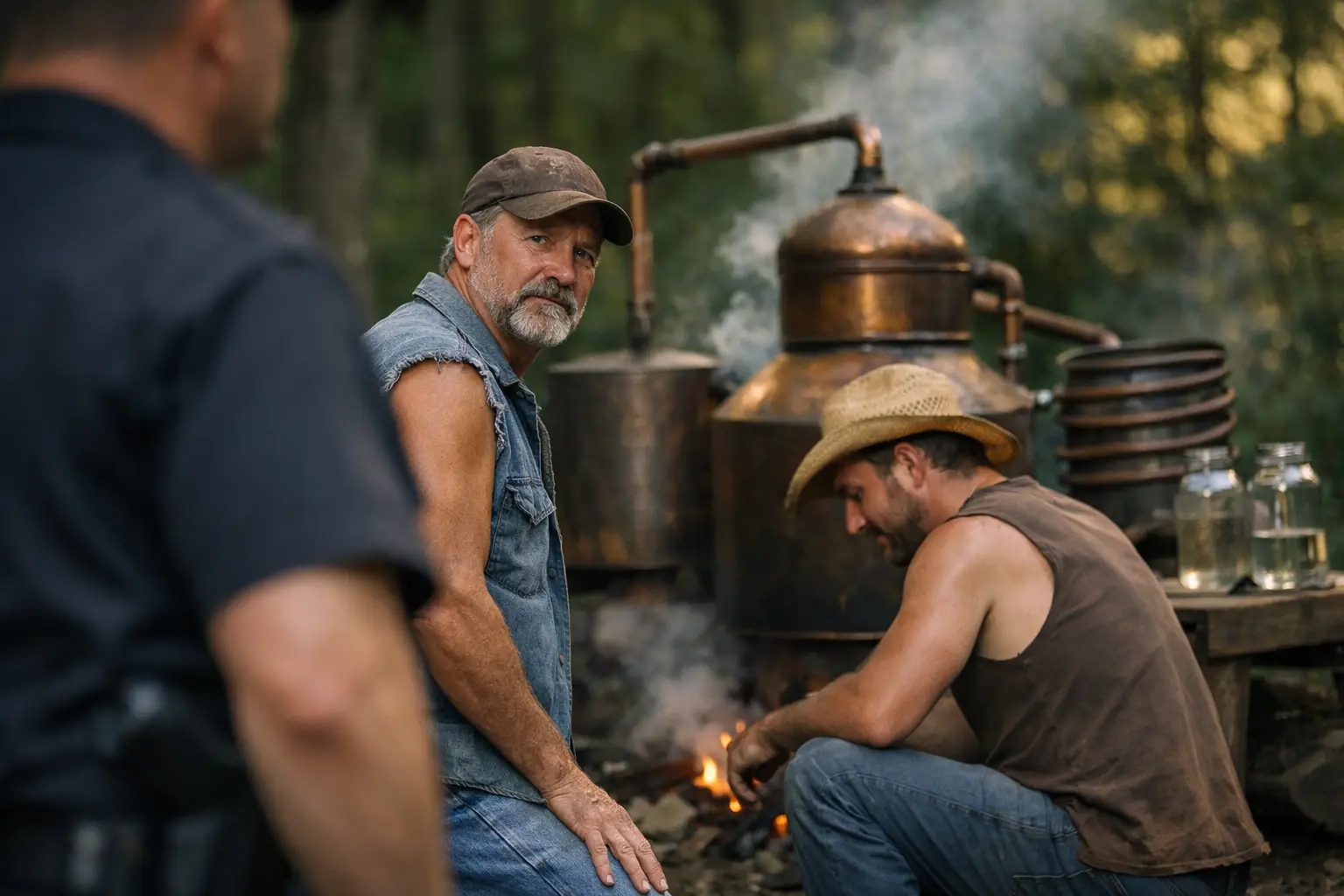
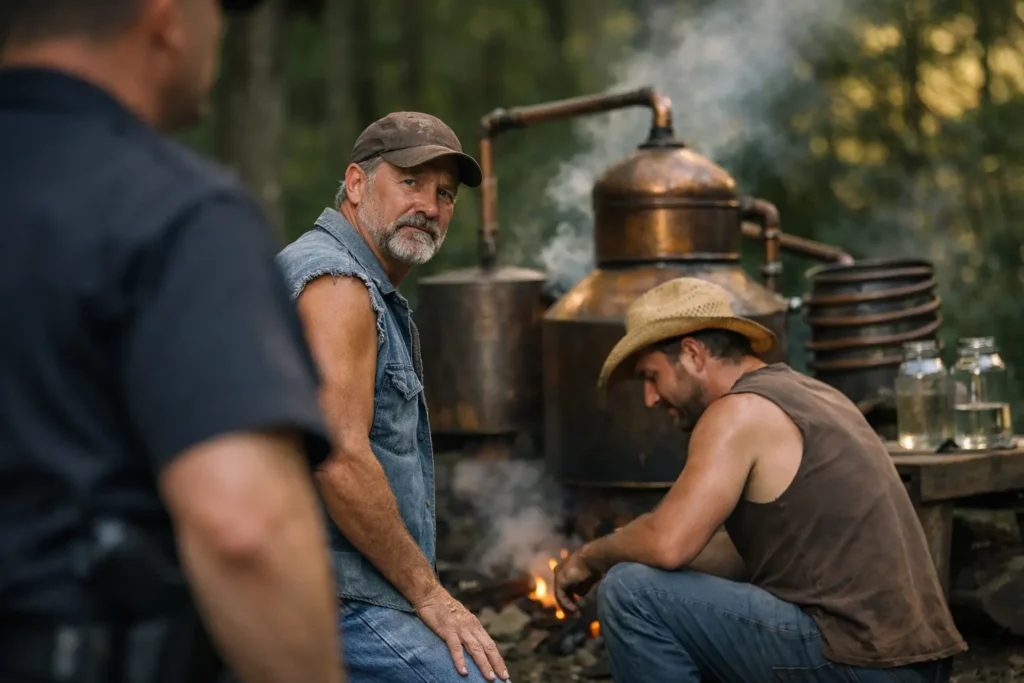
The question comes up every time somebody sees a copper still smoking in the woods, a runner hauling jars down a back road, or a familiar face talking about an old family recipe: is Moonshiners TV show legal? The straight answer is that producing and airing the television show is legal. Making untaxed liquor without the required federal and state approvals is not. Those two facts can sit side by side, even if they make for a more complicated story than a simple yes or no.
That tension is part of why Moonshiners has held folks’ attention for so long. The show brought a hidden piece of Appalachian and Southern history onto front porches across America. It also put real questions about tradition, regulation, taxes, and what is actually happening on camera right in the middle of the conversation.
Is Moonshiners TV Show Legal to Film?
Yes. A television production can legally film people, places, businesses, interviews, reenactments, and discussions about moonshining. Discovery and the production companies behind a show operate as media businesses. They handle releases, insurance, crew logistics, location agreements, and the plain old work of making television.
What a camera records does not automatically make every action shown legal. That is the part people sometimes miss. A documentary crew can report on a crime. A reality crew can capture risky behavior. A scripted or reality program can also use editing, storytelling devices, old footage, legal operations, and off-camera context that viewers do not see in a 42-minute episode.
The show itself has never been a license to distill alcohol without permits. Nor does being a known cast member create a special exemption from alcohol law. The same rules that apply to anybody else apply to a person with a television following.
There is another practical point here: television is edited entertainment, not a court record or a compliance inspection. A scene may be filmed on private land with permission. A conversation may be about a past run. A still may be used for demonstration, display, or a legal distilling operation. Viewers can enjoy the story without assuming they know every legal fact behind it.
The Law That Separates Moonshine From Legal Spirits
At the federal level, distilling beverage alcohol for sale requires approval from the Alcohol and Tobacco Tax and Trade Bureau, commonly called the TTB. A legitimate distillery needs the right federal permits, must follow production and recordkeeping rules, and owes required excise taxes. State and local laws add another layer, often involving licensing, zoning, fire safety, health requirements, and distribution rules.
The big misconception is that making a small batch at home for personal use is automatically allowed. That may be true for certain beer and wine under defined rules, but it is not a general home-distilling exception for beverage spirits. Running liquor without the proper authorization can bring serious consequences, including fines, forfeiture, and criminal charges.
Equipment is its own issue. Owning a still is not always illegal. Folks own them for legal distilling businesses, fuel alcohol projects, water distillation, essential oils, display pieces, and historical collections. But how the equipment is used matters. Using a still to produce spirits for drinking without the proper permits is where a person can get into trouble fast.
That is why legal craft distilleries have changed the conversation. They can honor family recipes, regional grain, old-school copper, and mountain know-how while doing business aboveboard. The craft spirits world did not erase moonshine heritage. In many ways, it gave that heritage a legitimate place to grow.
Why the Show Feels So Real
Moonshiners hit television in 2011 and quickly built a loyal crowd because it did not feel like polished city reality TV. It had mud, smoke, back roads, family stories, busted equipment, hardheaded partners, and the kind of characters you might meet at a benefit ride, a local festival, or a distillery open house.
Over the years, viewers got to know personalities like Tim Smith, Tickle, Mark and Digger, Josh, Howard, Amanda, and plenty of others who carried different pieces of the culture. Some brought deep family history. Some brought comic relief. Some brought business instincts, recipe knowledge, or a willingness to take on a wild build that had everybody watching to see whether it would run.
The episodes that stick with people are rarely just about a jar of liquor. They are about a legacy recipe, a family member, a partnership going sideways, a build in rough country, or the pressure of getting something done before weather, equipment, or bad luck shuts it down. That is storytelling. It takes a real culture and shapes it into television people want to talk about the next day.
Still, reality TV has to be treated as reality TV. Editing compresses time. Producers build episodes around conflict and payoff. Cast members may have legal businesses, public appearances, branded products, or other work beyond what makes the final cut. The show can be authentic to the people and culture while still being a produced program.
What the Moonshiners TV Show Changed
Before the show, plenty of people knew moonshine only as a punchline, a law-enforcement story, or a blurry family tale about somebody’s granddaddy. Moonshiners put names, faces, craftsmanship, and regional pride in front of a national audience. It also helped make words like mash, proof, copper, sour mash, and backwoods engineering part of everyday conversation.
That attention opened doors, but it brought trade-offs too. Bigger visibility means more customers, more events, more product opportunities, and more ways for heritage brands to tell their stories. It also means more scrutiny. A distiller or personality cannot build a serious long-term business on confusion about legality. Fans may love outlaw flavor, but legitimate brands need licenses, responsible messaging, and a clean operation behind the scenes.
For legal distilleries, the strongest play is not pretending to be something they are not. It is telling the real story well. Maybe that means talking about a grandfather’s recipe without claiming an illegal past. Maybe it means showing the copper still, local grain, and hands-on craft. Maybe it means letting customers meet the people behind the label at an event instead of feeding them a generic marketing line.
That kind of storytelling is where the culture has real power. The audience can smell fake from a mile away. They want heritage with proof behind it, not a costume bought for a photo shoot.
A Better Question Than “Is It Legal?”
A better question might be: what part of the moonshine story is being told? If you are watching for history, characters, and backwoods problem-solving, the show delivers a world that has meant something to a lot of families for generations. If you are asking whether you can copy what appears on screen in your own shed, the answer is no – not without understanding and meeting federal, state, and local requirements.
For aspiring distillers, the legal route may take more paperwork and more patience than an old-time story makes sound exciting. But it also gives you the chance to build something that lasts: a compliant distillery, a respected label, a tasting-room experience, a product line, and a reputation that can survive beyond one good season.
For fans, there is no harm in enjoying the show for what it is: a high-proof piece of American storytelling. Just keep the difference clear between watching moonshine culture and operating a legal spirits business.
The old stories deserve to be carried forward. The smartest way to carry them now is with respect for the people who lived them, respect for the law, and enough honest grit to make the next chapter worth telling.


Comments are closed.