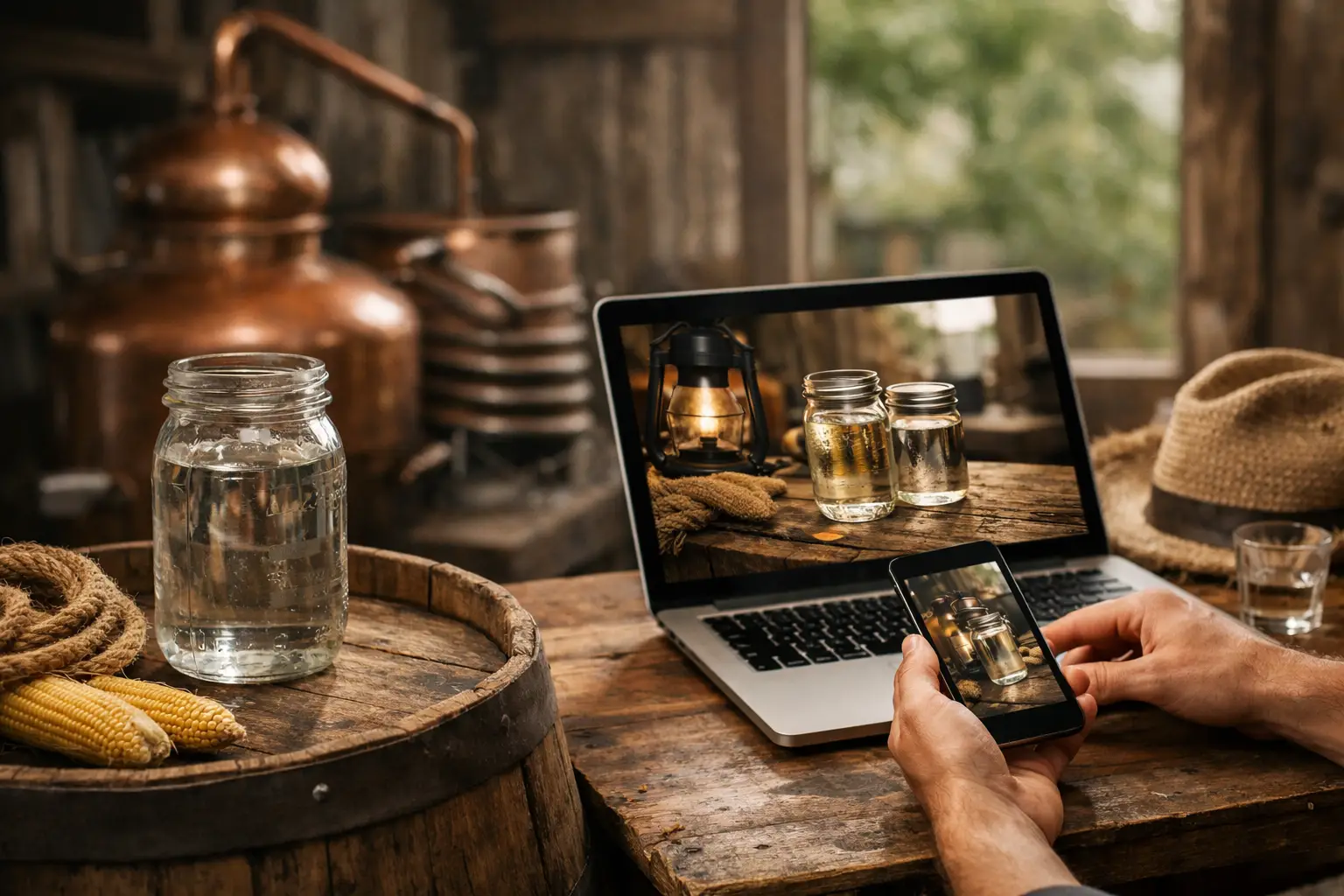
A good jar may get somebody talking at a cookout. A strong online presence gets them looking for your brand before the next cookout even happens. Knowing how to promote moonshine online is not about acting bigger than you are or copying some slick liquor campaign from out of town. It is about putting the real story, the real people, and the real craft where the right audience can find it.
For legal distilleries, heritage spirits brands, events, and public personalities, the opportunity is wide open. Folks are hungry for the backwoods stories behind the label. They want to see the copper, hear the family history, meet the people running the operation, and know where they can responsibly enjoy the product. But if your website is thin, your social posts are scattered, and your best photos are stuck in somebody’s phone, that story is not working as hard as it could.
How to Promote Moonshine Online Starts With a Real Story
Moonshine has always carried more than proof and flavor. It carries place. It carries family recipes, hard work, Appalachian ingenuity, country music, late-night stories, and a little bit of outlaw grit. That is why generic marketing falls flat in this business. You cannot slap a mason jar on a stock-photo ad and expect people who know the culture to buy in.
Start by getting clear about the story only your business can tell. Maybe your legal distillery was built from a grandfather’s recipe and a family farm. Maybe your brand is tied to a particular holler, a local festival, a musician, or a TV personality. Maybe the real hook is not the spirit itself, but the people who show up every day to make it happen.
That story needs a backbone. Pick the few truths you want people to remember: where you come from, what you make, why you make it, and what kind of people belong around your brand. Use those ideas across your website, social captions, product photography, interviews, and event signage. Consistency does not mean saying the same thing word for word. It means people recognize you wherever they find you.
Respect the Line Between Heritage and Illegal Sales
Moonshine culture has roots in independence, but online promotion has to respect the law. Promote legal, properly licensed products and experiences. Follow federal, state, platform, and local rules around alcohol advertising, age-gating, shipping, giveaways, endorsements, and where products can be sold.
Do not build a campaign around teaching unlicensed production, dodging regulation, or selling alcohol where it is not permitted. That might sound like a quick way to get attention, but it can get accounts shut down and damage a hard-earned reputation. The smarter move is to celebrate the heritage while showing customers that your operation is legitimate, responsible, and built to last.
Build a Website That Does More Than Sit There
Your website is your home base. Social media can change its rules overnight, but a website gives your brand a place you control. It should make a clear first impression in seconds: who you are, what you offer, where to find it, and why people should care.
For a distillery, that may mean a sharp homepage, product pages that follow compliance rules, a location page, a tasting-room calendar, wholesale information, and a simple way for media or event organizers to reach you. For a personality, it may mean a biography, appearance information, merchandise details where permitted, media clips, and a contact page that does not send serious opportunities into a forgotten direct-message folder.
Local search matters more than many brands realize. When somebody searches for a distillery near them, moonshine tasting, a heritage spirits event, or a place to buy a particular legal product, your business needs accurate location information, hours, photos, and descriptions. Keep your business name, address, and phone number consistent everywhere you manage a profile. A good local search foundation is not glamorous, but it brings people through the door.
Make Video the Main Pour
The Moonshiners TV audience did not fall in love with a list of ingredients. They connected with personalities, pressure, tradition, and the feeling that every run had a story behind it. Early episodes brought viewers into remote country settings and introduced the characters carrying that world. Over the years, the show grew into a bigger culture of familiar faces, live events, branded products, fan communities, and stories that reached far beyond the still site.
That is the lesson for your marketing: people remember people.
Short video is one of the best ways to put personality in front of an audience. Film the owner telling the story of a batch. Show a legal distillery preparing for a busy weekend. Capture a musician at an event, a team member explaining a flavor, or a customer sharing why they came in. A 30-second clip with an honest voice often beats a polished ad that says nothing.
Keep the footage grounded. Good light, clean audio, and steady editing matter, but do not sand off every rough edge until your brand looks like it could belong to anybody. A little dirt on the boots and a real laugh in the background can do more for trust than a room full of fancy props.
Save longer stories for your website and video channels, then cut moments from them for social posts. One well-shot interview can become a feature video, several short clips, still images, quotes, and a story for your email list. That is how small teams get more mileage without needing to create something brand-new every day.
Post Like You Know the Folks Watching
The goal is not to post constantly. The goal is to give people a reason to stop scrolling. A useful rhythm might include behind-the-scenes content, community moments, upcoming events, old photos with real context, staff spotlights, and customer-facing information such as hours or new releases. If every post is a sales pitch, folks will tune you out. If every post is just a pretty picture with no direction, they may enjoy it but never take the next step.
Use captions that sound like a person wrote them. Tell people what they are seeing, why it matters, and what to do next. Ask a real question when you want conversation. If an event is coming up, give the date, town, time, and the reason it is worth making the drive. If you are sharing a piece of history, name the people and place when you can. Details make stories believable.
Social platforms are useful rented land, and every one of them has trade-offs. Short-form video can reach new people fast, but it burns through content quickly. Facebook may be stronger for local event communities and older fans. Instagram is built for visual identity. Email is less flashy, but it remains one of the best ways to reach people who have already raised their hand and asked to hear from you. Build your audience in more than one place.
Turn Events Into Months of Content
A festival, tasting, meet-and-greet, or distillery anniversary should not live for one Saturday and disappear. Plan the media before the event starts. Get photos of the crowd, the signage, the talent, the staff, the vendors, and the small moments that prove people had a good time. Record short attendee reactions and quick interviews with guests.
Then keep telling the story after the tents come down. Share a recap video, tag partners where appropriate, post favorite crowd photos, thank the town, and announce what is next. This is especially valuable for event organizers trying to attract sponsors and vendors next year. Proof of a lively, well-run event is stronger than a promise.
Relationship-based promotion matters here. The right collaboration with a respected distiller, country artist, local business, or familiar Moonshiners face can introduce you to an audience that already trusts them. But the fit has to be real. Chasing a famous name with no connection to your brand looks forced. Build partnerships around shared values, shared fans, and a good reason to work together.
Measure What Brings People Back
Likes feel good, but they are not the whole scoreboard. Watch for website visits, calls, direction requests, event ticket interest, email signups, wholesale inquiries, and repeat customers. Look at which videos hold attention and which posts get real comments instead of empty reactions. Then make more of what earns action.
Moonshiner Gary has seen firsthand that the strongest brands in this space do not try to become somebody else. They take what is already true about their people, their place, and their reputation, then give it a louder and clearer voice through websites, photography, video, SEO, and event coverage.
Your online presence ought to feel like walking up to a good fire with the right crowd around it: welcoming, memorable, and honest about where it came from. Keep the story true, keep the business legal, and give people a reason to come back. We Shinin’.



Comments are closed.