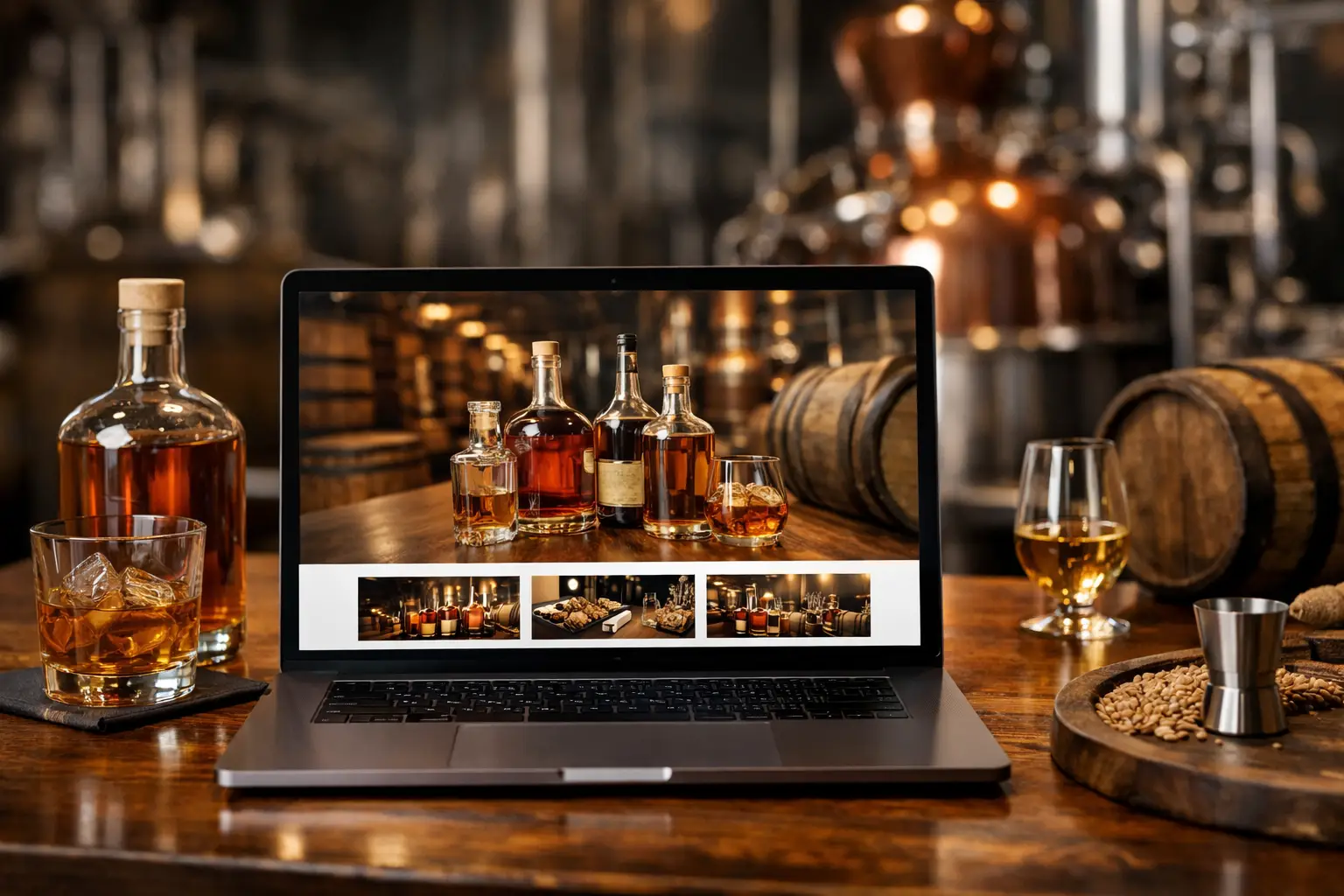
A good distillery website has to earn its keep before a customer ever hits the gravel drive. When folks ask what makes the best website for distillery business, the answer is not a slick homepage with a bottle spinning in midair. It is a website that makes somebody hungry to visit, confident enough to buy, and proud to tell their friends where they found you.
For a heritage spirits brand, the website is the front gate, the tasting room host, the sales sheet, and the campfire story all rolled into one. If it feels like it could belong to any liquor company in any city, it is leaving your best asset on the table: your real story.
What the Best Website for a Distillery Business Must Do
A distillery does not sell liquid alone. It sells place, process, people, and a reason to gather. A customer may first find you while looking for a weekend stop, a local bourbon, a gift, a private event venue, or a bottle they saw on social media. Your site needs to meet each one of those folks with a clear next step.
That means a visitor should not have to hunt for your address, hours, tasting room details, product information, or where to buy. Put the practical stuff where people can find it. Then give them enough personality to remember why your name matters.
The strongest websites do two jobs at once. They handle business cleanly, with clear menus, mobile-friendly pages, fast loading images, and direct calls to visit or contact you. At the same time, they make the brand feel alive. You should hear the crackle of the fire, see the copper shine, and know there are real hands behind the mash.
Sell the visit, not just the bottle
For most small and independent distilleries, the tasting room is where a casual fan becomes a repeat customer. Your site should make the trip feel worth taking. Show the property, the bar, the crew, the tours, the food situation if there is one, and the kind of afternoon people can expect.
Be plain about hours, tour times, reservations, parking, accessibility, and whether families or dogs are welcome. That information may not feel glamorous, but it prevents frustration and helps customers commit. A person deciding between three Saturday stops will often choose the place that answers their questions first.
Build the Pages That Bring in Business
A one-page site can work for a brand-new operation with one product and one goal. Most distilleries outgrow it fast. As your events, distribution, products, and public reputation grow, your website needs room to do the same.
A practical distillery site usually needs these core pages:
- Home: State what you make, where you are, and why someone should care within the first few seconds.
- Our Story: Tell the truth about the people, the place, and the tradition behind the label. Skip the made-up old-timey language if it is not your real history.
- Spirits: Feature each product with clear tasting notes, proof, bottle size, availability, and purchase or retailer information where permitted.
- Visit Us: Give your location, hours, maps, tour details, reservation instructions, and photos that make people want to pull in.
- Events and Contact: Promote live music, releases, festivals, private bookings, press inquiries, and wholesale conversations without making folks dig for a phone number.
If state rules allow online sales, your website can guide that purchase. If they do not, it can still point customers toward legal retailers, tasting room availability, merchandise, or an email list for release announcements. Alcohol laws differ by state and by product, so the best move depends on your setup. What does not depend on location is clarity. Never make customers guess whether a bottle is available or where they can find it.
Let Your Story Carry Some Weight
The Moonshiners television era showed America something folks in the hills already knew: people care about the maker behind the jar. They watched Tim Smith, Tickle, Mark and Digger, Amanda, Josh, and plenty of others because there was more on the line than a recipe. There was family knowledge, risk, personality, rivalry, hard work, and pride in doing things a certain way.
Legal distilleries can learn from that without putting on a costume. Your story does not have to be outlaw legend to be worth telling. Maybe your grandfather kept a still behind the barn. Maybe your town was built around tobacco, timber, coal, farming, or mill work. Maybe you left a corporate job to make rye the way you believed it ought to be made. Maybe the story is simply that you and your people refused to make bland spirits for bland occasions.
Tell it straight. Put names and faces on the site. Show the distiller checking a run, the grain coming in, the barrels resting, the crew pouring at an event. Stock photos of strangers holding rocks glasses do not build trust in this business. Real photography does.
Make Local Search Work the Way Locals Search
Most people do not type a poetic phrase into a search engine. They type things like distillery near me, whiskey tasting near Nashville, moonshine tours in the Smokies, or private event venue near me. Your website should naturally answer those searches through useful pages, not by stuffing the same town name into every sentence.
Create real content around what you offer and where you offer it. A page about tours should explain tours. A page about an annual release should explain the release. A page about your event space should show what it holds, what is included, and how to ask about dates.
Keep the business name, address, phone number, and hours consistent wherever customers see them. Use current photos. Update holiday hours. If your last event announcement is from two summers ago, visitors may wonder whether the doors are still open. A site does not need a fresh redesign every year, but it does need somebody tending the fire.
Good Video Makes the Brand Feel Real
Video is one of the quickest ways to separate a living distillery from a dead brochure. It does not need to look like a big-budget whiskey commercial. In fact, too much polish can scrub out the character.
A short video of the founder talking through a mash bill, a barrel pull, a bottling day, or the first crowd at a release party can do more than paragraphs of sales copy. Let people hear the accents, the machinery, the laughter, and the pride. That is what makes a local brand feel like a place people want to stand inside.
The same footage can support your website, social posts, event promotion, and media outreach. That is why a coordinated content plan beats posting random phone clips whenever somebody remembers. Moonshiner Gary has seen firsthand that audiences connect with people before they connect with logos. Give them a person worth following.
Do Not Let Design Get in the Way
There is a difference between rugged and hard to use. Wood textures, old labels, copper colors, and backwoods character can look mighty fine. But if the text is hard to read, the buttons disappear on a phone, or the pages take forever to load, the look is costing you business.
Keep the design rooted in your actual brand. A polished bourbon house may need a cleaner presentation than a rowdy mountain moonshine outfit. A farm distillery may want fields, grain, and family photographs up front. An urban craft operation may lead with cocktails and nightlife. There is no one right visual style, but there is one wrong move: copying somebody else’s identity because it looked good on their bottle.
Also remember the legal side. Age-gating, responsible drinking language, privacy practices, and accurate product claims matter. Your website should build excitement without making promises that create trouble later.
Build for the Next Good Opportunity
A website should be ready when opportunity comes knocking. A television mention, festival appearance, celebrity visit, distributor conversation, or viral video can send a pile of new eyes your way overnight. If your site has no clear story, no current product information, and no way to collect emails or inquiries, that attention blows past like smoke out of a still house.
Build the kind of site that can hold a crowd. Make it easy for a first-time visitor to find you, easy for a fan to stay connected, and easy for a buyer or event organizer to take you seriously. Then keep feeding it with honest photos, useful updates, and stories only your distillery can tell.
The best brands in this business do not try to sound like everybody else. They put their own people, their own ground, and their own proof on the table. That is how a website quits being a digital business card and starts pulling its weight.




Comments are closed.