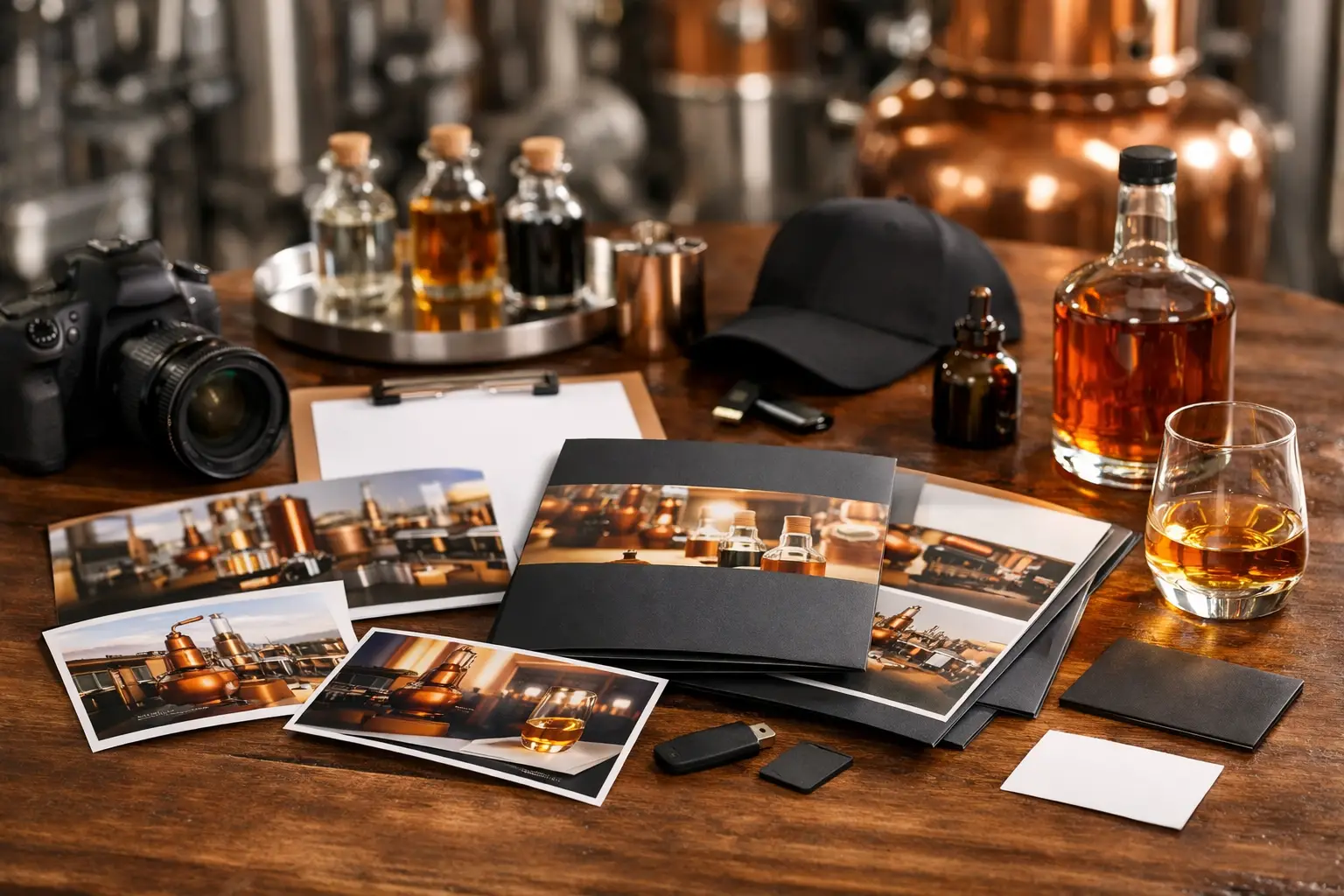
A reporter has twenty minutes before deadline. An event promoter is sorting through vendor emails between phone calls. A podcast host wants to know whether the person behind your whiskey can carry a conversation. The best distillery press kit elements make their job easy without sanding down the real character of your operation.
That matters in the spirits business. Plenty of folks can put a bottle on a white background and call it branding. But a heritage distillery, legal moonshine outfit, or small-batch whiskey maker is selling more than liquid. You are carrying a place, a family name, a hard-earned process, and a reason people ought to care. Your press kit needs to hand that story over cleanly, clearly, and with enough grit left on it to feel true.
A Press Kit Is Not a Fancy Folder
A good press kit is a ready-to-use package for people who might tell your story, book your brand, stock your product, or invite you into a bigger conversation. That includes local news, trade publications, podcasters, festival organizers, retailers, tourism groups, and event media teams.
It is not a 30-page brag book. It is not a pile of blurry phone pictures dropped into a shared folder with no labels. And it is not a generic mission statement that could belong to any liquor company in the country.
The job is simple: give people accurate facts, strong visuals, usable quotes, and a clear picture of what makes the distillery worth talking about. A press kit should save the recipient time while making your brand memorable.
The Best Distillery Press Kit Elements Start With a Real Story
Before anyone cares about your awards, mash bill, or warehouse expansion, they need to understand who you are. Your company background should be short enough to use in an article but strong enough to sound like a human being wrote it.
Lead with the truth that gives the brand its backbone. Maybe your family has worked the same land for generations. Maybe you started making legal shine after learning old methods from a grandfather. Maybe your town lost jobs, and the distillery became a way to put pride and paychecks back in the community. Maybe you are not chasing old-timey nostalgia at all – perhaps you are a new operation making bold whiskey in a region folks overlook.
Give the story a beginning, a purpose, and a present-day point. Avoid claiming you are “passionate” or “committed to quality” without proof. Those words have been poured into so many press releases they barely have a flavor left. Say what you make, where you make it, why it is different, and what you stand for.
For moonshine and heritage spirits brands, this is where cultural credibility counts. Respect the old ways without pretending every recipe came straight out of a 1930s hollow. Real history beats borrowed history every time.
Include a short bio and a longer version
Provide a tight company description of roughly 75 to 125 words, plus a fuller founder or distiller bio. The short version gives journalists something they can run with. The longer version gives interviewers material for better questions.
If the founder has a personality, let it show. A good quote might mention learning to run a still, keeping the family farm alive, building a business from scratch, or refusing to cut corners. Keep it conversational. The best quote sounds like something the person would actually say across a barrelhouse table.
Give the Media the Facts They Will Ask For Anyway
A press kit should answer the basic questions before they become a dozen back-and-forth emails. Put these details in one clean fact sheet:
- Official distillery name, founding year, city and state, and legal business description
- Founder, master distiller, or key spokesperson names and titles
- Product lineup, bottle sizes, proof, style, suggested retail price, and market availability
- Major milestones, awards, distribution news, tasting room details, and upcoming releases
- Direct media contact information, including a name, email address, and phone number
Accuracy is not negotiable here. If a bottle is seasonal, say so. If distribution is limited to three states, do not write copy that makes it sound nationwide. If an award was a silver medal at a regional event five years ago, name it correctly and include the year. There is no shame in being small. There is plenty of trouble in overstating what you have done.
A clean fact sheet also helps your own team. When the tasting room staff, sales reps, distributor, and social media person all pull from the same current information, the brand sounds organized without losing its soul.
Photography Should Show More Than the Bottle
Bottle shots matter. Retailers, publications, and event calendars need them. Get clean, high-resolution product photos against a simple background, photographed from more than one angle. Include both portrait and landscape options if possible, because editors crop things every which way.
But do not stop there. A distillery is alive when there is steam in the air, grain on the floor, wood underfoot, and somebody working. Show the still, the barrel racks, the mash, the hands, the faces, the land, and the tasting room. If there is a story in the building, photograph that story.
That does not mean every image needs to look dark, smoky, and outlaw. Sometimes a bright shot of guests enjoying a tasting or a clean photo of a distiller checking a run tells the stronger story. It depends on your audience and the publication. A craft spirits trade magazine may need a sharp production image. A lifestyle editor may want the founder in front of the rickhouse. A festival promoter may need a high-energy crowd photo.
Label every file properly. “IMG_4817_final2” does nobody any favors. Use names such as “Ridge-Creek-Distilling-founder-Jane-Smith.jpg” and include a short caption sheet. Make usage permission plain so nobody has to wonder whether they can publish the image.
Add Video and Audio That Let People Feel the Place
A 45- to 90-second brand video can do more work than a long paragraph, especially when your distillery experience is part of the draw. Keep it honest. The sound of the still, boots on a wood floor, a founder talking straight to camera, and barrels rolling across the warehouse can carry more weight than overproduced corporate music.
Short vertical clips are useful too. Event organizers and social teams often need material they can share quickly. Capture a handful of clean clips: a pour, a toast, a still in operation, a quick founder introduction, and a wide view of the property.
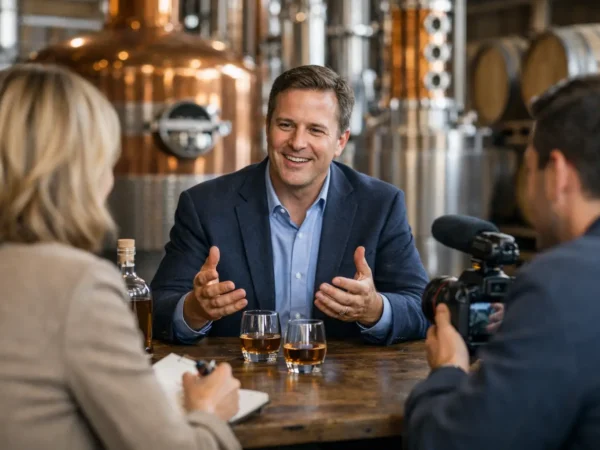
If your spokesperson is comfortable on camera, include a short interview clip. That gives podcast hosts, TV producers, and event bookers confidence that the person behind the brand has something to say. The Moonshiners audience knows the difference between somebody performing a character and somebody who has actually lived the story.
News Belongs in the Kit, But Keep It Fresh
Your press kit should contain a small section for current news: a new release, major expansion, anniversary, charity partnership, tasting room opening, national distribution move, or event appearance. This is often the reason a writer picks up the phone now instead of later.
Use dates. Explain why the news matters beyond your own front gate. A new bottle is more interesting when it brings back a regional grain, supports local farmers, marks a family milestone, or gives visitors a new reason to come through town.
Update this section regularly. A press kit that still promotes last fall’s release tells people nobody is tending the fire. Set a calendar reminder to review it every quarter and before major events.
Make It Easy to Use in the Real World
The best press kit can be a well-organized downloadable folder or a simple page on your website, as long as it is easy to find and easy to use. Lead with the essentials: company story, fact sheet, product information, downloadable photos, recent news, and contact details.
Do not hide media assets behind a complicated form unless there is a real legal reason. Most opportunities are time-sensitive. If a writer has to wait two days for a logo or product shot, they may cover the brand that answered first.
At Moonshiner Gary, the work has always been about taking the real reputation built in the woods, the stillhouse, the event field, or on screen and giving it a professional place to stand. That is what a press kit should do. It should not invent your legend. It should make the truth of it easier to see.
Build the kit before the big call comes, then keep feeding it with new photos, honest milestones, and stories worth repeating. When opportunity knocks, you should be ready to pour.



Comments are closed.