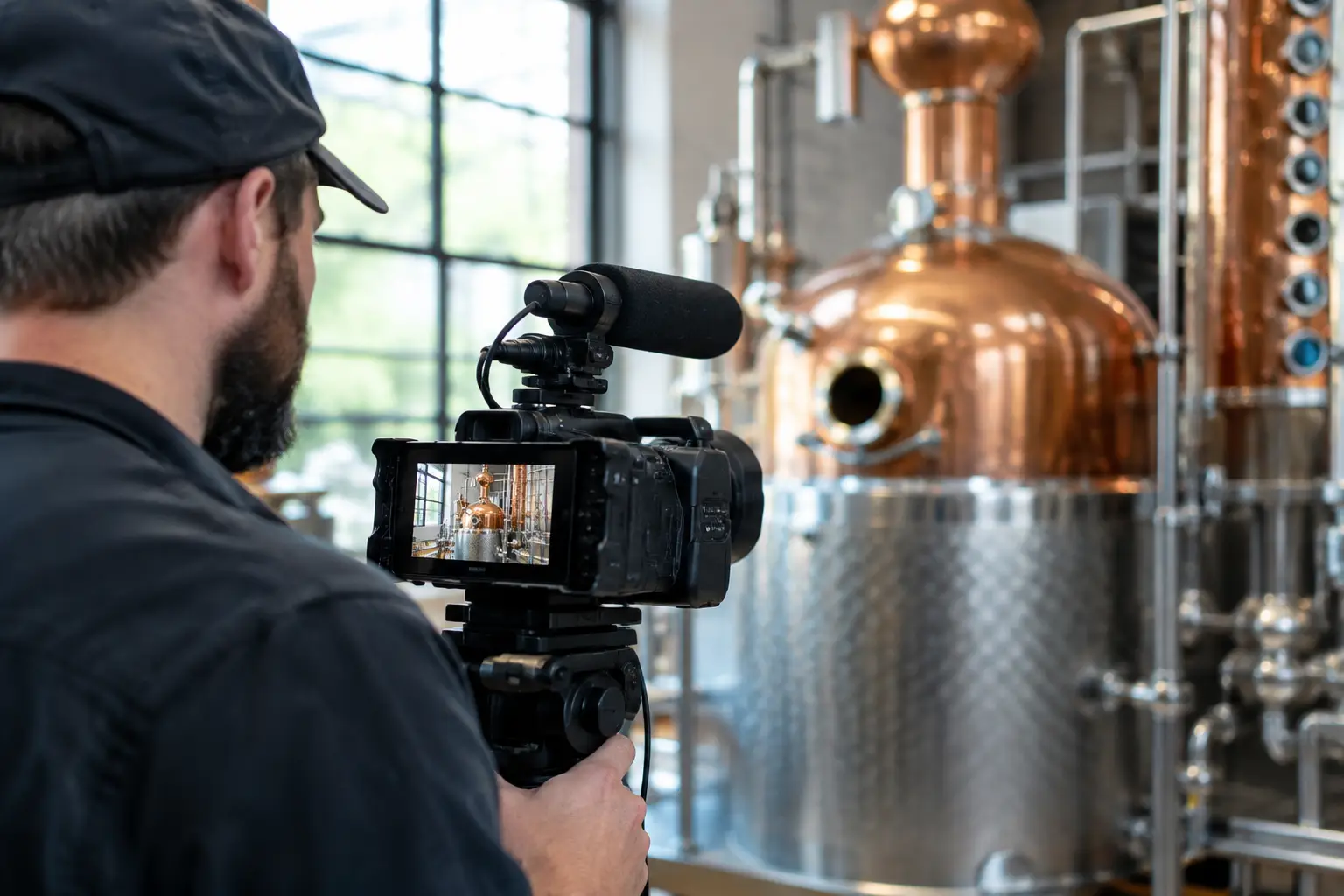
The first bottle coming off your line is not just a product shot. It is proof that long nights, permit headaches, mash bills, barrel decisions, family history, and stubborn determination finally turned into something folks can hold in their hands. To plan a distillery launch video that earns attention, start there. Not with a drone shot. Not with a trendy song. Start with the reason your distillery had to exist.
The best launch videos in the spirits world do more than announce a grand opening. They give people a reason to pull up, order a pour, follow the brand, and tell somebody else about it. Around moonshine, whiskey, and heritage spirits, people can smell a fake story from a county away. Give them the real thing.
Decide What the Launch Video Needs to Do
A launch video cannot do every job at once. If you try to cram your entire history, every SKU, your tasting room menu, production process, and opening date into two minutes, you will end up with a loud commercial that nobody remembers.
Pick the main purpose before anybody turns on a camera. Are you introducing a new legal distillery to local customers? Are you launching a flagship bottle into stores? Are you trying to attract distributors, tourists, or event traffic? The answer changes the story, the length, and even who needs to be on camera.
For a tasting room opening, the video should make people feel the place. Let them see the wood, copper, hands at work, a crowded bar, and the personality behind the counter. For a retail launch, put more focus on what makes the bottle worth picking up: the ingredients, the flavor profile, the heritage, and the person whose name is on it.
There is a trade-off here. A brand film can build trust for years, while a quick social video can push immediate traffic. Most distilleries need both, but they should not be the same edit stretched or chopped without a plan.
Find the Story Before You Build the Shot List
A still is photogenic. Fire, grain, barrels, old barns, and backroads all look good on camera. But good-looking footage alone does not make a launch video work. The story is what gives those images weight.
Ask the founder one simple question: why this distillery, and why now? The strongest answer usually is not, “We saw a market opportunity.” It may be a family recipe, a lost local tradition, a farmer relationship, a hard-earned second chance, or years spent learning the craft before taking the risk.
That does not mean every distillery needs to lean on outlaw talk or put on a backwoods costume. If your operation is modern, polished, and science-driven, own it. If it is rooted in Appalachian tradition, let that come through in the people, language, and process. Authenticity is not about fitting somebody else’s version of moonshine culture. It is about making sure the story on screen matches the truth people find when they walk through your door.
The early seasons of Moonshiners connected because viewers saw more than jars and stills. They saw characters, stakes, places, and relationships. Your distillery launch video needs that same human heartbeat, whether you are making straight bourbon, craft vodka, rum, or white whiskey.
How to Plan a Distillery Launch Video Shoot
Once the central story is clear, build the shoot around the moments that prove it. Do not schedule a camera crew for a slow Tuesday afternoon and hope the magic appears. Plan production days when the distillery is alive.
Film a real mash run if you can. Capture the grain being milled, water hitting the mash, steam rising, the still running, barrels being rolled, bottles being filled, and labels going on. Those details show labor, and labor is what makes a premium bottle feel earned.
Your shoot plan should cover four kinds of footage:
- The people: founder interviews, distillers, family members, bartenders, farmers, and loyal local supporters.
- The process: grain, fermentation, distillation, aging, bottling, and quality checks.
- The place: the exterior, surrounding land or town, tasting room, signage, and small details that give the location character.
- The payoff: a first pour, a raised glass, a packed event, a bottle on the shelf, or the reaction of somebody tasting it.
Give the on-camera people a little direction, but do not hand them a speech that sounds like a boardroom wrote it. A founder who says, “My granddad taught me not to waste good corn,” will always land harder than somebody reciting flavor notes they barely remember.
If there is a meaningful person in the story, get them in the video. That might be the grandmother with the recipe card, the farmer growing the grain, the head distiller who left a bigger operation to build something homegrown, or the local musician who plays your opening night. Relationships carry a story farther than equipment ever will.
Make Room for the Launch, Not Just the Production
A distillery video needs a beginning, a middle, and a moment that says, “It is time.” Your launch date, tasting room opening, bottle release, or first public pour should feel like the natural result of everything the viewer just watched.
That means planning ahead. If your grand opening is on Saturday, do not wait until Friday to start thinking about the video. Film the core brand story weeks ahead. Then capture the launch event itself for a second wave of content that shows real crowds and real energy.
A smart production plan usually creates one main launch film, plus shorter cuts for social media. The main film might run 60 to 120 seconds, depending on where it will live and how much story you have. Short cuts can spotlight one quote, one process moment, one bottle, or one call to visit. Vertical video is not an afterthought anymore. If most of your customers find you on their phones, plan for vertical framing during the shoot instead of trying to force a wide landscape video into a cramped crop later.
At Moonshiner Gary, the goal is never to make a distillery look like every other spirits brand with a polished commercial and no pulse. The goal is to put the right camera in front of the real story, then carry that story across video, photography, social content, and the places customers are already looking.
Keep the Message Clear When the Edit Starts
Editing is where a launch video either finds its legs or gets buried under too many good ideas. The first few seconds matter most. Open with a strong visual, a plainspoken line, or a sound that puts viewers right in the distillery. A burner kicking on, grain hitting a mill, a cork popping, or a founder saying why they built the place can all work.
Then keep moving. Let the viewer see enough of the process to believe in the craft, but do not turn the video into a factory tour. Let them hear the founder, but do not make them sit through a five-minute interview. Use music that supports the place and pace without making the brand feel like it borrowed somebody else’s identity.
Be careful with claims, too. “Best in the world” means little without proof. Specific details are stronger: locally grown corn, a 100-year-old family farm, a true small-batch run, a particular barrel program, or a real connection to the county where you operate. Let the facts do the bragging.
Give People a Next Step They Can Actually Take
A beautiful video that ends with a logo and no direction leaves money on the table. Tell viewers what happens next. Visit the tasting room. Come to the opening. Ask for the bottle at a local retailer. Join the email list. Follow the brand to see the next batch release.
The right call to action depends on your goal. A new distillery might need foot traffic. A bottle entering distribution may need customers asking their favorite store for it. An established operation launching a limited release may need urgency. Keep it focused. One clear next move is stronger than five competing instructions.
After release, pay attention to what people actually respond to. Maybe the founder’s story gets shared more than the beauty shots. Maybe a short bottling clip brings more tasting room visits than the main film. That is useful information, not a failure of the original video. The launch film starts the conversation, then your next pieces of content keep it going.
When the still is warm, the first bottles are lined up, and the people who helped build the place are standing nearby, get the camera rolling. Those are the moments you cannot fake later. Tell that truth well, and folks will not just watch. They will want to be part of what you are building.


Comments are closed.