
A new still can be polished, the labels can be sharp, and the first batch can taste like something worth talking about. But without a real guide to distillery launch publicity, that opening weekend can come and go with little more than a few family photos and a quiet Facebook post. In the heritage spirits business, good liquor matters. So does the story people carry home with it.
A distillery launch is not just a ribbon cutting. It is the first chance to show folks what you stand for, where you came from, and why your bottle deserves a place on their shelf. Whether you are building a legal craft distillery, bringing back a family recipe, or putting a new spin on old-school shine, publicity works best when it feels earned, local, and true to the people behind the mash.
Start With the Story Before the Grand Opening
The public does not connect with stainless steel alone. They connect with a reason. Maybe your grandfather made corn liquor in the hills. Maybe your town lost its factory jobs and you are building something that puts local grain, local hands, and local pride back to work. Maybe you are not from a long line of distillers at all, but you spent years learning the craft because you respect it enough to do it right.
That is your launch story. Get it straight before you send one press release or invite one camera crew.
When Moonshiners first brought backwoods distilling stories into living rooms across America, viewers did not tune in just to watch a run of liquor. They tuned in for the personalities, the family history, the problem-solving, and the grit. Tim Smith, Tickle, Mark and Digger, Amanda, Josh, Howard, and others made an impression because they felt like real people with real stakes in what they were doing.
Your distillery needs that same human center. Do not lead with, “We are excited to announce our state-of-the-art facility.” Lead with the hard-earned reason the facility exists. The equipment supports the story. It is not the story.
Find the one sentence people can repeat
A strong launch message should be easy for a reporter, customer, bartender, or hometown neighbor to repeat without needing a sheet of talking points. It might be, “This is the first legal distillery in the county in generations,” or, “They make Appalachian-style spirits from grain grown within 30 miles.”
If your message takes three minutes to explain, it will get shortened into something generic. Give people the clean version first, then let the deeper story carry the interview, video, website, and tasting room conversation.
Build the Launch Before You Announce It
One common mistake is treating publicity like an invitation sent a week before opening day. By then, most of the useful work should already be underway. A good launch builds curiosity in stages, giving people a reason to follow along before they can buy a bottle.
Start several weeks ahead with real behind-the-scenes material. Show the still arriving. Introduce the distiller. Let folks see label samples, grain deliveries, barrel work, renovations, old photos, recipe testing, or the first legal run. These are not filler posts. They are proof that there are people and sweat behind the brand.
You do not need every post to look like a national whiskey ad. In fact, overly polished content can feel out of place for a heritage-driven operation. A good photo, clean sound, honest captions, and a consistent look will carry more weight than trying to imitate a giant corporate spirits company.
Get your home base in order
Before the buzz hits, make sure people have somewhere solid to land. Your website should clearly show your location, hours, launch date, tasting availability, spirit lineup, brand story, and contact information. If you sell merchandise, offer tours, host music, or plan food-truck days, those details need to be easy to find.
Social media should match the same name, logo, tone, and basic information. Nothing kills momentum faster than a newspaper feature that sends people to an outdated page, a dead phone number, or a profile with no clue when the doors open.
Search visibility matters here too. When somebody hears about your distillery at a gas station, on local radio, or from a friend, they are going to search your name. Make sure they find the real deal first, not a stale business listing or somebody else with a similar name.
Give Local Media a Reason to Care
Local papers, radio stations, regional magazines, tourism offices, and community outlets can be powerful at launch. But they are not there to run your advertisement for free. They need a story their audience cares about.
A useful media pitch includes the who, what, where, and when, but it also answers the bigger question: why does this matter to this community? New jobs, local agriculture, historic restoration, a family legacy, a regional spirits tradition, or a special opening-day event can all give the story legs.
Make it easy for media folks to cover you. Have a short backgrounder ready, along with quality photos of the founders, the building, the still, and the bottles. Offer an interview time when the distiller is available. If there is a good visual moment, such as a first pour, barrel roll, ceremonial opening, or live music on the grounds, let them know.
Do not send the same lifeless message to every outlet and hope it sticks. A small-town editor may care most about the local family behind the business. A regional food writer may want to talk process, flavor, and ingredients. A tourism outlet may care about the visitor experience. Same distillery, different angle.
Make Opening Day Worth Covering
A launch event should create something people want to attend and something worth documenting afterward. That does not mean you need a giant stage, a celebrity, and a parking lot full of rented decorations. It means there needs to be a reason beyond “our doors are open.”
Consider what fits your place. A tasting with the distiller, a local band, a food truck with roots in the community, a charity tie-in, a bottle signing, or a heritage display can all work. The best choice depends on your capacity, permitting, and crowd flow. A small distillery may be better served by ticketed tasting sessions than by trying to squeeze 800 people through a room built for 80.
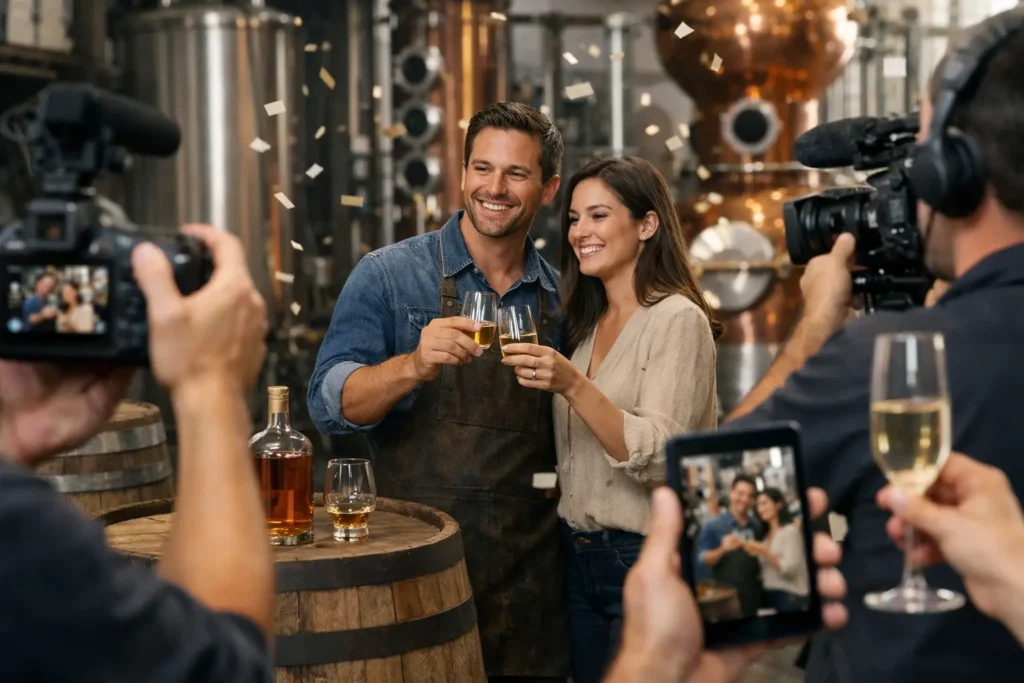
Have somebody dedicated to capturing the day. Founders are usually too busy shaking hands, solving problems, and keeping the operation moving to take usable photos. Good launch photography and video will keep paying off after the crowd leaves. You can use it for press follow-up, social posts, event recaps, future advertising, and pitch materials.
Also plan for the unglamorous stuff. Parking, signage, weather, lines, responsible service, restrooms, and staff roles are part of publicity. A crowd that has a good time becomes your best word-of-mouth crew. A crowd that cannot park, cannot find the entrance, and waits an hour for a sample tells a different story.
Keep the Fire Going After the First Pour
The first weekend is a spark, not the whole fire. The real work is turning attention into repeat visits, bottle sales, mailing-list signups, retail relationships, and a community that feels connected to the brand.
Follow up quickly. Post a genuine thank-you with photos from the opening. Share press mentions without acting like you just won the lottery. Feature the people who came out, the local vendors who helped, and the crew who put in the work. Keep telling the story of what happens after launch: barrel aging, new releases, market visits, cocktail ideas, staff spotlights, festivals, and the occasional hard lesson learned.
This is where many brands lose their footing. They spend everything on opening day, then go quiet for two months. Consistency beats one big burst. You do not have to post all day every day, but your audience should know you are alive, active, and proud of what you are building.
Measure what actually moved the needle
Likes can be fun, but they do not always pay for grain, barrels, or payroll. Track attendance, website traffic, email signups, tasting room sales, merchandise sales, calls from retailers, media inquiries, and repeat visitors. Ask customers how they heard about you.
The answer may surprise you. A local radio interview might bring in more buyers than a slick video. A behind-the-scenes clip of the distiller explaining a mash bill may outperform a polished bottle photo. That is not failure. That is useful information about your people.
Publicity Should Sound Like Your Distillery
There is no one right way to launch. A polished bourbon operation near a major tourism corridor may need a different plan than a family-run moonshine brand opening in a rural county. Budget, local laws, production capacity, and the kind of crowd you want all matter.
What does not change is the need for honesty. Do not borrow a fake outlaw story. Do not claim traditions you cannot back up. Do not talk like a corporate boardroom if your customers know you from the feed store, the local fair, or a late-night campfire. Folks in this business can smell fake from across the holler.
The brands that last are the ones that make good spirits, show their work, and treat every customer, reporter, retailer, and neighbor like part of the journey. Build that kind of launch, keep the cameras rolling after the first pour, and let the right people know: We Shinin’.



Comments are closed.