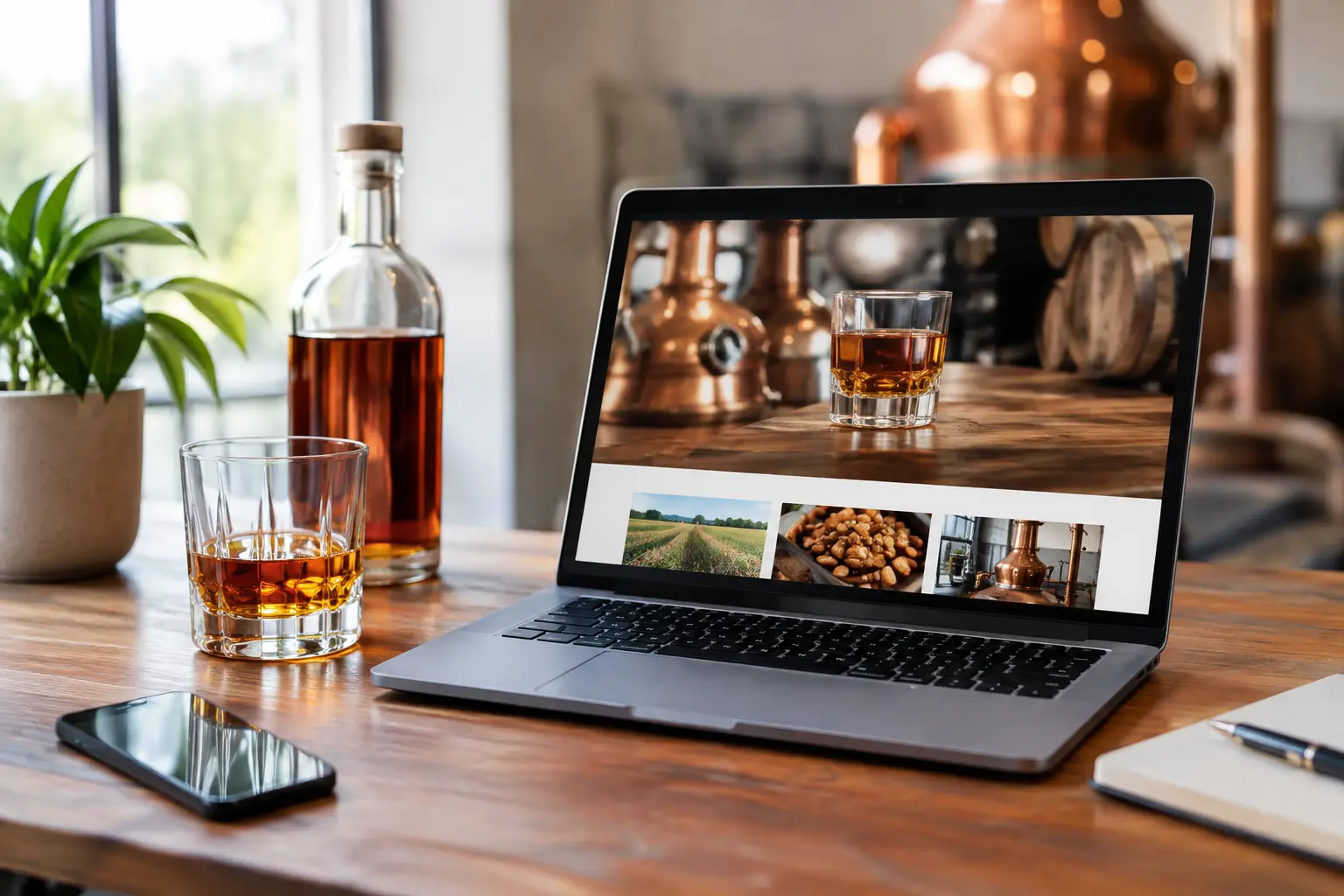
A good bottle can win somebody over at the tasting bar. A bad website can lose them before they ever find the parking lot. When you build a legal distillery website, you are not putting up a digital brochure for the sake of it. You are giving your brand a front porch, a sales hand, and a place to prove that the operation behind the copper is real, professional, and worth the drive.
For a small distillery, the website has to carry more weight than it does for a giant liquor company. Folks may know your name from a festival, a local shelf, a television appearance, or a buddy who brought over a jar. But when they search you, they need clear answers fast: What do you make? Where can they buy it? Can they visit? What is the story? And are you running a legitimate, legal operation?
Build a Legal Distillery Website Around Trust
The word “legal” does not mean your site needs to read like a government filing cabinet. It means the site should make it easy for visitors to understand that you are a licensed business with a real location, real products, and responsible practices. That matters in an industry where the old outlaw stories are part of the culture, but customers, retailers, distributors, and event partners still need confidence in the business.
Start with the facts that should never be hard to find: your distillery name, physical address, contact information, hours, and the state or region you serve. If your tasting room is open only certain days, say so plainly. If tours require reservations, do not bury that detail under a pretty photo of a rickhouse. A customer who drives two hours and finds a locked door is not likely to become a loyal fan.
Your website should also include a clear age gate or age-related notice where appropriate, especially if your content is geared toward alcohol products and promotions. State and federal rules, platform policies, direct-to-consumer shipping rules, and advertising standards can change by location and product. Your website needs to reflect how your business actually operates, not what another distillery gets away with in another state. Have a qualified attorney or compliance professional review any legal language, sales claims, privacy policy, shipping terms, and contest rules before publishing them.
That caution is not boring. It protects the work you have put into your name.
Your Story Is the Proof Nobody Else Can Copy
There are plenty of websites with dark backgrounds, whiskey barrels, and a stock photo of a man in a hat. That look may fit the category, but it does not tell anybody why they should remember your bottle over the next one.
The best distillery websites put the people behind the spirit on the screen. Tell visitors where the recipe came from, what grain you use, why you chose that water source, or how your family got into the business. If your roots are in Appalachian craft, farm distilling, racing culture, country music, or a long line of bootleg legends, own that history honestly. Heritage is powerful when it is specific.
There is a difference between honoring moonshine history and pretending a licensed distillery is still hiding from the law. Your story can have grit without making false claims. If Grandpa ran shine in the hills, tell the family story with respect. Then show the line from that legacy to the licensed operation you run now. That balance gives the brand backbone.
Good photography does a heap of work here. Show the still, the hands loading grain, the barrels, the field, the storefront, the team, and the crowd at a real event. Do not fill the site with images that could belong to any distillery in America. A visitor should feel like they have stepped onto your property before they ever arrive.
Make It Easy to Find the Bottle and the Door
A website can be beautiful and still fail at business. If people cannot figure out how to visit, buy, or ask a question, the design is just a fancy label with nothing in the jar.
Your home page should quickly point people toward the action that fits your business. For some distilleries, that is a tasting room visit. For others, it is finding a retailer, booking a private event, joining an email list, or contacting the team about wholesale. You do not need ten different calls to action fighting for attention. Pick the one or two that matter most and make them obvious.
A product page should do more than list a name and alcohol percentage. Describe the spirit in language a regular customer understands. Explain whether it is a corn whiskey, bourbon, flavored moonshine, vodka, rum, or ready-to-drink product. Give tasting notes without acting like somebody needs a sommelier certificate to enjoy it. Let people know the bottle size, proof, and where it is available, while making sure every product detail matches your approved labeling and current inventory.
For many legal distilleries, a “Find Our Spirits” page is more useful than trying to force online sales where the law does not allow them. A simple list of retail partners, regions, and tasting-room availability can turn a search into a purchase. Keep it current. Nothing kills momentum like sending a customer to a store that stopped carrying your product six months ago.
Put Visit Information Where Folks Can See It
Tasting rooms are where strangers become regulars. Give your visit page the attention it deserves. Include hours, directions, parking notes, accessibility details, tour information, group policies, and whether kids or pets are allowed. If food trucks, live music, seasonal releases, or special events bring people in, make that calendar easy to read on a phone.
Do not make visitors hunt through social media for basic details. Social posts disappear down the feed. Your website is where the official answer should live.
Build for Search Without Sounding Like a Robot
Search engine optimization is not a bag of tricks. It is making sure Google and real people can understand what you do and where you do it. If you are a craft distillery in East Tennessee, people need to find you when they search for things like “distillery near me,” “Tennessee moonshine tasting,” or “things to do near Gatlinburg.” If you make a specialty spirit, your site should help people connect your brand to that product category.
Use your town, state, product names, and event information naturally in page titles, headings, photo descriptions, and copy. Build separate pages for the things customers actually search for, such as tours, tastings, products, private events, and retail locations. Do not cram the same keyword into every sentence until it sounds like a bad radio commercial.
Fresh content helps when it has a reason to exist. A new release, a harvest story, an event recap, a behind-the-scenes video, or a feature on the people making the spirit gives the site life. This is where a distillery can show its personality without turning every page into a hard sell. Moonshiner Gary has seen firsthand that audiences respond to real stories, real faces, and content that feels like it came from the backwoods instead of a boardroom.
Do Not Let the Website Outrun the Business
The biggest mistake is building a site full of promises the operation cannot keep. If you cannot ship to most states, do not make shipping the center of the site. If your tours are only available on Saturdays, do not use vague language that makes visitors assume you are open daily. If a product is seasonal, say it is seasonal.
The other mistake is waiting until everything is perfect. Your distillery does not need a Hollywood production to get online. It needs a clean foundation, strong photos, honest copy, accurate information, and a plan to update it. You can add videos, recipes, press coverage, merchandise, and deeper history as the brand grows.
A legal distillery website should feel like walking through your front door: proud of where it came from, clear about what it offers, and ready to welcome the next person who wants a taste. Keep it true, keep it current, and give folks a reason to come see what you are making. We Shinin’.


Comments are closed.