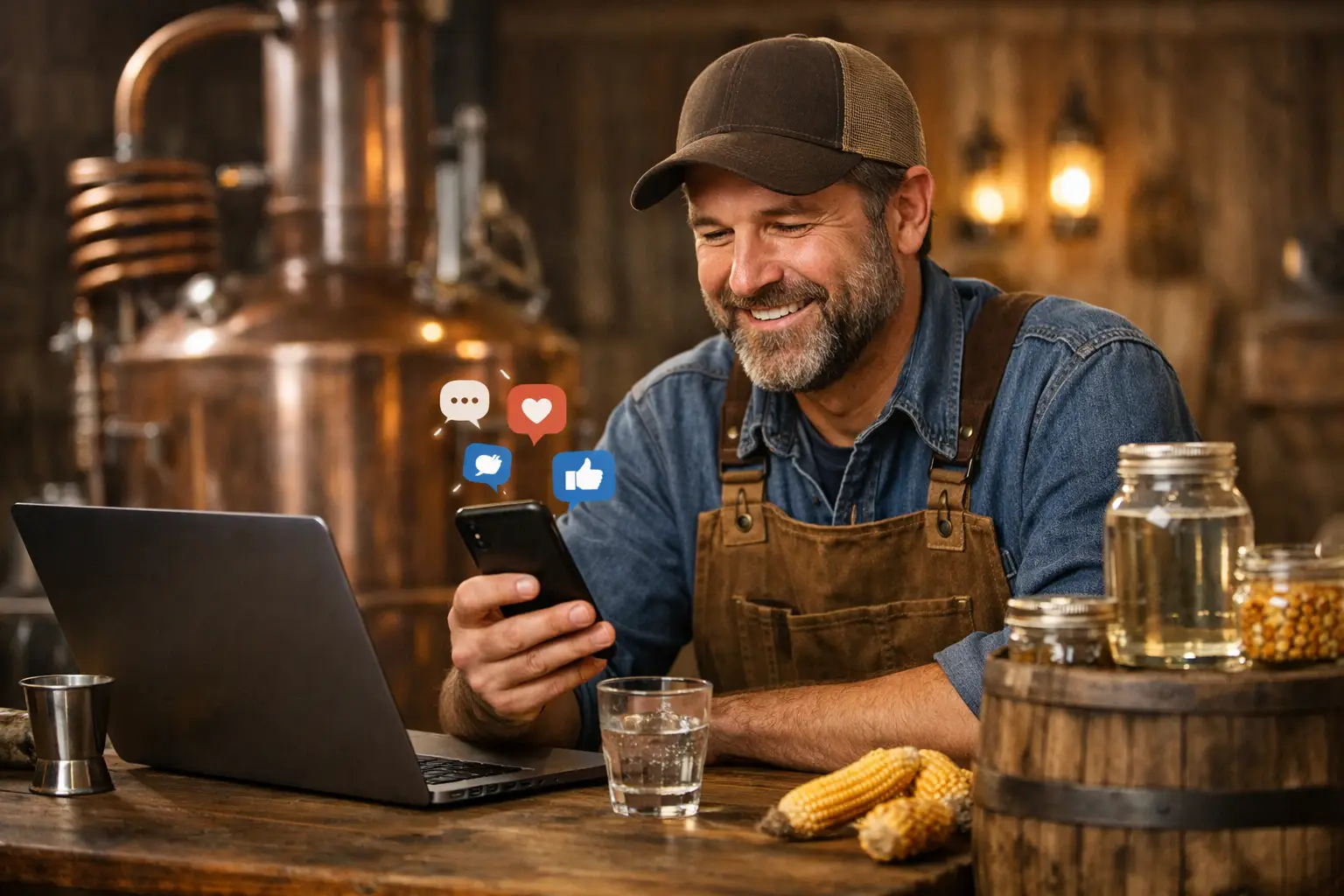
One bad post can make a real moonshiner, distiller, or backwoods brand look fake faster than a watered-down jar at a county fair. That is why social media for moonshiners has to be handled different from social media for some polished lifestyle brand with a rented truck and a fake Southern accent. In this world, folks can smell pretend from a mile away. If your page does not match your roots, your work, and your story, the audience checks out.
The moonshine world has changed a lot since Moonshiners first hit TV screens and pulled back the curtain on a culture most of America only knew through stories, songs, and family whispers. Over the years, viewers got attached to personalities like Tim Smith, Tickle, Mark and Digger, Josh, Howard, Amanda, and plenty more because they felt real. Sure, television shaped the storytelling, but what made people stick around was personality, place, and tradition. Fans were not just watching liquor being made. They were watching identity.
That same truth carries over online. A strong page is not built on random graphics, recycled memes, or posting a bottle picture once every three weeks. It is built on story, consistency, and proof. If you are a moonshiner, legal distillery, heritage spirits brand, or event promoter, your social media has one job: show people who you are before they ever shake your hand.
Why social media for moonshiners is different
Most marketers miss the mark because they treat every industry like it wants the same playbook. The moonshine crowd does not. This audience cares about lineage, grit, place, and trust. They want to know where the recipe came from, who taught you, what kind of ground you stand on, and whether your brand has any real connection to the culture it claims.
That means the usual corporate posting style often falls flat. Clean branding matters, yes, but overproduced content can work against you if it strips out the soul. On the other hand, low-effort posting is not authenticity either. There is a difference between rugged and sloppy. The sweet spot is content that feels true to the backwoods spirit while still looking professional enough to build a business.
It also depends on who you are. A TV personality has a different lane than a small legal distillery. An event organizer needs excitement and turnout. A bottle brand needs shelf appeal and customer trust. A public figure needs engagement, visibility, and a story that can carry from episode buzz to personal brand. Same culture, different goals.
What the Moonshiners era taught the industry
When Moonshiners took off, it did more than entertain. It gave the heritage spirits world a public face. Folks who had spent years as local legends became known nationwide. Fans started following personalities, buying merchandise, attending appearances, and caring about what happened off-screen as much as on-screen.
Certain episodes and story arcs hit because they showed more than the product. They showed family ties, old-school methods, mountain problem-solving, and the kind of pride that comes with making something by hand. That is what social media should carry forward. Not just the shine, but the life around it.
The industry grew because the stories grew. Distilleries, personalities, festivals, and brands all learned the same lesson: attention follows identity. If people connect with your face, your voice, your values, and your way of life, they will keep watching long after a season ends.
What to post if you want people to care
The best content in this space usually falls into a few strong lanes, and all of them start with real life. Show the work. Show the people. Show the setting. Show what makes your operation different from the next jar on the shelf.
Behind-the-scenes footage works because it proves there is a real story under the label. A quick clip from the still room, a photo from the holler, a look at a new run, a setup before an event, or a few words about family history can do more than a polished ad campaign if it is done right. Fans want access. They want to feel close to the culture.
Personality matters just as much. Some moonshiners win people over with humor. Some with hard-earned wisdom. Some with outlaw edge. Some with family tradition. Your page should sound like you. If every caption reads like it came from a generic liquor brand, you are wasting the strongest thing you have.
Then there is proof. Social media needs receipts. Good photography, strong video, packed event shots, customer reactions, media appearances, and community moments all tell the audience this is not talk. It is happening. That kind of content builds trust fast because it shows momentum.
Social media for moonshiners should sell the story first
A lot of brands make the mistake of trying to sell too early and too often. Every post cannot be Buy Now, Tickets On Sale, New Drop, or Book Me Today. If that is all your audience sees, they start scrolling. Folks in this world buy from people they feel connected to.
That is why story comes first. Let people see your history, your people, your craft, and your road. Then when it is time to push an event, a product, a meet-and-greet, or a brand partnership, the audience is already warm. They know your name. They know your face. They know why they should care.
This does not mean you avoid promotion. It means promotion has to be earned. A page full of nothing but sales language feels like a flyer stapled to a fence post. A page built on story feels like a front porch conversation that leads to business naturally.
Where moonshine brands usually go wrong
The first mistake is inconsistency. A page goes active when a season airs, a launch happens, or an event is coming up, then goes quiet again. That makes a brand look stalled. You do not need to post every hour, but you do need to stay alive.
The second mistake is mismatch. The photos say one thing, the captions say another, and the website says something else entirely. Branding has to line up. If your social media feels rowdy and grassroots but your visuals look stiff and generic, people feel the disconnect.
The third mistake is forgetting that social media is visual storytelling. Dark, blurry, badly cropped content might be real, but it is not always effective. There is nothing wrong with bringing in professional photography, video, or branded design to sharpen the message. That does not make it less authentic. It just makes it easier for people to pay attention.
Finally, too many folks underestimate community. This audience wants interaction. They want comments answered, event photos shared, stories remembered, and supporters recognized. Social media is not a billboard. It is a digital front porch.
Building a page that feels true and still grows
If you want growth, start with a clear identity. Know whether your page is centered on personality, product, place, or events. Most strong brands use some mix of all four, but one usually leads. Once that is clear, the content gets easier to organize.
From there, think in seasons. TV moments, festival dates, launches, appearances, and holidays all create natural peaks. Build around them, but do not disappear in between. The in-between content is where loyalty gets built.
This is also where real media work makes a difference. Strong photos, short-form video, event coverage, interviews, and a website that supports the story all help social media hit harder. The page should not stand alone. It should work with the rest of your presence so fans, buyers, booking contacts, and partners all find a brand that looks alive and ready.
That is part of why relationship-based marketing matters so much in this business. If the person handling your content understands the culture, knows the personalities, and respects the roots, the work lands different. It sounds right. It looks right. It carries weight. That is a whole lot better than hiring somebody who treats moonshine like a costume.
The folks who win online in this space are usually not the loudest. They are the most believable. They show up. They tell the truth well. They let people into the story without losing the mystery that made people interested in the first place.
We Shinin’, sure, but the real work is building something that lasts longer than a viral clip. If your social media feels honest, looks sharp, and stays active, it can turn local reputation into national attention without losing the roots that got you there.



Comments are closed.