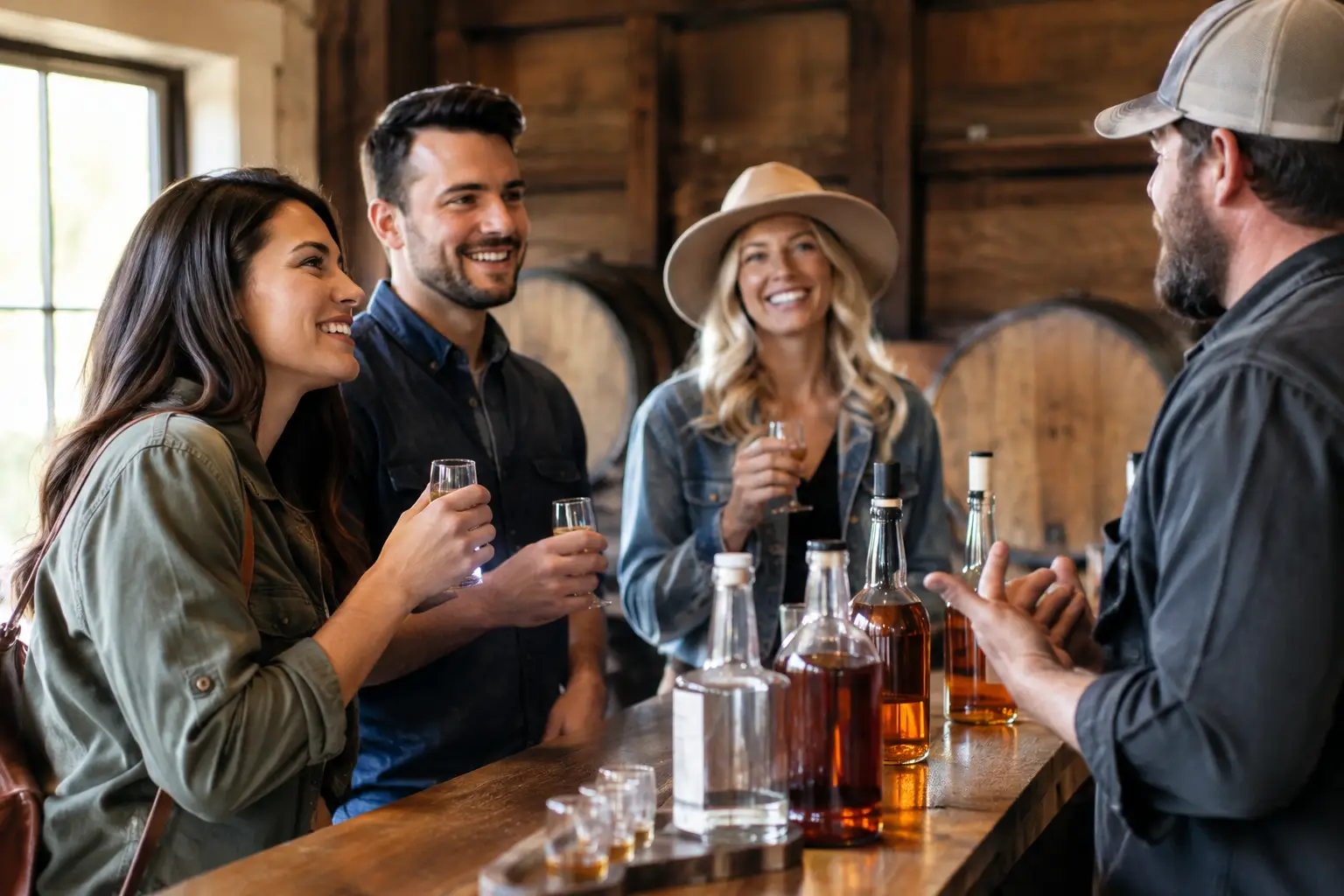
A good tasting room can have copper stills gleaming, jars lined up pretty, and a view worth pulling over for. But if nobody knows why they ought to walk through that door, all that hard work stays sitting on the shelf. To promote a moonshine tasting room, you have to sell more than a sample flight. You have to give folks a story they can taste, a reason to bring their people back, and something worth talking about after the ride home.
Moonshine has always had a story behind it. Long before it became a legal product with a barcode and a retail counter, it was tied to family recipes, mountain roads, hard times, ingenuity, and the kind of independence people still respect. The best tasting-room promotion does not fake that history or dress it up in a costume. It lets visitors see the real people, place, and pride behind the bottle.
Promote a Moonshine Tasting Room With a Real Story
A visitor may come in because they saw a sign, a social post, or an episode of Moonshiners. They come back, buy a bottle, and tell their friends because the experience felt real. That difference matters.
Start with the answer to a simple question: what can people get at your tasting room that they cannot get from a bottle on a liquor-store shelf? Maybe it is a family recipe with a legal modern-day operation. Maybe it is fruit grown nearby, a working stillhouse, a founder with deep Appalachian roots, or a flavor built around the town you call home. Get specific. “Authentic moonshine” is a claim every brand can make. A story about the old orchard behind the property, your granddad’s notes, or the local musician who plays Saturday afternoons belongs to you alone.
That story should show up everywhere customers meet your brand: the tasting-room wall, staff conversations, bottle descriptions, photos, short-form video, event flyers, and your website. It does not need to sound polished like a big-city ad agency wrote it. It needs to sound true.
The Moonshiners television era helped bring backwoods distilling culture into living rooms across America. Fans did not tune in just for the liquor. They tuned in for personalities, recipes, setbacks, friendships, and the stubborn determination to make something with their own hands. Your tasting room needs that same human pull. Put the people behind the operation on camera. Let the audience see the work, not just the finished jar.
Make the Visit Worth Filming and Sharing
People take pictures of what feels memorable. That does not mean every tasting room needs neon signs, fake barnwood, or a pile of props that have nothing to do with the brand. It means you should create a few honest visual moments that visitors naturally want to capture.
A well-built bar, a clear view of the stills where permitted, a hand-painted mural tied to local history, or a porch with a mountain backdrop can do more for promotion than a dozen generic posts. Give customers a spot that says, without words, “I was here.” Then make sure your business name is visible without turning every corner into a billboard.
The product presentation matters, too. A plain sample can become a story when the bartender explains why that peach shine tastes different, where the corn came from, or how the recipe came together. Train your crew to be hosts, not just pourers. They should know the brand history, the flavor notes, the local recommendations, and the answer to the question every visitor asks: “What should I try first?”
There is a trade-off here. A busy tasting room can move people quickly, especially on weekends, but rushing every guest through the flight can make the visit forgettable. Build a service rhythm that keeps the line moving while leaving room for real conversation. One good interaction can turn a first-time tourist into a repeat online customer and an unpaid ambassador.
Use Video to Show the Work Behind the Shine
Static product photos still have their place. You need clean bottle shots, group photos from events, and images that make a visitor want to pull up a chair. But video is where a moonshine brand can show its heartbeat.
Short videos work best when they have a clear point. Show the first run of a seasonal flavor. Let the distiller explain the difference between two corn mash recipes. Capture a packed Saturday with live music and folks raising a tasting glass. Film the quiet moments, too: firing up the operation before opening, labeling bottles by hand, or telling the story behind an old family photo.
Do not chase every trend if it makes your brand look foolish. A heritage spirits business can be funny, rough around the edges, and full of personality without acting like it is trying to impress somebody half its age. The right video should feel like an invitation from somebody who knows the road, knows the craft, and has a little shine waiting for you.
Consistency beats one big flashy video that disappears after a week. A steady library of photos, reels, customer reactions, staff stories, and event coverage gives people proof that there is something happening at your place. It also gives search engines and social platforms fresh material to recognize.
Build Events Around Community, Not Just Discounts
A tasting room is not only a retail space. Done right, it becomes a gathering place. That is where promotion gets powerful.
Host events that fit your identity. A local songwriter night, a heritage food pairing, a car and bike gathering, a seasonal release, a craft market, or a meet-and-greet with a known personality can bring in more than a one-day crowd. It gives your business a reason to create content before, during, and after the event.
The key is fit. If your crowd is made up of travelers and show fans, lean into story-driven appearances and behind-the-scenes experiences. If you serve a local community week after week, regular music nights and partnerships with nearby businesses may create more lasting value. Big events can bring attention, but they also require staffing, permits, security, parking plans, and a clear way to capture visitor information for later follow-up.
Do not let the event end when the last song does. Get photos of the crowd, short interviews with guests, footage of the band, and a few strong shots of the bottles and signage. Share those moments while the energy is still fresh. A well-covered event keeps working for you long after the chairs are folded up.
Make Sure Folks Can Find You Before They Arrive
You can have a packed parking lot on Saturday and still lose business every other day if your digital house is a mess. Your website and business listings should make the basics easy to find: location, hours, tasting availability, event calendar, products, and any age or reservation requirements.
This is where plenty of small brands get tripped up. Their social media might have personality, but the website is outdated, the hours are wrong, or visitors cannot tell whether tours are available. That confusion costs you real traffic. Folks on a road trip will not hunt for answers. They will move on to the next stop.
Local search visibility matters because many visitors are looking with immediate intent. They are not researching moonshine history for a school paper. They are asking where to taste, what is open nearby, and whether your place is worth the drive. Keep your information accurate, gather honest customer reviews, and use current photography that shows the experience clearly.
If the digital side feels like a second full-time job, bring in people who understand both media and the culture. Moonshiner Gary has worked alongside recognizable names in the moonshine world because this business is built on relationships, credible storytelling, and showing the work the right way. A good media partner should not sand off your edges. They should help more people see what makes your operation worth visiting.
Turn Every Visitor Into Part of the Story
The strongest promotion is still a customer who tells a friend, “You have to go there.” Give people a reason to say it.
Ask guests where they traveled from. Celebrate birthdays and reunions. Thank them when they post. Feature customer photos when appropriate. Make your staff feel comfortable inviting visitors to follow upcoming releases and events. These small actions are not gimmicks. They are how a business becomes part of somebody’s weekend, vacation, or family tradition.
There is no single trick that will fill a tasting room forever. A new sign may help. A celebrity visit may create a spike. A viral video may bring a rush of curiosity. But the places that last build attention the old-fashioned way: a strong product, a true story, good people, and enough smart promotion to make sure the right crowd hears about it.
Keep the shine honest, keep the welcome warm, and give folks something better than a sample. Give them a place they will want to claim as part of their own story. We shinin’.


Comments are closed.