

A good bottle can earn a first purchase. A real story earns the second, the fifth, and the friend they bring to the tasting room. That is the heart of how to grow spirits fanbase online: not chasing empty follower counts, but giving people a reason to pull up a chair, talk about what you make, and claim a little piece of the brand as their own.
Folks in the moonshine and heritage spirits world already understand this better than most. The jar, the still, the family recipe, the ridge road, the hard lesson behind a failed run – those things carry weight. The online job is not to polish all that character away. It is to put it in front of the right people consistently, with enough craft that it looks as good as it feels.
Start With a Story People Can Repeat
People rarely become fans because a distillery posts another photo of a bottle against a black background. They become fans because they can tell somebody else what makes that bottle different.
Maybe your founder learned from a grandfather who made apple brandy in the hills. Maybe your legal distillery is bringing an old regional grain back to the table. Maybe you are a personality known from the Moonshiners world and people want to see what happens when the cameras are gone. Whatever the truth is, get clear on it before you worry about trends.
The early years of Moonshiners showed why this works. Viewers came for the stills and the cat-and-mouse tension, but they stayed for the people. Tim Smith’s drive, Tickle’s humor, Mark and Digger’s craft, Amanda’s grit, and the personalities who came through season after season gave fans somebody to root for. The equipment mattered. The human stakes mattered more.
Your brand needs that same center. Write down the answer to three questions: What do we make? Why do we make it this way? Who are the people behind it? If the answers sound like they could belong to any vodka, whiskey, or flavored shine company in America, keep digging.
How to Grow Spirits Fanbase Online With Consistent Proof
A story is only the starting point. Online audiences trust what they can see repeatedly. That means showing the work, not just announcing the finished product.
A short video of a mash coming together can do more than a polished sales pitch when the person on camera explains what the grain changes in the final flavor. A photo from bottling day feels stronger when it names the crew who put in the hours. A post about an upcoming tasting has more pull when it includes a real face, a local partner, and a reason to show up besides a discount.
Consistency does not mean posting seven days a week until everybody is sick of seeing you. It means your audience recognizes the rhythm. They know they will see behind-the-scenes work, local event news, bottle education, and the people around the brand. For a small distillery, three well-made posts a week can beat fifteen rushed ones.
Keep your content pillars narrow enough to manage. Most heritage spirits brands can build around production, people, place, and proof. Production shows the craft. People show the personalities. Place ties the brand to a region and its community. Proof includes awards, retailer placements, customer reactions, media features, and honest testimonials.
That last piece matters. Let a bartender explain why they pour your rye. Let a fan at a festival tell the camera which flavor surprised them. A compliment from a real person lands harder than a graphic that says you are the best.
Let Video Carry the Weight
Spirits are sensory, and the internet cannot hand somebody a sample. Video comes closest. It lets people hear the crackle of the fire, see the copper, watch a label go on a fresh bottle, and hear the accent and confidence of the person making the product.
You do not need every clip to look like a national commercial. In fact, overproducing every post can make a heritage brand feel like it is trying too hard. Use clean sound, decent light, steady framing, and a clear point. Then leave room for the dust on the boots and the laughter in the shop.
The best short videos usually begin in motion. Start with the pour, the flame, the forklift unloading grain, or somebody saying something worth hearing. Do not spend the first five seconds on a logo animation. People scrolling their phone need a reason to stop.
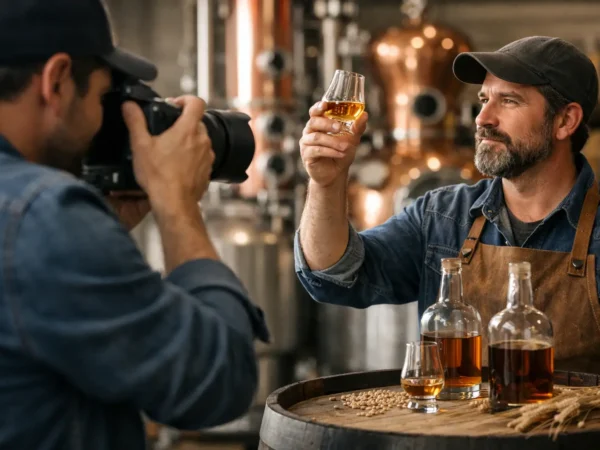
Longer video has a place, too. A founder story, a distillery tour, a festival recap, or a conversation with a local musician can build deeper connection. Cut those larger shoots into smaller clips so one good day of production keeps working for weeks. Professional photography and video are not vanity purchases when they give your team a library of real material to publish, pitch, and reuse.
Build the Local Crowd Before Chasing the Whole Country
National attention is exciting, especially when a product has TV roots or a recognizable personality behind it. But the people most likely to visit, buy, share, and bring friends are often within driving distance.
Put your local identity front and center. Tag the town when it makes sense. Feature the restaurant that carries your bottles. Show the band playing your release party. Celebrate the farm, mechanic, artist, veteran group, charity, or small business that is part of your orbit. A fanbase grows faster when it feels like a community instead of an audience being marketed to.
Events are where online interest becomes real-world loyalty. Before an event, tell people what they will experience. During it, capture short interviews, crowd moments, and product shots. Afterward, post the photos quickly while the memory is still warm, thank the hosts, and give attendees a reason to tag themselves.
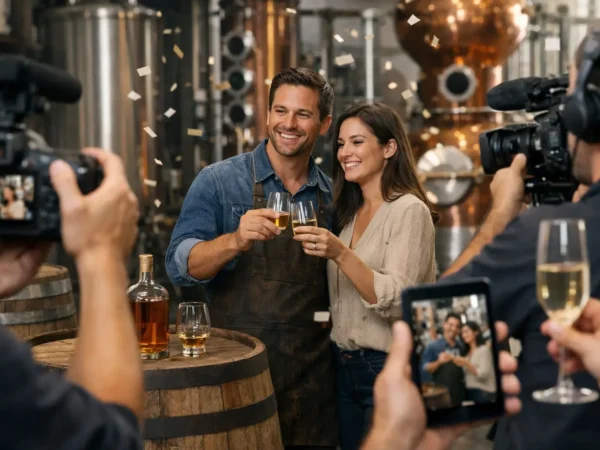
This is where event media coverage pays for itself. One Saturday at a festival can produce a month of content, plus proof for future sponsors, retailers, and event organizers. The trade-off is that somebody has to be responsible for capturing it. If everybody is pouring samples, nobody is gathering the footage that keeps the party alive online.
Make Conversation Part of the Product
Too many spirits accounts treat social media like a billboard. They post, disappear, then wonder why engagement is thin. Fans notice when a real person answers.
Reply to questions with useful information. Thank people who share a photo. Ask a bartender about their favorite serve. When somebody tells a family liquor-store story or a memory about old-time shine, meet them in that conversation. You do not need to agree with every comment, and you should not feed obvious troublemakers. But you do need to show there are people behind the page.
A recognizable founder or personality can be a major advantage, but it needs boundaries. Let that person be human without making the entire brand dependent on one face. Show the team, the process, and the customers too. If a busy travel schedule, filming commitment, or bad week keeps the lead personality off camera, the brand should still have something honest to say.
Give Fans a Next Step
Every post does not need a hard sell. Constantly shouting “buy now” is a fast way to turn a good story into background noise. Still, fans need a clear path when they are ready to act.
Your website should make it easy to understand the brand, find products where legally available, see upcoming events, and contact the team. Your social profiles should match the look and voice of that site. A great video that leads to a confusing, outdated web presence wastes the attention you worked to earn.
Use calls to action that fit the moment. Ask people to share their favorite cocktail recipe, tell you what town they want to see you visit, sign up for release news, or come meet the crew at a local event. For regulated alcohol brands, make sure every promotion follows platform rules, state laws, age-gating requirements, and responsible-consumption standards. The outlaw spirit may be part of the heritage, but sloppy compliance is not good storytelling.
Measure What Actually Means Something
A viral post can be fun, but it is not automatically business. Watch for comments with substance, saved posts, video completion, event attendance, email signups, website visits, retailer inquiries, and repeat customers. Those signals tell you whether people are moving from curiosity to connection.
Some content will not pull huge numbers and will still be worth making. A video explaining your grain bill may be exactly what turns a distributor, serious whiskey drinker, or local journalist into a believer. On the other hand, if every post looks good but nobody comments, shares, visits, or asks where to buy, the message may be too polished and not personal enough.
The strongest spirits fanbases are built the same way the best backwoods stories are built: one honest detail at a time, told by people who were actually there. Keep showing the work, keep your word, and make room at the table for the folks who want to be part of what you are building. We Shinin’.



Comments are closed.