
A good jar can get somebody to stop at your table. A real story, a recognizable look, and a reputation that holds up after the event is what gets them to remember your name. The top branding mistakes moonshine businesses make usually happen when a brand tries to look like the culture instead of living in it.
That difference matters in this business. Moonshine, legal craft spirits, distilling, and backwoods lifestyle brands are built on heritage, personalities, and hard-earned trust. Folks can smell a borrowed story quicker than they can smell a bad mash. You do not need to sound polished like a Wall Street liquor company, but you do need to be clear, consistent, and honest about who you are.
The Top Branding Mistakes Moonshine Businesses Make
Trying too hard to look outlaw
The outlaw edge has always been part of moonshine history. It is also part of what made Moonshiners connect with so many people over the years. Viewers came for the stills, the builds, the runs, and the characters, but they stayed because Tim Smith, Tickle, Mark and Digger, Amanda, Josh, Howard, and others felt like real people with real roots.
The mistake is treating that history like a costume rack. Mason jars, old wood, fake handwritten fonts, and words like “bootlegger” do not create a brand by themselves. If your distillery is legal, say so proudly. If your recipe comes from a family tradition, tell that story with the details only your family would know. If you are building something new, own that too.
Authenticity does not mean you have to be old-fashioned. It means your look, your voice, your product, and your people all tell the same truth. A modern legal distillery can still have mountain grit. A country artist can sell shine without pretending he has been running the hills since birth. The story just has to be yours.
Making the label do all the work
A label matters. On a crowded shelf, it may be the first and only chance to earn a second look. But many small spirits brands spend every available dollar getting a pretty bottle, then leave the rest of their presence half-built.
A customer sees the label, searches the name, and finds a bare social page, an outdated website, or no clear way to locate the product. That is a broken trail. Branding has to carry from the bottle to the website, the merchandise table, event banners, videos, and every social post.
Think of your label as the handshake, not the whole relationship. It should give people a reason to look you up. Your digital presence should give them a reason to care, visit, buy, and tell somebody else about you.
Using a website like a dusty business card
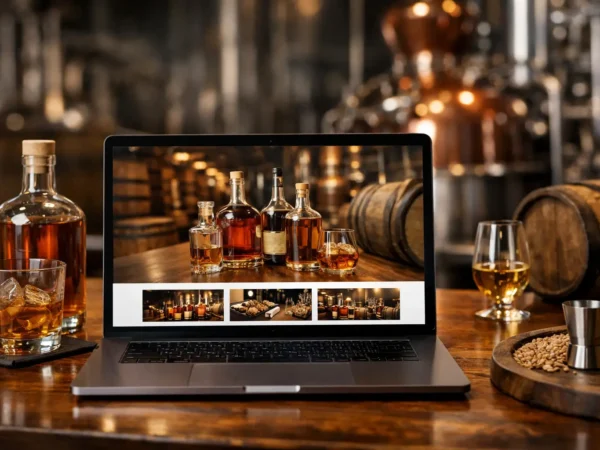
A website that only lists an address and a phone number is not doing the job anymore. Your website is where people go when they want to know whether your operation is real, where they can find your product, what makes your shine different, and whether you are worth following.
For a distillery, that may mean clear product pages, a tasting room schedule, event dates, retailer information, and professional photos that show the actual place and people behind the brand. For a personality or creator, it may mean a clean media page, appearance information, merchandise, current video, and a story that explains what you stand for.
The big mistake is making visitors work for basic answers. Put your location, contact information, and next step where they can find it. Keep it current. Make sure it works on a phone, because plenty of people will be checking it from a festival field, a parking lot, or the passenger seat on the way to town.
Posting only when there is something to sell
Social media is not a flyer rack. If every post says “Buy now,” “New product,” or “Come see us,” people eventually scroll right past it. They need a reason to follow between releases and events.
The strongest moonshine and heritage brands show the work. Let people see the grain coming in, the copper getting cleaned, the crew loading up for an event, the old family photo behind a recipe, or the quick joke that happens when a shoot does not go as planned. That is where personality lives.
There is a trade-off here. You do not need to post every single day just to feed an algorithm, especially if it turns your page into noise. But you do need a steady rhythm. A few honest, well-shot pieces of content each week will beat a month of silence followed by a desperate rush of sales posts.
Confusing rough-around-the-edges with low quality
Backwoods does not mean blurry. Rugged does not mean hard to read. A rough-cut video can feel real, but if nobody can hear what you are saying, it does not build trust. A homemade photo can be charming, but dark, cluttered product photos can make good shine look questionable.
This is where some businesses get stubborn. They worry professional photography, video, or design will make them look too corporate. It will not, if the people creating it understand the culture. Good media should make your real operation look like its best self, not turn it into a stock-photo version of Tennessee or Appalachia.
Use the actual people, actual place, and actual process. Then shoot it with enough care that your audience can feel the quality you put into the product.
Borrowing somebody else’s voice
Every brand cannot talk like Mark and Digger. Every personality cannot carry the same kind of humor as Tickle. The show has always worked because the characters have their own voices. That is true for business branding, too.
A copy-and-paste Southern saying may get a quick laugh, but it will not build a long-term identity if it does not match the people behind the brand. Some operations are family-centered. Some are technical and process-driven. Some are loud, funny, and made for a crowd. Some are quiet and rooted in a particular place.
Find the language your customers already hear from you in person. That is the voice worth carrying into captions, videos, emails, signage, and interviews. You can say “We Shinin’” if that is truly your crew. If it is not, do not force it.
Ignoring the people who make the brand believable
In this community, relationships carry weight. A handshake at a festival, a good word from another distiller, a photo with a respected personality, or a customer who tells their friends about a tasting can do more than a big pile of generic advertising.
The mistake is thinking branding is only colors, logos, and posts. It is also how you treat collaborators, fans, vendors, retailers, and the folks who show up to support you. When a brand is easy to work with and keeps its word, people remember. When it ghosts event organizers, fails to follow through, or talks down to customers, they remember that too.
Build your public reputation on the same standards you use behind the scenes. Get photos with partners. Share customer stories with permission. Thank the venues and events that give you a platform. Be present in the community before you need something from it.
Chasing attention without a clear home base
A viral video can bring a pile of new eyeballs, but attention has to land somewhere. Too many businesses spend money boosting posts or chasing trends without giving new followers a clear path to learn more.
Before you promote a video, release a product, or head to a major event, make sure your home base is ready. Your website, pinned social posts, product details, event schedule, and contact information should all point in the same direction. If someone sees your name on Friday night, they should still be able to find the important details on Monday morning.
Moonshiner Gary has seen this across the community: the brands that grow are not always the loudest ones. They are the ones that turn real stories into consistent visibility, then back that visibility up with good work and good relationships.
Your brand does not need to be fancy. It needs to be easy to recognize, easy to trust, and true enough that people want to bring their friends along for the ride. Keep telling the story only you can tell, and make sure folks can find it wherever they meet you.


Comments are closed.