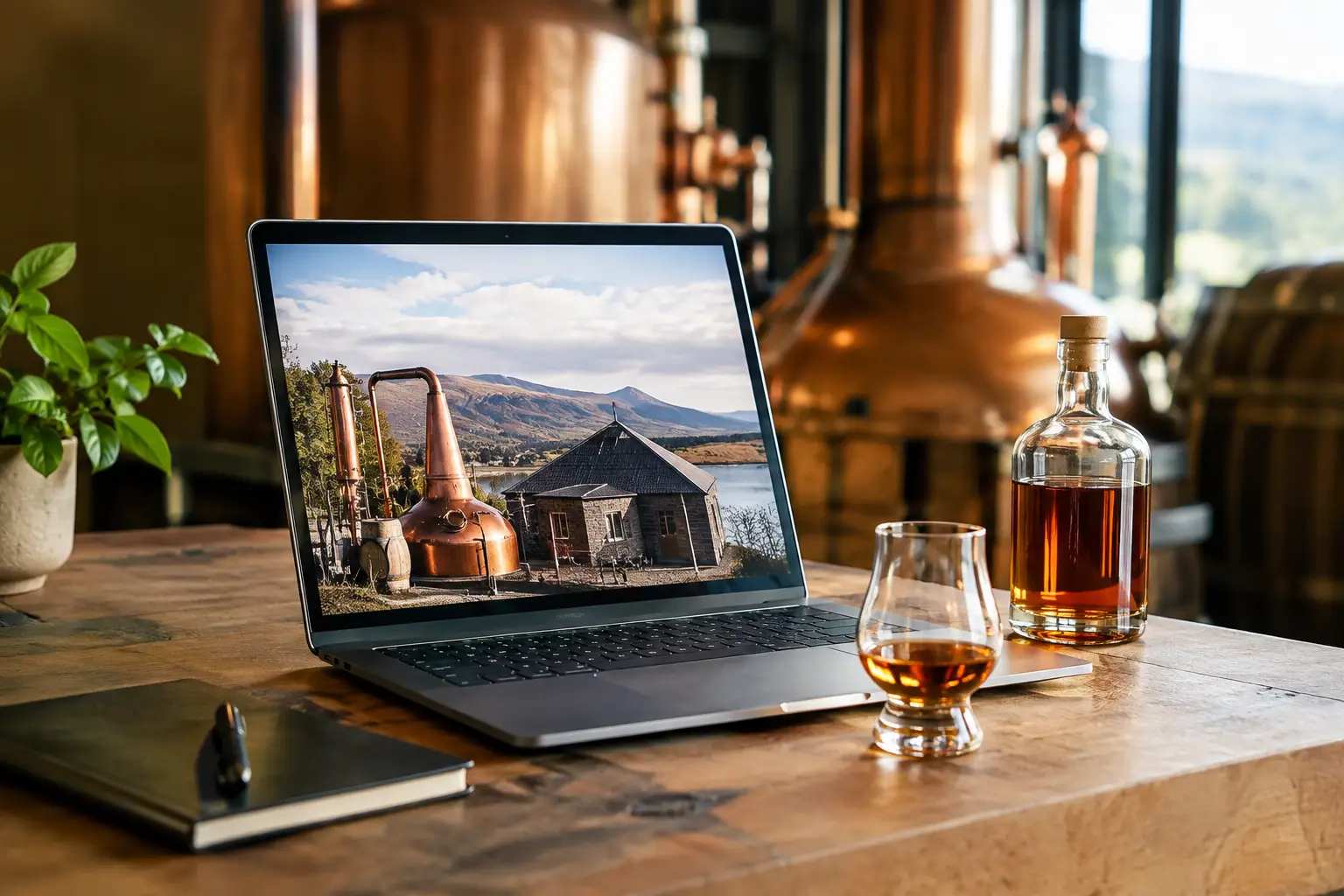
A distillery website has to do more than look good sitting on a phone screen. It has to carry the weight of your story, your stillhouse, your people, and the bottle somebody is deciding whether to try. That is why website builders for distilleries should be judged by more than a slick template or a low monthly price. A good site helps a real spirits business get found, earn trust, guide visitors toward a tasting room or retailer, and give the brand a home nobody else controls.
For a small distillery, every impression counts. Folks may first hear your name at a festival, see a bottle behind a bar, catch a video on social media, or follow a personality they trust from the Moonshiners world. When they search for you afterward, the website needs to prove the story is real.
What a Distillery Website Must Do
A lot of website platforms can put a logo at the top of a page and add a few product photos. That does not mean they are the right fit for a distillery. Heritage spirits are not sold like generic consumer goods. The customer wants to know where it comes from, who made it, what is in the bottle, and whether there is a place they can visit.
Your site needs to make that information easy to find without sanding off the character that makes the brand worth remembering. A Tennessee whiskey operation may lean into family recipes and local grain. A legal moonshine brand may lead with outlaw history, bold flavors, and a crowd that knows the difference between a costume and the real culture. A craft rum producer near the coast may need to make its agricultural roots and visitor experience clear in seconds.
The job is the same: turn curiosity into a next step. That could be finding a nearby retailer, booking a tour, joining an email list, following the brand, requesting distribution information, or contacting the team about an event.
Website Builders for Distilleries: Start With the Work
Before choosing a platform, decide what the website has to accomplish over the next year. A startup with one flagship bottle has different needs than an established distillery with a tasting room, seasonal releases, merchandise, wholesale inquiries, and a full event calendar.
If your main business comes through visitors, your site should make hours, directions, tour details, parking information, and event updates impossible to miss. If distribution is the priority, the site should give buyers and media a clean way to understand the portfolio, access brand assets, and reach the right person. If the brand is personality-driven, the site needs room for video, press, appearances, and the story behind the faces people recognize.
That is where cheap, one-size-fits-all setups can get sideways. They may work for a basic landing page, but they often get cramped once you need product pages, image galleries, local search information, age-gate language, forms, video, and regular updates. The platform is only part of the decision. The bigger question is whether the site can grow without becoming a mess.
The story cannot be an afterthought
Distilling has always been full of stories. Some are family stories. Some come from the hills, the hollers, old copper, and recipes passed hand to hand. Some were built under bright lights after Moonshiners brought backwoods craft and its characters into living rooms across America.
But a story needs structure online. Put the strongest version of your origin story on the About page, then reinforce it everywhere else through photography, product descriptions, founder quotes, and video. Do not bury the good stuff in a wall of text. Show the hands, the barrels, the grain, the old equipment, the crew, and the land when those details are truly part of the operation.
Authenticity is not just using a rough-looking font or throwing a mason jar on every page. It is specificity. Tell people what you make, where you make it, why it tastes the way it does, and who stands behind it.
Product pages should answer real questions
A bottle photo and a fancy flavor line are not enough. Each spirit deserves its own clear page with the basics: proof, style, key tasting notes, available sizes, where it can be found, and whether it is a limited or regular release. If there is a cocktail or serving suggestion that fits the brand, add it. If a release is only available at the distillery, say so plain.
Be careful with claims. A product page should be proud without making promises that create legal headaches or sound like carnival barkers. Straight talk usually sells better anyway. Let the process, ingredients, awards, and customer experience do the heavy lifting.
What Separates a Hard-Working Site From a Pretty One
The strongest distillery sites are built for visitors and search engines at the same time. That means fast-loading pages, clear navigation, readable text, properly sized images, and useful information organized around how people actually search.
A visitor searching your distillery name wants confirmation they found the real deal. Someone searching for a distillery near them wants location, hours, and a reason to visit. A buyer searching a specific whiskey, moonshine, or rum wants availability and product information. Those are different paths, and the website should support all of them.
Local visibility matters especially for tasting rooms. Keep your address, phone number, hours, service details, and event information consistent. Build pages around genuine local relevance, not a pile of copied town names. If you are part of a trail, a regional festival circuit, or a community tradition, that belongs in the story because it gives people a real reason to show up.
Photography makes a difference here. Stock photos can fill space, but they cannot show your actual stillhouse, your actual crew, or the place a customer will visit. The same goes for video. A short, well-shot piece of a run, a barrel pull, a release party, or a founder talking shop can do more than paragraphs of polished marketing language.
The Trade-Off Between DIY and Professional Help
There is nothing wrong with building your first site yourself if the budget is tight and the goal is simple. Some owners are good at keeping pages updated, taking decent photos, and handling the technical side. A DIY builder can get a new brand on the board quickly.
The trade-off is time and consistency. Distillers already have enough on their plate: production, compliance, payroll, inventory, distributors, events, and customers asking when the next batch drops. Website work has a way of getting pushed off until the hours are wrong, a product is discontinued, or a big opportunity arrives and the site does not represent the business well.
Professional help becomes worthwhile when the brand needs a real content plan, stronger photography, search visibility, custom page structure, regular updates, or a website that ties together social media, press, events, and sales goals. The right partner should understand that a distillery is not just another local business. They should respect the culture while knowing how to make the business easier to find and easier to trust.
Moonshiner Gary works in that space because the work is connected to the people and the story, not just the pixels. A distillery does not need somebody to fake a backwoods voice. It needs media that feels like it came from people who know the difference.
Build for the Next Pour, Not Just the Launch
A website is not a brochure you finish once and forget. Keep it alive with current releases, event dates, press mentions, photos from the road, and useful tasting-room information. That steady work tells customers the brand is active, and it gives search engines fresh reasons to pay attention.
Do not chase every new feature just because another brand has it. Build the site around what your customers need to know and what your team can maintain. A clear, honest website with strong images and current details will beat a complicated one full of dead pages every time.
Your distillery already has a story worth pouring. Give it a website built to carry that story farther than the tasting room door.


Comments are closed.