A bottle can get somebody through the door once. Your name is what brings them back, makes them tell a friend, and gives a retailer confidence to put your product on the shelf. This guide to distillery reputation building is for the folks making real spirits with a real story – and who are tired of watching louder brands get all the attention.
In the moonshine and heritage spirits business, reputation is not some polished corporate word. It is whether people believe you know your craft. It is whether your tasting-room guest feels respected, whether your online presence looks alive, and whether the story on the label matches the person standing behind the bar.
The old backwoods rule still applies: word travels. It just travels through Google searches, social feeds, event photos, and group texts now.
Reputation Starts Before the First Sip
A customer may not know your mash bill, your cut points, or how many hours went into that run. But they can spot a brand that feels thrown together from a mile away. A broken website, stale social page, dark product photos, or unanswered reviews can make a good distillery look like it does not have its act together.
That is rough, because good whiskey, rum, vodka, or shine takes patience. Marketing should not fake that patience. It should show it.
Start by getting clear on what you stand for. Maybe your distillery is rooted in Appalachian family recipes. Maybe you are bringing legal shine to a downtown tasting room. Maybe your name is built on grain from neighboring farms, veteran ownership, a wild old family story, or a straight-up obsession with making clean liquor. Pick the truth you can prove and repeat it everywhere.
Your reputation gets stronger when the same core story shows up on your website, your bottle, your booth banner, your interviews, and your social media. That does not mean every post needs to sound identical. It means people should recognize the same outfit no matter where they run into you.
Let the Work Show
The Moonshiners TV era put a national spotlight on the people, places, and personalities around backwoods liquor. Viewers did not tune in just for a jar with a flashy label. They watched Tim Smith, Tickle, Mark and Digger, Amanda, Josh, Howard, and others because the work had faces, history, arguments, jokes, and stakes. The audience felt like they knew who was behind the shine.
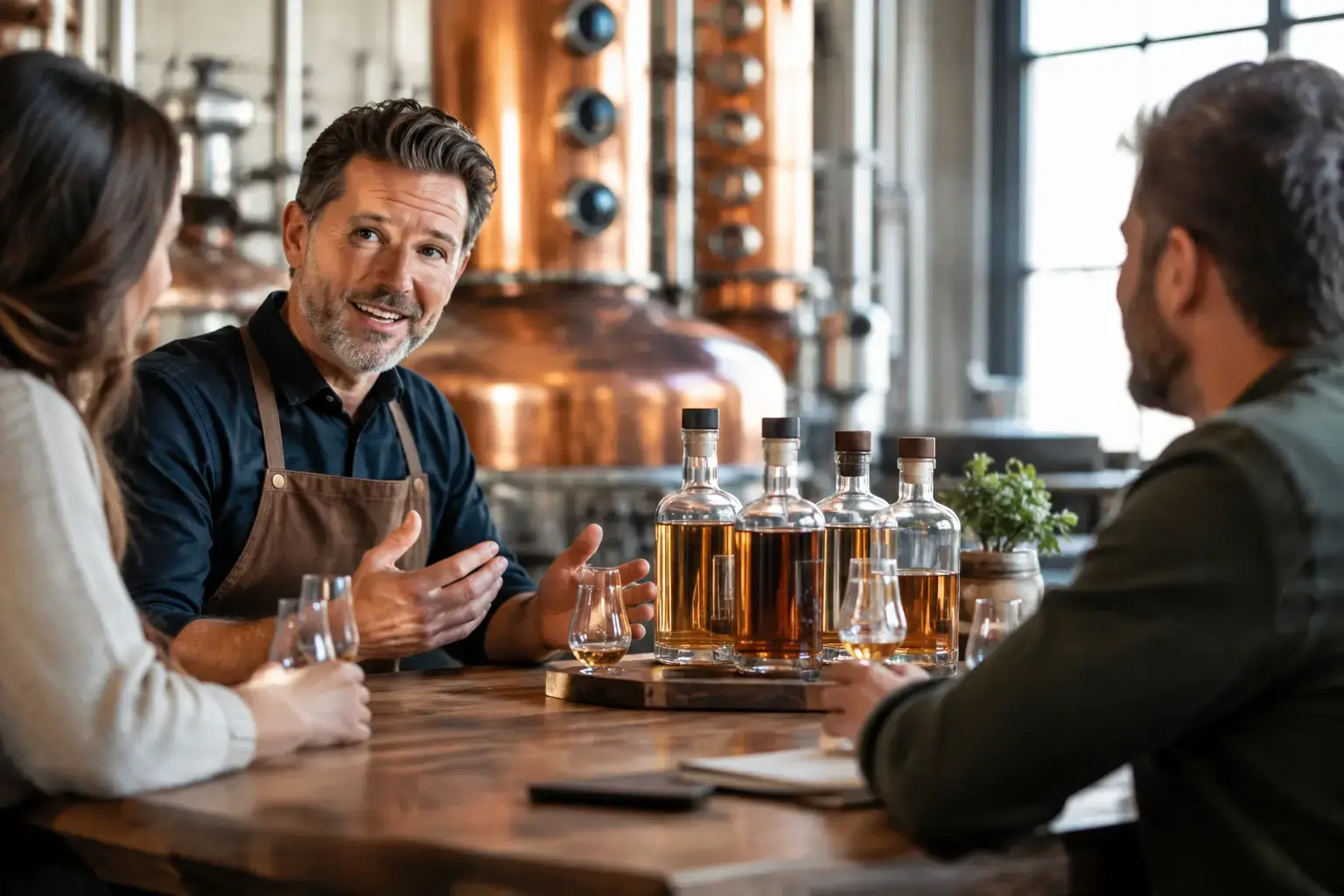
Legal distilleries can learn a lot from that. Do not hide the people who make the place run. Show the distiller checking a run. Show the grain delivery, the barrel room, the rough hands, the family dog wandering through the shop, and the crew setting up before an event. Show the clean, professional side too: quality control, visitor safety, a sharp tasting room, and a team that knows the product.
There is a balance here. Nobody needs a fake reality show, and not every day needs to become content. But if your only photos are cutout bottles on a white background, you are leaving the best part of your brand in the shadows.
Good photography and video make craft visible. They also give reporters, retailers, event organizers, and customers something worth sharing. One strong day of content capture can feed your website, press materials, social posts, email campaigns, and event promotion for months. That is not fluff. It is usable proof that your operation is active and worth paying attention to.
Build a Digital Front Porch
For plenty of customers, your website is the front porch before they ever drive up the road. It needs to answer the practical questions fast: where are you, when are you open, what do you make, can people visit, and where can they find your spirits?
Then it needs to give them a reason to care.
A solid distillery website does not have to be fancy. It does need to be current, easy to use on a phone, and built around your actual business goals. If tours are the money-maker, make booking easy to find. If retail accounts are your focus, give buyers a clear path to product information and contact details. If events keep your tasting room moving, keep the calendar accurate.
Search visibility matters too. When someone searches for a distillery near them, a local spirits event, or the kind of product you make, they should be able to find you without digging through three pages of results. Search engine optimization is not magic dust. It comes from useful pages, clear location information, regular updates, quality photos, and a website that gives people what they came looking for.
Social media works the same way. You do not have to dance for the algorithm every day. You do have to show signs of life. Post with a purpose: a new release, a behind-the-scenes moment, a staff story, an upcoming festival, a retailer feature, or a customer experience worth celebrating. Consistency beats random bursts of posting followed by six months of silence.
Earn Trust Where It Counts
Reputation building is not only about what you say. It is about what other people can say about you when you are not in the room.
Ask happy tasting-room guests to leave honest reviews. Respond to them like a human being, not a copy-and-paste machine. Thank people for the good words. If somebody had a bad experience, take it seriously and handle it with respect. You will not win every argument online, and you should not try. But future customers notice whether you are defensive, absent, or willing to make things right.
The same goes for partnerships. A distillery that supports local music, a charity ride, a heritage festival, a restaurant, or a nearby small business becomes part of the fabric of its community. Choose partnerships that fit. Throwing your logo at every event in a 100-mile radius can waste money and muddy your identity.
A smaller event with the right crowd may do more for your reputation than a giant festival where your booth gets lost between funnel cakes and insurance tents. Ask who attends, what media coverage is planned, whether you can collect leads, and what content you will walk away with. If an event cannot connect you with your people or give you material to use later, the trade-off may not be worth it.
A Guide to Distillery Reputation Building Needs Receipts
Big claims do not build much trust in the spirits world. Receipts do.
If you won an award, show it without acting like it made you king of the mountain. If a respected retailer brought in your product, tell that story. If customers come back for a seasonal release, share their excitement. If your distiller has decades of experience, put that experience in plain view. Testimonials, media coverage, event footage, and real customer photos all help turn a claim into something people can believe.
This is where a relationship-driven approach beats generic marketing talk. Moonshiner Gary has spent years helping recognizable Moonshiners personalities tell their stories, and the lesson is simple: audiences can smell a borrowed personality faster than bad mash. The best promotional work pulls forward what is already true about the person, product, and place.
Do not buy followers just to make the numbers look bigger. Do not manufacture controversy for attention. Do not promise a handmade heritage experience while delivering a cold, careless customer experience. A fast spike in attention can be useful, but it is not the same thing as respect.
Give Your Team a Reputation to Carry
Every person pouring samples, answering messages, loading the trailer, or taking a phone call represents the distillery. Make sure they know the basics of the story and can explain the products without sounding rehearsed. A friendly, informed pour at a festival may create more lasting loyalty than a month of ads.
That does not mean everybody needs to become a salesperson. It means the crew needs enough shared language to make customers feel welcome and confident. Let people use their own voice. Just make sure the facts are right, the tone fits, and nobody is left guessing when a customer asks where the spirit is made or what makes it different.
Reputation also grows inside the business. Treat staff, vendors, musicians, photographers, and partners right. This industry is tighter than people think. The same folks you meet at a tasting, trade event, or shoot may cross your path for years. Good work gets remembered. So does needless drama.
Keep Showing Up
The strongest distillery reputations are built one honest appearance at a time. A clean website update. A well-shot product release. A reply to a customer. A festival where the crew showed up prepared. A story that sounds the same whether it comes from the founder, the bartender, or a customer who took a bottle home.
You do not need to be the biggest name on the shelf to be the name people trust. Put your real story where people can see it, back it up with professional work, and keep treating every customer like they may be the one who tells the next ten folks about your distillery. That is how the word gets around. We Shinin’.


Comments are closed.