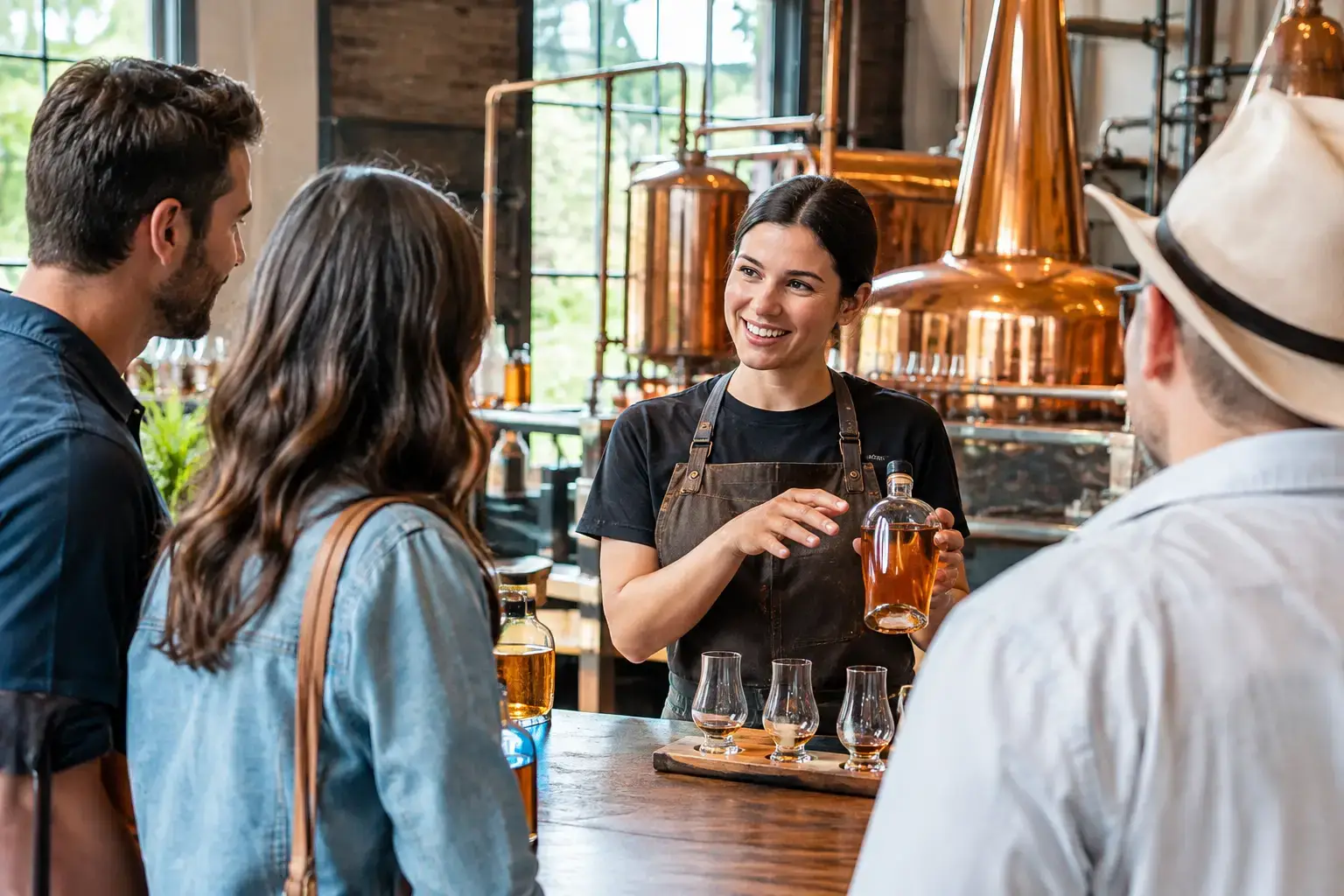
A busload of visitors does not pull into a distillery because the building has shiny tanks. They come because somebody gave them a reason to believe there is a story waiting behind the gate. So, how do distilleries attract tourists? They turn a bottle into a place people can feel, photograph, talk about, and remember long after the ride home.
For heritage spirits, that means more than hanging a sign that says “tours available.” The best visitor experiences have some dirt under their boots. They respect the local history, show the work, put a real face on the brand, and make guests feel like they were welcomed into something bigger than a tasting room.
How Do Distilleries Attract Tourists? Start With a Story
Tourism is fueled by stories. Folks may try a whiskey because it is well made, but they will drive out of their way because they want to stand where that whiskey is made and hear why it matters.
The moonshine world has understood this for a long time. When Moonshiners first hit television in 2011, viewers were not just watching stills run and jars get filled. They were watching family traditions, Appalachian know-how, hard-headed personalities, close calls, old recipes, and the pride that comes from making something with your own hands. The show gave a national audience a window into a culture many had only heard about in whispers.
Legal distilleries can learn from that pull without putting on a fake outlaw costume. A real family recipe, a local grain supplier, a historic mill site, a former tobacco farm, a veteran founder, or a community rebuilding after hard times can all be part of the story. The point is not to manufacture folklore. It is to find the truth that already lives in the business and tell it with some backbone.
A tourist should be able to answer a simple question after the visit: “What makes this place different?” If the answer is only “they make bourbon,” the experience needs more work. If the answer is “their granddad ran a still on this ridge, and now they are keeping that craft alive the right way,” that is something people carry with them.
Make the Tour Feel Like a Visit, Not a Lecture
A distillery tour can lose people fast when it becomes a ten-minute safety speech followed by a list of equipment names. Visitors do want to learn how spirits are made, but most do not need a chemistry class. They need a host who can read the room, tell a good tale, and make production feel alive.
Show the grain, let guests smell the mash, point out the char inside a barrel, and explain what the weather does to aging in your part of the country. Give them a detail they cannot get from a shelf tag. Maybe it is why your water matters. Maybe it is the stubborn little still that started the whole operation. Maybe it is a funny story about the first batch that went sideways.
The people leading the tour matter as much as the room itself. A knowledgeable guide with personality can make a modest facility memorable. On the other hand, a beautiful visitor center cannot cover up a bored, rushed experience. Train staff to know the facts, but give them permission to speak like humans.
Keep the tour moving. Let folks see the working side of the place, then bring them into a tasting that has a beginning and an end. A strong tasting is not a race through six pours. It gives visitors a little context, lets them ask questions, and helps them find the bottle that fits their own taste.
Give Visitors a Reason to Stay Longer
Tourists are valuable when they do more than walk in, sample, and leave. The goal is to make the distillery a stop people build time around. That usually takes more than a tasting bar.
Food is often the easiest answer, whether that means a full kitchen, a weekend food truck, or a partnership with a nearby barbecue joint. Live music, a porch, yard games, a fire pit, and shaded outdoor seating can turn a 45-minute visit into an afternoon. If the brand has deep local roots, bring in makers, musicians, pitmasters, farmers, or storytellers from the same community.
Events work especially well when they have a real connection to the brand. A seasonal bottle release, a harvest gathering, a classic truck meet, a bluegrass night, or a charity shine run has more staying power than another generic “customer appreciation day.” People can smell a copied-and-pasted event calendar from a mile away.
There is a trade-off here. A small distillery does not need to become a full-time entertainment venue and burn out its crew. One well-produced event each quarter can do more for word of mouth than a pile of poorly attended weekly promotions. Start with what the team can deliver consistently, then build from there.
Build a Place Worth Photographing
People are going to take pictures. That is not vanity. It is free proof that a real experience happened, and it can put your distillery in front of the next group planning a weekend trip.
The best photo opportunities do not have to be flashy. A row of barrels under warm light, an old truck by the barn, a hand-painted sign, a mountain view, a weathered rickhouse, or a clean look at the copper still can do the job. What matters is that it looks like your place, not a fake backdrop ordered from a catalog.
Make the basics easy, too. Clear parking, visible entrance signs, clean restrooms, friendly retail displays, and a tasting room that feels comfortable all shape the visitor’s memory. Nobody posts about confusing parking, but they sure remember it when it ruins the first ten minutes.
Good photography and video should show the real atmosphere before people arrive. Visitors want to know whether the place feels polished, rough-cut, family-friendly, lively, quiet, rural, or downtown. Let them see the faces behind the bottle and the kind of crowd that comes through on a Saturday.
Be Easy to Find Before They Hit the Road
A distillery can have a fine product and a strong story, then lose visitors because its online information is thin, old, or flat-out wrong. Tourist decisions happen fast. Somebody sees a post, hears about a place from a friend, or searches while sitting in a hotel lobby. If they cannot quickly find hours, location, tour details, event dates, and what makes the stop worthwhile, they may move on.
Your website and social channels should answer the practical questions without making people hunt. Can visitors walk in? Do they need reservations? Is there food nearby? Is the tour family-friendly? What is happening this weekend? Are there bottles or merchandise worth taking home?
Then give those channels some life. Share the bottling day, a new barrel arrival, the local band setting up, a team member telling a story, or a customer holding the bottle they have been hunting for. Consistency beats chasing every trend. The goal is to make people feel the place is active and worth the drive.
This is where industry-specific media work earns its keep. Moonshiner Gary has seen firsthand that a strong website, honest photography, short-form video, event coverage, and steady search visibility can carry a distillery’s real-world reputation far beyond its county line. The camera does not need to invent the magic. It needs to capture what is already true.
Partner With the Town, Not Just the Tourist
The strongest distillery destinations are tied into their local communities. They work with hotels, campgrounds, restaurants, visitor centers, wedding venues, and nearby attractions. They make it easy for guests to see the distillery as part of a full day or weekend, not an isolated errand.
That can mean cross-promoting a local festival, creating a route with other small businesses, or giving nearby hospitality workers enough knowledge to recommend the right tour. It can also mean showing up for the community when there is no camera around. Locals become your best ambassadors when they know you are invested in the same place they call home.
Do not overlook repeat visitors, either. The first visit may be about curiosity. The next one is about belonging. New releases, member gatherings, special tastings, and familiar faces behind the bar give people a reason to come back and bring somebody with them.
A distillery does not have to be the biggest stop on the map to become the one people talk about. Give folks a true story, treat them like guests instead of transactions, and send them home with a memory that feels like it could only have happened right there. That is how a good stop becomes a destination. We Shinin’.


Comments are closed.