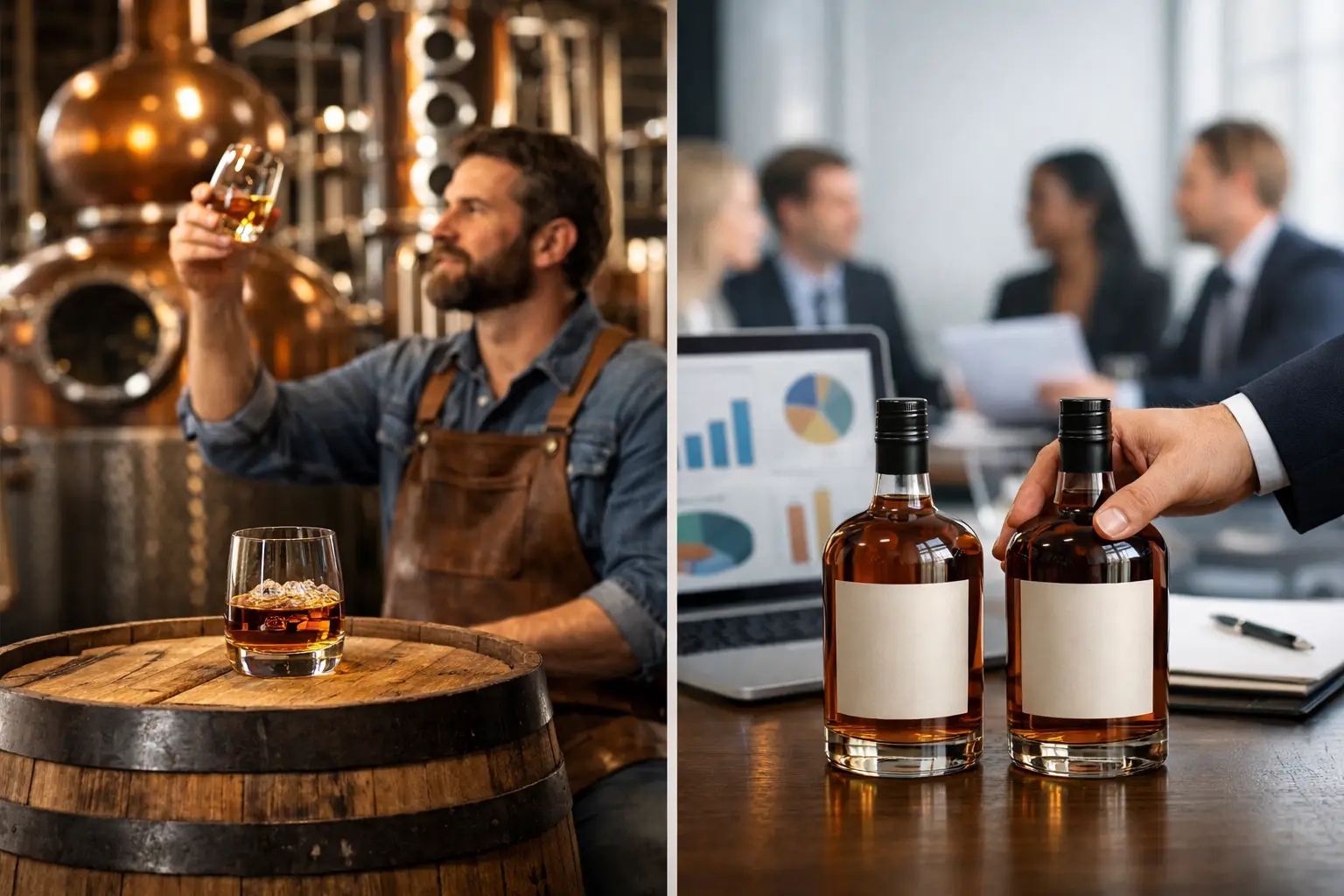
A mason jar on a tailgate, a copper still warming up before daylight, an old family recipe told one piece at a time – that is where distillery storytelling vs generic marketing gets settled. Most folks can spot the difference before they ever click a link. One sounds like it was written by somebody who has stood in the rickhouse, worked an event table, and listened to the old-timers. The other could be selling insurance by lunchtime.
For a distillery, a spirits brand, or a moonshiner building a name, marketing is not just about getting more eyes on a bottle. It is about giving people a reason to care who made it, where it came from, and why it belongs in their cooler, cabinet, or bar. The bottle may get a first purchase. A true story earns the second one.
Why Generic Marketing Falls Flat Around a Still
Generic marketing is built to be safe. It leans on clean slogans, stock photos, broad promises, and social posts that say plenty without saying much at all. “Premium craftsmanship.” “Bold flavor.” “Made for good times.” None of those lines are necessarily wrong. They are just weak when every other spirits brand is saying the same thing.
The moonshine and heritage spirits crowd does not buy into polished talk alone. They want to know whether there is dirt under the fingernails behind the brand. They want to see the people, the hills, the work, the failed batches, the late-night bottling runs, and the pride that came before the label design. That does not mean every brand has to act outlaw or pretend it has a hundred-year family recipe. Forced backwoods language is just another form of generic marketing.
The real job is to find what is true and tell it straight. Maybe your story is a legal distillery bringing an old regional grain back into the mash bill. Maybe it is a veteran-owned operation learning the business from the ground up. Maybe the heart of the brand is a family member whose name is on every bottle. If it is real, it has weight.
Distillery Storytelling vs Generic Marketing: The Difference
Generic marketing starts with a product and asks, “How do we sell this?” Distillery storytelling starts with a real point of view and asks, “Why does this product exist, and who ought to hear about it?” That difference changes the website, the photos, the videos, the event booth, and the way a founder talks to a camera.
A generic campaign may post a bottle against a black background with a sale announcement. Storytelling may show that same bottle in the hands of the distiller who chose the grain, then explain what makes the batch taste the way it does. One is an ad. The other gives somebody a connection they can repeat to a friend.
That matters because spirits are social by nature. People pass bottles around. They tell stories over a pour. When your brand gives them a story worth repeating, they become part of the promotion without feeling like they are doing your marketing for you.
The difference is not that storytelling ignores sales. A good story should still move people toward a tasting room visit, a retail purchase, an event ticket, or a follow on social media. The difference is that the sale has a backbone. You are not begging for attention. You are giving the right people something they recognize.
The Moonshiners Effect: People Follow People
When Moonshiners first hit television, the draw was never just equipment, recipes, or a chase through the woods. Viewers came back because they connected with the people. They watched personalities build stills, argue over plans, take risks, laugh, lose money, and keep going anyway. Whether it was a new build, a hard-to-find ingredient, or a batch that needed saving, the work gave the story its stakes.
That is why familiar names from the show built loyal followings beyond an episode. Tim Smith, Tickle, Mark and Digger, Amanda, Josh, Howard, and others did not become recognizable because they had a perfect logo. Folks remembered their voices, their mannerisms, their history, and what they stood for.
A legal distillery does not need a TV production crew to use that lesson. Your owner, head distiller, cellar hand, tasting-room manager, or event crew may be the strongest part of your brand. Put real people in the frame. Let them speak in their own voice. A little rough edge is often more believable than a script polished until it has no soul left.
There is a balance, of course. Being authentic is not the same as being unprepared. A shaky phone video with bad sound may feel raw, but it will not always represent a premium product well. Good storytelling still needs solid photography, clear audio, thoughtful editing, and a plan for where the content will live. The goal is not to make it sloppy. The goal is to make it honest.
Build the Story Into the Work You Already Do
The best distillery stories are not invented in a conference room. They are collected from the work already happening every week. A production day can become short-form video. A grain delivery can become a post about sourcing. A new barrel release can become a photo story. A festival weekend can provide enough footage and customer moments to feed your content for weeks.
Your website should carry that same truth. Too many distillery sites open with a vague mission statement, a few product names, and no reason to stick around. Give visitors a clear look at the people behind the brand, the place you call home, and the spirit you are making. Make it easy to find products, hours, events, and contact information, but do not bury the heart of the business underneath the practical details.
Search visibility matters here too. SEO is not a trick where you stuff “best moonshine” into every page and hope for the best. Strong search content answers the questions people actually ask: what makes your whiskey different, where can they find it, what happens at your tasting room, and what is coming up at your next event. The more specific and useful the content, the better chance the right audience has of finding it.
Photography is another place where brands either look real or disappear into the crowd. Product shots are necessary, but they cannot carry the whole load. Get the barrel room, the hands at work, the local scenery, the crowd at the tasting room, and the faces that make the place run. Those photos tell a bigger story across social media, press materials, print pieces, and your website.
Do Not Borrow a Story That Is Not Yours
Heritage sells, which is exactly why some brands get tempted to manufacture it. They put fake moonshine jargon on labels, lean too hard on clichés, or present themselves as something they are not. That might get a quick laugh or a curious click, but it will not hold up when customers meet the people behind the counter.
There is nothing wrong with a modern distillery. There is nothing wrong with clean design, e-commerce, polished video, or a brand that reaches beyond its home county. The trouble starts when the marketing acts like technology and tradition cannot sit at the same table. They can. A well-run business can honor its roots while using every tool available to grow.
That is where relationship-based marketing earns its keep. People in this industry talk. Event organizers talk. Retailers talk. Fans of the show talk. If your public image does not match the way you treat people behind the scenes, word gets around. A brand story has to be lived, not just posted.
Make Every Appearance Count
Festivals, bottle signings, tastings, and industry gatherings are not side work. They are where a brand gets to look customers in the eye. Bring the story with you. Let people meet the makers when possible. Capture the event with quality photo and video. Follow up online while the crowd still remembers the day.
For personalities and founders, this is especially important. A public appearance can create more usable brand material than a month of scheduled graphics, if somebody knows what to capture. Short interviews, crowd reactions, a few behind-the-scenes moments, and a strong set of photos give the audience proof that the brand is active in the real world.
Moonshiner Gary has seen that up close while helping personalities and brands turn real connections into websites, media, video, photography, and stronger public visibility. The work is not about making everybody sound alike. It is about helping the right story travel farther without stripping away what made it worth hearing.
The next time you plan a post, a release, or a big event, do not start by asking what the algorithm wants. Start with the piece of your story that only you can tell. Put that truth in front of people often enough, clearly enough, and with enough pride that they will want to pull up a chair and pass it on. We shinin’.


Comments are closed.