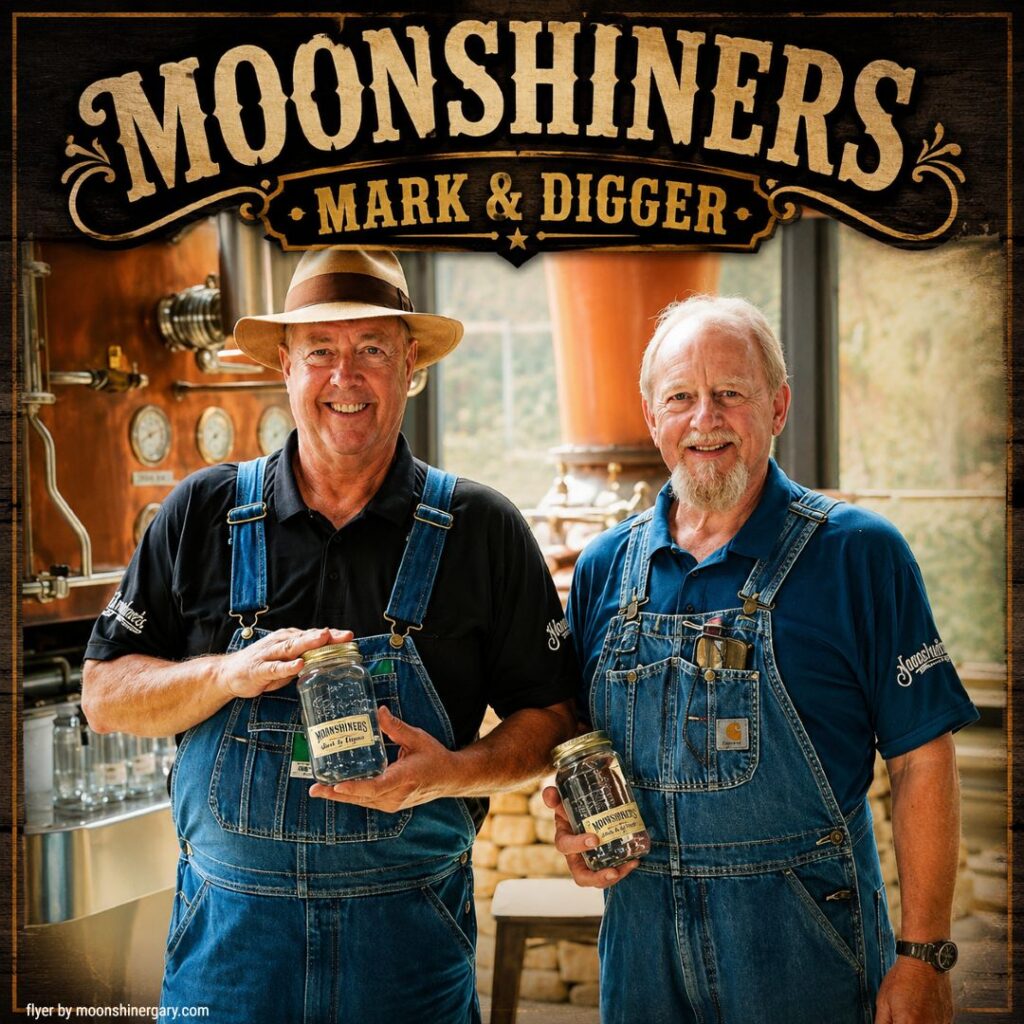
You can spot real chemistry on camera in the first few minutes, and that is exactly why mark & digger moonshiners became such a draw for fans of the show. They never felt polished for television. They felt like two men cut from the same hardwood as the hills around them – funny, stubborn, skilled, and deeply tied to a way of life that existed long before a camera crew ever showed up.
For folks who watch Moonshiners because they care about heritage, not just drama, Mark and Digger represent something bigger than reality TV fame. They stand for an old Appalachian code where craft matters, loyalty matters, and if you are going to tell a story, it better sound true. That is a big reason their popularity has lasted while plenty of TV personalities come and go.
Why Mark & Digger Moonshiners connected so fast
Some cast members grab attention because they are loud. Mark and Digger grabbed attention because they felt lived-in. Their humor never looked forced, their back-and-forth never felt scripted, and their knowledge of distilling gave every scene some weight. Even when the show leaned into high-pressure moments, there was still a sense that these were men carrying real traditions.
That matters in this world. Moonshine culture has always had a strong line between people who know the life and people who just want the image. Fans can tell the difference. Distillers can tell even faster. Mark and Digger built trust because they came across like men who understood the work, the risk, and the respect that comes with the craft.
Their style also widened the audience. Hardcore fans of outlaw distilling could appreciate the details, while casual viewers got characters worth following week after week. One brought a steady hand, the other brought a little mischief, and together they gave the show a rhythm that felt natural instead of manufactured.
From Moonshiners history to fan favorites
Moonshiners built its name by doing more than showing stills in the woods. The series tapped into a long American fascination with rebellion, survival, family tradition, and handmade liquor. Early on, the show introduced audiences to personalities like Tim Smith, Tickle, and others who helped define its identity. Over time, the cast evolved, but the formula stayed rooted in personality-driven storytelling.
That is where Mark and Digger found their lane. As the show matured, viewers were no longer just tuning in to see whether a run would succeed or whether law enforcement pressure would change the plan. They were showing up for relationships, rivalries, hard lessons, and the little one-liners that made the whole thing feel human.
Mark and Digger became central to that next phase of Moonshiners. Their segments often carried both entertainment and credibility. One minute you had a laugh, the next you had a real glimpse into technique, local culture, or the economics behind making and moving liquor. That balance helped the show stay fresh as reality television got more crowded and more polished.
If you look back across the seasons, one of the strongest things Moonshiners did was keep the craft tied to people, place, and pressure. Mark and Digger fit that perfectly. They did not come across as actors playing moonshiners. They looked like men whose identity existed before the production schedule.
The episodes people remember
Fans tend to remember the episodes where personality and problem-solving collide. That might mean a recipe challenge, a run under pressure, equipment trouble, weather issues, or a deal that carries some risk. Mark and Digger were good television because they could carry those moments without losing authenticity.
They also understood something a lot of reality personalities miss: not every memorable scene has to be loud. Sometimes it is just a conversation by a still, a joke tossed out at the right time, or a practical choice that shows years of experience. Those scenes stick because they feel earned.
Their best episodes often worked on two levels. For viewers, there was suspense and entertainment. For people inside distilling culture, there was another layer – respect for process, improvisation, and the kind of field knowledge that cannot be faked for long.
What Mark and Digger mean to the moonshine brand
The impact of Mark and Digger reaches beyond the show itself. In the heritage spirits world, visibility matters, but credibility matters more. A personality can get attention on television, but if they are going to last in the real market – events, merchandise, public appearances, product storytelling, fan engagement – they need something solid underneath the fame.
Mark and Digger brought that solid foundation. Their image helped keep moonshine culture from turning into a cartoon. Sure, there is humor, exaggeration, and the usual TV editing. That comes with the territory. But underneath it, they helped preserve the sense that this world is built on family lines, regional knowledge, hard work, and a certain amount of grit.
That has business value too. Distilleries, events, and related brands benefit when the public sees moonshine not just as a novelty, but as part of a larger American spirits tradition. Personalities like Mark and Digger help bridge that gap. They keep one boot in old-school storytelling and the other in modern media.
For brands trying to reach this audience, that is the lesson. People here do not want fake polish. They want a story with dirt on its boots. They want proof that the face on the label, stage, or screen actually understands the culture. Mark and Digger have been effective because they deliver that feeling almost immediately.
The trade-off of fame in a backwoods world
There is always a tension when outlaw heritage meets mainstream media. The more popular a figure becomes, the more people start asking whether the image can still feel real. That is not unique to Moonshiners. It happens in country music, whiskey culture, off-road brands, and almost every niche built on authenticity.
Mark and Digger have had to live in that tension like everybody else connected to the series. Television exposure brings opportunity, but it also changes expectations. Fans want access. Brands want partnerships. Events want appearances. Social media wants content every week. The challenge is keeping the core identity intact while the audience gets bigger.
That is why relationship-driven storytelling matters so much in this space. People will forgive growth. They will not forgive phoniness. If a public figure starts sounding manufactured, the audience turns quick. The reason certain Moonshiners cast members have lasted is simple: they still feel like themselves.
Why authenticity still wins
Authenticity is an overused word in marketing, but around moonshine culture it still means something. It means your reputation offline matches your image online. It means your photos, videos, and public appearances do not feel disconnected from your real roots. It means fans hear your voice and believe it.
That is one reason personalities from this world need media support that understands the culture. A generic agency may know how to post content, but that is not the same as knowing how to tell a mountain story without sanding off the edges. When you are working in a heritage-driven niche, presentation matters, but cultural legitimacy matters more.
That has shaped this whole industry around the show. Moonshiners is not just a TV property now. It feeds event appearances, fan communities, digital media, branded products, and a wider conversation about American distilling tradition. The cast members who thrive are the ones who can carry their story across all those places without losing the thing that made fans care in the first place.
Mark & Digger Moonshiners and the road ahead
The future for figures like Mark and Digger is not just tied to what happens in one season or one storyline. Their staying power comes from being bigger than the plot of any single episode. They are part of a larger heritage brand that lives in Appalachian identity, American spirits culture, and the kind of storytelling that still gets passed around at festivals, distillery events, and kitchen tables.
That is why their appeal keeps reaching beyond die-hard viewers. Folks who care about craft spirits, regional history, and old-school independence see something familiar in them. They are not just entertainment. They are a reminder that the strongest brands in this world are still built the old-fashioned way – through trust, repetition, character, and showing up as who you are.
For anyone building a name in the moonshine business, there is something worth learning there. Good branding is not about scrubbing the rough edges off a story. It is about telling the truth in a way people remember. Mark and Digger have done that on screen for years, and that is why people still talk about them like family friends instead of passing TV stars.
We Shinin’, yes, but the real shine comes from keeping the story honest long after the cameras roll.


Comments are closed.