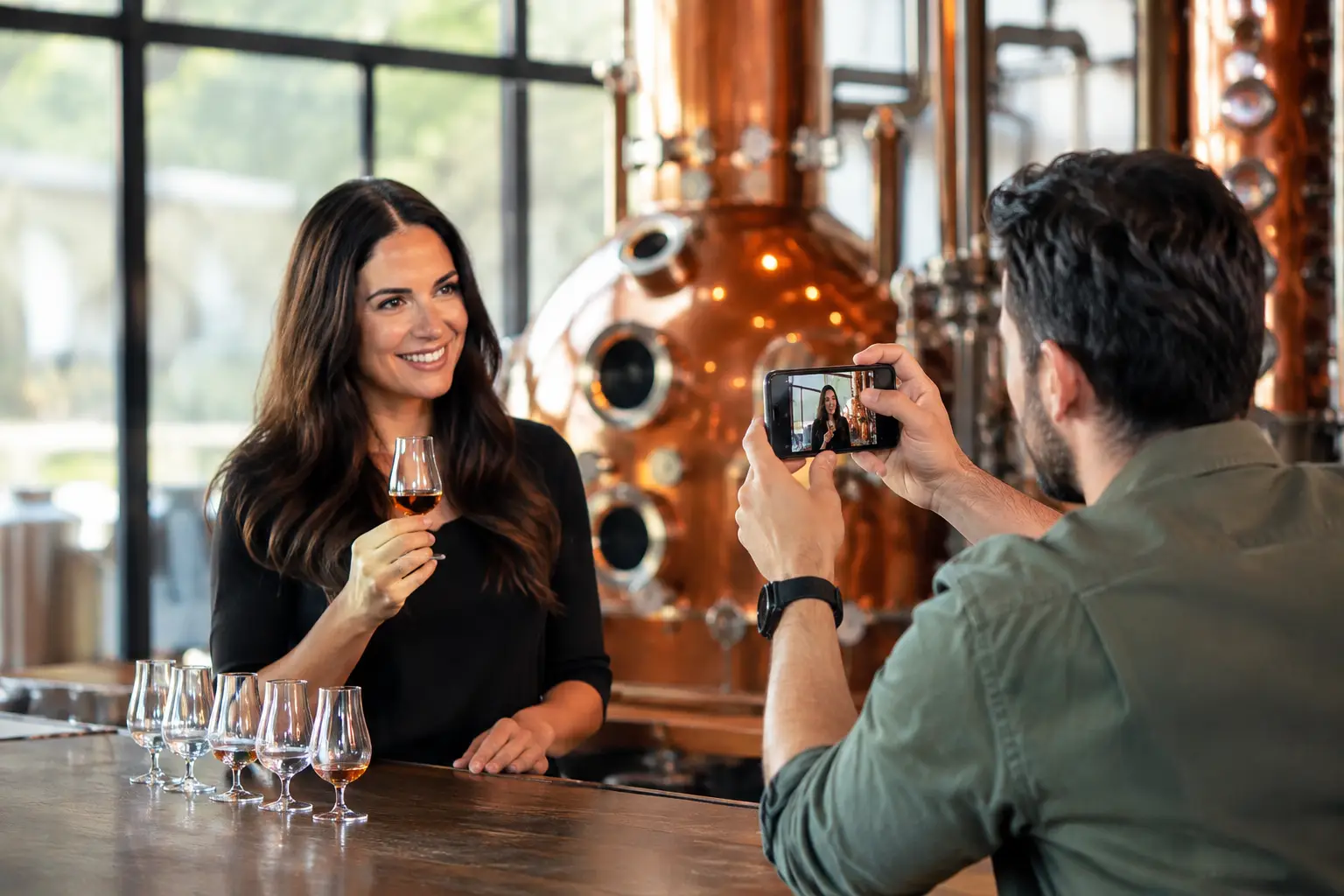
A good distillery event can disappear by Monday morning if nobody captures the proof. The crowd goes home, the band packs up, the bottles get counted, and all that remains is a few shaky phone clips. Knowing how to document distillery events means turning one packed night at the stillhouse into weeks of real stories, strong social content, press-ready visuals, and a record of what your brand stands for.
Around heritage spirits, people can spot fake from a mile off. They do not want polished nonsense with no soul. They want to see the fire, the copper, the handshake across the bar, the old timer telling a story, and the folks who drove two counties over because they believe in what is being made. That is the material worth documenting.
Start With the Story, Not the Camera
Before the first vehicle pulls into the parking lot, decide what the event is really about. A bottle release, a tasting, a concert, a charity ride, a grand opening, or a meet-and-greet may all happen at a distillery, but they need different coverage.
Ask one plain question: what should someone who missed this night understand when they see the content next week? Maybe it is that your new bourbon release brought out local collectors. Maybe it is that your distillery is the kind of place where families, veterans, musicians, and hard-working people feel at home. Maybe it is that a familiar face from the Moonshiners world showed up and gave the crowd a reason to stay late.
That answer guides every shot. Without it, event coverage turns into a random folder of faces, tables, and blurry bottles. With it, every photo and clip helps tell the same story.
Build a simple shot plan
You do not need a Hollywood production schedule, but you do need a plan. Walk the property before doors open and identify where the good light falls, where the crowd will gather, and which backdrops make the brand look its best. A barrel wall, rickhouse door, copper still, branded trailer, or hand-painted sign can carry more character than a generic step-and-repeat.
Make sure the coverage includes the venue before it fills up, the staff getting ready, the arrival of guests, the main attraction, product moments, crowd energy, and the final toast or sendoff. Those are not filler shots. They create a beginning, middle, and end.
If a special guest, band, chef, charity partner, or local personality is involved, confirm their schedule in advance. Catching somebody for a 60-second interview is easy before the crowd closes in. Trying to do it after three hours of autographs and live music is a different kind of work.
How to Document Distillery Events Without Losing the Real Feel
The best event coverage stays close to the action without getting in the way of it. People should feel like they were there, not like they are watching a commercial made by strangers who never touched a jar or walked a distillery floor.
Start wide. Get the building, signage, parking lot, and growing crowd so viewers understand the scale. Then move closer for details: hands pouring samples, the texture of charred oak, a label going onto a bottle, boots on a wood floor, condensation on a jar, a grin after the first sip. Details are where the atmosphere lives.
Then capture the human connections. A distillery is not just equipment and inventory. It is the founder talking to a customer, a veteran being thanked, a bartender explaining a pour, a family taking a photo, and a musician warming up behind the stage. Those moments are the reason an event feels bigger than a transaction.
Do not chase every single person with a camera. Be present, respectful, and quick. Get permission when you are setting up a more intentional interview or portrait, especially when children are involved. If alcohol is being served, be mindful about what you show. Good coverage can show people having a fine time without making the brand look careless.
Prioritize Video That Has a Job to Do
Photos prove the event happened. Video lets people hear it, feel it, and decide they want to be at the next one.
A short recap video is usually the workhorse. It can show guests arriving, bottles being poured, the main event, a few honest reactions, and a strong closing shot of the crowd or distillery. Keep it moving, but do not cut so fast that the audience cannot take in the place.
Audio matters more than many folks realize. A great-looking video with muffled speech feels cheap fast. If there is a toast, a product announcement, a live interview, or a story about the family recipe, get clean audio. Use a microphone when possible and grab a little natural sound too: the band, the crowd, a bottle cap opening, the clink of glasses, the quiet hum around the still.
Vertical clips are useful for social posts, while horizontal footage may serve your website, a longer recap, or future media use. The practical move is to plan for both. Capture key interviews in a way that can be cropped cleanly, and do not let every important moment live only in one format.
A strong interview does not need a script. Ask the distiller why this release matters, ask a guest what brought them out, or ask a partner what the event supports. Keep the question out of the final edit if you want a tighter clip. Let people speak in their own voice. That is where the credibility is.
Get the Product Right
A distillery event may have music, food trucks, and a full parking lot, but the spirits still need their moment. Product coverage should be intentional, not an afterthought snapped from across the room.
Get clean images of the bottle label, the pour, the cocktail or tasting flight, and the product in the hands of real customers. Watch for clutter behind the bottle, fingerprints on the glass, and labels turned away from the camera. A quick adjustment can turn an ordinary picture into something fit for a release announcement or retailer pitch.
It depends on the event, of course. At a loud festival, staged bottle photography may not make sense in the middle of the rush. Set aside ten minutes before doors open or after the crowd thins. That small window can provide clean promotional assets the team will use long after the event recap is done.
Treat Posting as Part of the Coverage
Documentation is not finished when the camera card comes out. The real value comes from putting the right material in front of the right people while the event is still fresh.
Post a few strong pieces during the event if you have the ability to do it well. A quick crowd clip, a guest arrival, or a behind-the-scenes shot can create urgency for anyone nearby. Do not spend the whole night staring at a phone, though. If live posting means missing the big moment, capture the big moment first.
The next day, share a fast recap with the best photos and a short video. Over the following weeks, break the coverage into smaller stories: a bartender feature, an interview quote, a bottle spotlight, a partner thank-you, or a throwback clip that promotes the next gathering. One event should not produce one post. It should feed your calendar for a while.
This is where working with someone who knows the culture pays off. Moonshiner Gary understands that a packed house is only half the story. The other half is showing the people who could not make it why they need to pull up next time.
Keep the Assets Organized for the Long Haul
After the event, label and store everything while the names, moments, and details are still fresh. Separate photos, raw video, edited clips, interviews, logos, and product shots. Name files by date and event, not whatever the camera decided to call them.
Save the standout images in a folder that is easy to find when a newspaper calls, a distributor asks for material, or you need a graphic for next year’s event. Back up the originals in more than one place. A hard drive fails at the worst possible time, usually right after you realize that footage cannot be recreated.
Also take notes on what worked. Which post got shared? Did the crowd react to the band, the release, the guest appearance, or the story behind the product? Event documentation is not just a highlight reel. It is market research from the people who showed up.
The next time the gates open, do not just hope the night gets remembered. Give it a story worth carrying forward, one honest frame, one real voice, and one good pour at a time.


Comments are closed.