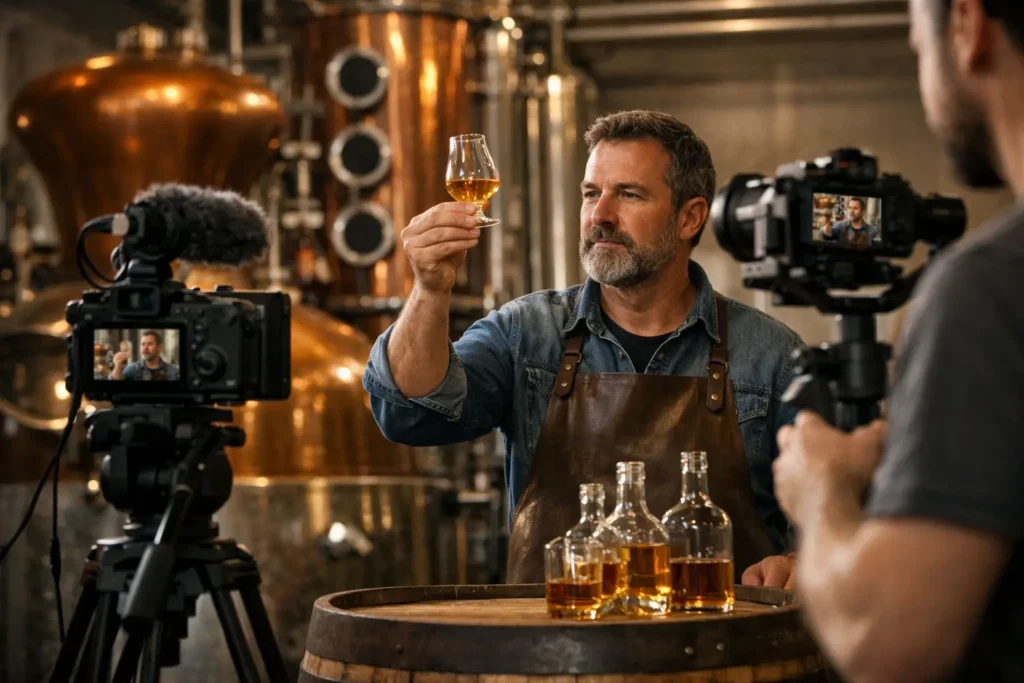
A still does not make a good story just because it has copper on it. A barrel rack does not sell whiskey just because it looks good in a photograph. Video production for distilleries has to show the work, the people, and the reason the bottle belongs in somebody’s hand. Folks can smell a polished commercial from a county away. What they want is the real thing, captured with enough skill that it earns attention.
That matters even more in the heritage spirits world. Your customers are not only buying corn whiskey, bourbon, rum, or vodka. They are buying a place, a memory, a family recipe, a hard-won business, and maybe a little bit of outlaw spirit. A strong video gives all of that a face and a voice.
What Video Production for Distilleries Must Capture
The best distillery videos do not begin with a drone shot and a logo. They begin with character. Maybe it is the founder checking a run before daylight. Maybe it is the head distiller explaining why a certain yeast strain stays in the family. Maybe it is the sound of grain hitting the mill, the first drip from the condenser, or a regular at the tasting room telling you why they bring every out-of-town guest through the door.
That is the footage that carries weight. The bottle is the product, but the process is the proof.
For years, shows like Moonshiners brought backwoods distilling culture into living rooms across America. Viewers saw more than shiny equipment and old recipes. They saw personalities, family history, risk, ingenuity, and the kind of stubborn pride it takes to make something by hand. That same truth still works for legal distilleries trying to stand apart in a crowded shelf set.
A generic agency may see a distillery as another food-and-beverage client. Somebody who knows this community sees the difference between a staged “country” scene and a real working stillhouse. That difference shows up on camera. It shows up in who gets interviewed, what details get left in, and whether the final piece feels like a story or a costume.
Your Story Is Bigger Than the Bottle
Every distillery has more usable material than it thinks. The trouble is that owners are usually busy running production, managing distribution, staffing the tasting room, and keeping the books straight. They know their story, but they have not always pulled it apart into pieces that work on screen.
Start with the honest answers. Why did this distillery open? What does the region bring to the spirit? Who taught you the craft? What part of the process takes the most patience? What do customers misunderstand about what you make? A good production crew listens for the answers that sound like the person talking, not a brochure.
A family-run operation might build its video around generations and local roots. A newer craft brand may have a founder story built around a career change, a farm, or a specific flavor nobody else was making. A destination distillery may need to make the tasting room experience the star. There is no single formula, and there should not be.
The goal is not to make every brand look the same. The goal is to make the right customer recognize something worth visiting, sharing, or pouring.
Make One Shoot Work Harder
A properly planned shoot can supply content for months, not just one pretty brand film. This is where video becomes practical marketing instead of a one-time expense.
Your main story video may run two to four minutes and live on your website, at the tasting room, during sales meetings, and on event screens. From that same day of filming, you can create shorter pieces for social media: a 30-second founder introduction, a barrel-pull moment, a cocktail pour, a quick tour, or a behind-the-scenes clip from bottling day.
A smart shoot plan usually creates material for at least these four needs:
- A brand story that explains who you are and why you make your spirits
- Short vertical videos for social platforms and paid promotions
- Product-focused footage for launches, retailers, and seasonal campaigns
- Event and tasting-room footage that shows people having a good time around the brand
The format matters. A wide cinematic video can look great on a website or television screen, while a vertical clip is built for somebody holding a phone in a parking lot, waiting in line, or sitting at the bar. Shoot for both from the start. Trying to crop every horizontal shot into a vertical reel later can leave faces cut off and the best action out of frame.
Audio matters just as much. Distillers often focus on the visuals, but bad sound can make a beautiful room feel amateur in a hurry. A clear interview, the crackle of a fire, the rumble of a mill, and the clink of a glass give a video texture that stock music cannot replace.
Show the Process Without Giving Away the Family Recipe
Some distillers hesitate to put their process on camera because they do not want to hand competitors a blueprint. That is a fair concern. You do not need to show every measurement, proprietary ingredient, or production decision to tell a compelling story.
Show the craft without exposing the playbook. Film the mash, the steam, the cuts in broad strokes, the barrel selection, and the hands behind the work. Let the master distiller talk about standards, patience, and flavor instead of a confidential formula. Viewers do not need every detail to understand that care went into the bottle.
There is another trade-off worth considering: polish versus grit. A premium bourbon release may call for moody lighting, slow barrel-house shots, and a refined finish. A moonshine brand tied to a rowdy festival crowd might need more energy, laughter, trucks, music, and personality. Both can look professional. Professional does not mean sterile.
The right production matches the brand you already are, then makes that identity easier for people to see and remember.
Let People Carry the Story
Equipment is impressive, but people connect with people. Put the founder on camera if they have something to say. Put the distiller on camera if they are the one who knows the spirit inside and out. Bring in the farmer, the bartender, the longtime customer, or the musician playing your release party when their voice adds something real.
Do not force everybody into a script. The strongest interview lines usually happen after the formal question is over and someone starts talking about what they actually care about. A good interviewer knows how to get there without making the subject sound rehearsed.
That relationship piece has always been the heartbeat of the moonshine community. The audience knows when somebody is talking from experience and when they are trying to borrow a lifestyle they have not lived. Moonshiner Gary has spent years working alongside personalities such as Tim Smith, Tickle, Mark and Digger, Amanda, and others because real access creates real stories. For a distillery, that insider understanding can save a lot of time and keep the final product from feeling like an outsider looking in.
Build Video Around Real Business Goals
Views are nice. A video that does not help your business is just an expensive memory card.
Before filming, decide what the job is. Are you trying to increase tasting-room visits before tourist season? Introduce a new expression to distributors? Give your sales team something stronger than a sell sheet? Build confidence before a crowdfunding campaign or expansion? Promote a festival where your brand will pour? Each goal changes the story, the call to action, the length, and where the footage needs to live.
For example, a distributor-facing piece should quickly establish quality, production capacity, awards if they matter, and the founder’s credibility. A tasting-room video can slow down and make the visit feel inviting. A release-day social clip needs to get to the bottle and the reason to care fast.
It also pays to film on a day that has real life in it. Empty rooms are easier to control, but a crowded tasting room, active bottling line, live music night, or harvest day gives the camera something to feel. Plan enough structure to get what you need, then leave room for the moments nobody could script.
The next time the still is running, the barrels are being rolled, or the crowd is gathering for a release, do not treat it as just another workday. That is your story happening in real time. Get it on camera while it still has the heat, noise, and truth of the place you built.



Comments are closed.