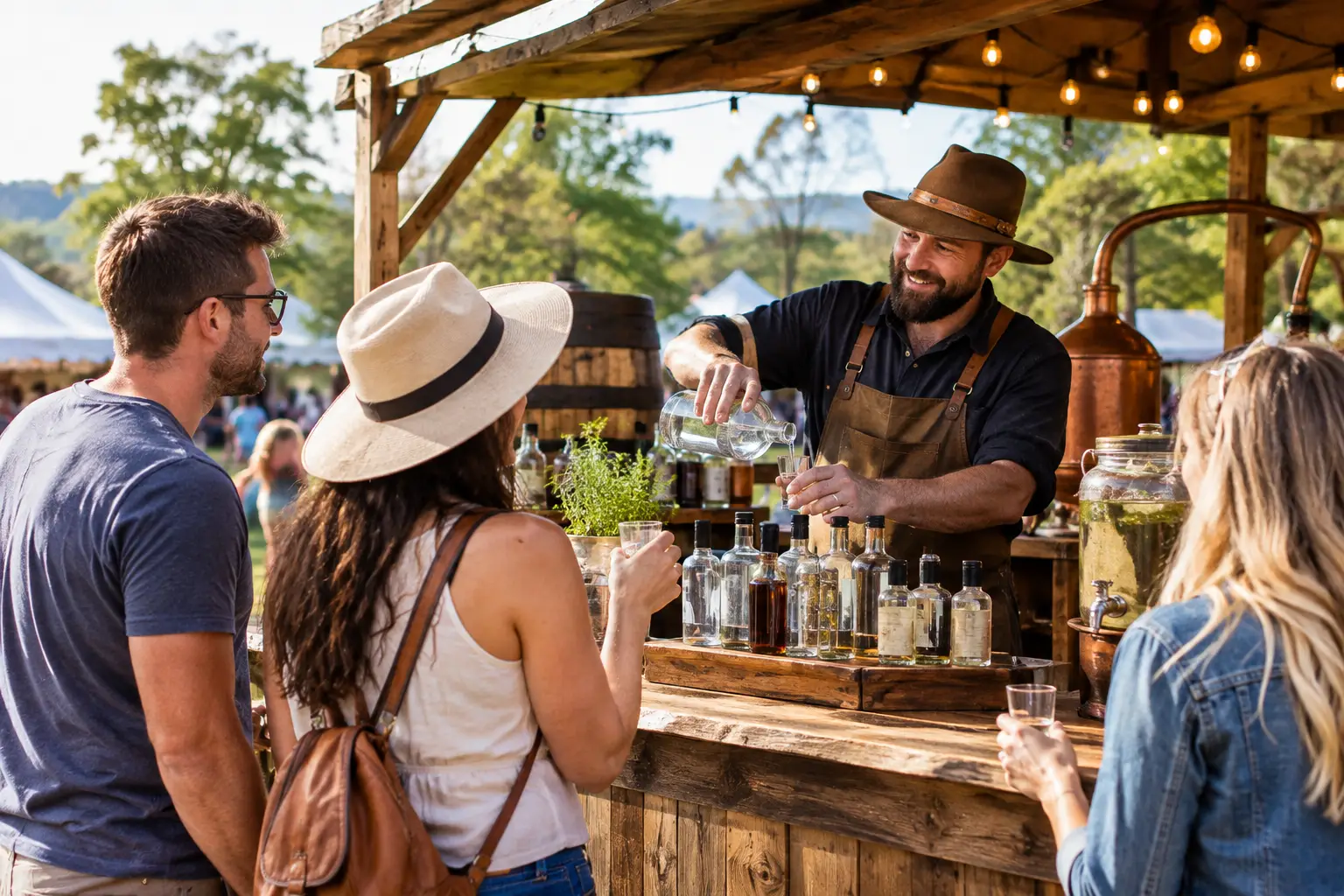
A festival booth has about three seconds to make somebody stop walking. That is why the best moonshine festival booth ideas do more than stack bottles on a folding table. They give folks a reason to step closer, tell a story worth repeating, and make a legal distillery or heritage spirits brand feel like the real deal.
At a good moonshine festival, people are not just shopping for flavored spirits. They are shopping for a memory, a photo, a conversation with somebody who knows the craft, and maybe a little piece of the mountains or backwoods culture they came to celebrate. Your booth needs to earn its spot in that moment.
Best Moonshine Festival Booth Ideas Start With a Story
The strongest booth is not always the biggest one. It is the one with a clear point of view. Before ordering a banner or hauling in props, answer one plain question: what should a visitor remember about your brand after they leave?
Maybe your family recipe came from a certain hollow. Maybe your distillery uses local fruit, honors a granddad who made legal shine after Prohibition, or puts a modern twist on an old-school white whiskey tradition. Pick one story and let the booth carry it from the sign to the staff conversation.
Trying to tell every story at once creates visual noise. A booth built around one honest idea feels tighter, more memorable, and easier for customers to explain to their friends later.
1. Build a Stillhouse Front Porch
A front-porch-style setup is a crowd favorite because it gives people a place to pause. Use weathered wood textures, sturdy barrels, lantern-style lighting, old fruit crates, and a simple branded backdrop. If your event is outdoors, make sure every piece is weighted down and weather-ready.
The key is restraint. A real-looking booth beats a theme-park pile of fake props every time. One clean counter, a couple of barrels, and a backdrop with your distillery name can say more than twenty decorations fighting for attention.
If sampling is allowed under event and local alcohol rules, keep the serving area clean and clearly organized. The rustic look should never make the operation look careless.
2. Let a Copper Still Become the Photo Magnet
A small display still, clearly presented as a non-operating prop where required, can stop traffic all day long. Copper catches light, photographs well, and instantly signals moonshine heritage. Add a sign that tells visitors what they are seeing and why it matters to your brand.
Do not treat the still like a museum piece sitting in the corner. Give people a reason to stand with it. A marked photo spot, a branded floor sign, or a simple line like “Show Us How You Shine” can turn that prop into customer-made promotion.
Be careful with authenticity here. A sloppy fake still can hurt a brand with knowledgeable festival regulars. If you use a display, make it look intentional and safe, not like something dragged out of a costume closet.
3. Make Flavor Discovery Easy
Festival crowds get overwhelmed fast. If you offer several flavors, create a clear flavor board with short descriptions people can scan from a few feet away. Skip fancy spirit language if it does not fit your audience. Tell them what it tastes like in plain talk: peach-forward, tart apple, warm cinnamon, clean corn, or sweet berry.
Color-coding can help, especially for fruit-forward products. Keep the design tied to your label system so visitors can find the bottle they sampled when they are ready to buy.
A flavor board also helps your staff move the line. Instead of starting every conversation from scratch, customers arrive at the counter with a question already in mind.
4. Run a Legal Tasting Trail
If the festival permits tastings, turn the sampling process into an experience. Offer a short guided flight with a beginning, middle, and finish: traditional unflavored, one fruit expression, and one bolder seasonal pour. Keep portions and service practices fully aligned with the event rules and applicable laws.
Give each pour a one-sentence story. Tell folks why the original expression matters, where the peaches came from, or what makes the seasonal batch different. The pour gets attention, but the story makes the sale.
A tasting trail works best when it stays fast. Festival visitors do not want a twenty-minute lecture while their friends are headed to the next stage. Give them a good moment, answer their questions, and keep the line rolling.
5. Put a Real Maker in the Booth
Nothing beats a person who can speak honestly about the product. If the founder, distiller, or a well-known personality connected to the brand can attend, build the booth schedule around that appearance. A handshake, signed bottle, or quick photo can create a line before the first tasting cup is poured.
That approach has been part of the appeal of Moonshiners from the beginning. Viewers came for the builds, the runs, and the backroad personalities, but they stayed because Tim Smith, Tickle, Mark and Digger, Amanda, and others felt like real people with real stories.
If your maker cannot attend, do not put an unprepared staffer behind the table and hope for the best. Train the team on the origin story, products, price points, and the questions customers always ask. Personality matters, but knowledge closes the gap.
6. Create a Festival-Only Item
Folks love to bring home something they could not get anywhere else. That might be a limited bottle, a signed label, a commemorative jar, a special bundle, or even a festival-only flavor if production and compliance allow it.
The item does not have to be expensive or complicated. It just needs a clear reason to exist. Put the festival name or year on the display, tell people how limited it is, and make the offer easy to understand.
Scarcity works when it is honest. Do not claim “last chance” if the same package will be stacked at the next three events.
7. Add a Backwoods Game People Can Actually Play
Interactive booths pull in families and friend groups, but the activity has to fit the speed of a festival. A simple cornhole challenge, ring toss, spin wheel, or trivia question can work well. Keep prizes compliant with event policy and separate any game mechanics from alcohol service where necessary.
Moonshine history trivia is especially useful because it gives your team an opening line. Ask about Appalachian traditions, corn liquor terminology, or famous moments from the culture. Make the questions fun, not a test designed to embarrass somebody.
The best prize may be a photo, a sticker, a koozie, or a coupon for approved merchandise. The game should create conversation, not clog the booth.
8. Use a Big, Plainspoken Sign
Your main sign should answer three things quickly: who you are, what you make, and why someone should stop. Fancy language loses to clarity on a busy midway.
A brand name, a short heritage line, and a strong image often do the job. If your brand is known for peach shine, say it. If you are a Tennessee distillery with a family story, say that. People should not need to get to the counter to figure out what business they are looking at.
Make sure the sign can be read over heads and across a crowd. Festival booths are not the place for tiny type or dark lettering on a darker background.
9. Design for Cameras, Not Just Foot Traffic
Every booth should have one spot made for photos and short videos. A painted barn wall, a barrel stack, a branded porch swing, or a clean backdrop can do the job. Add a recognizable phrase that sounds like your brand, not generic event copy.
This is where a little media planning pays off. Get vertical video of the crowd, the bottles, the maker meeting fans, and the booth coming alive at sunset. Those clips become next month’s social posts, next year’s vendor pitch, and proof that your brand shows up where its people gather.
Moonshiner Gary has seen this firsthand: event coverage works best when it captures the relationship between a personality, a product, and the people who came out to support both.
10. Give Folks a Reason to Come Back Later
A booth can be packed at noon and forgotten by four o’clock unless you create a second reason to return. Schedule a bottle signing, a limited release time, a meet-and-greet, or a short storytelling moment. Post the time clearly where people can snap a photo of it.
This also helps spread out demand. Instead of one long rush that burns out your staff, you create smaller waves through the day.
11. Keep the Checkout Area Fast and Clean
A slow checkout can ruin a booth that did everything else right. Keep merchandise organized, prices visible, payment equipment tested, and bags ready. If your setup allows it, separate the sampling conversation from the purchase line so serious buyers are not stuck behind a crowd asking flavor questions.
Do not hide prices to force a conversation. That may work in a quiet showroom, but festival customers are making quick decisions with a lot happening around them.
12. Follow Up After the Festival Ends
The booth is only half the job. Capture permitted email signups, encourage customers to follow your official social channels, and post the photos and videos while the weekend is still fresh in their minds. Thank the festival, recognize the staff, and feature the people who stopped by.
Just do not turn the follow-up into a hard sell. Share the story of the weekend first. Let people see themselves in it. That is how a customer who bought one jar at a festival becomes somebody who watches for your next release.
The right booth does not need to be fancy. It needs to be true to the people behind it, easy for strangers to understand, and lively enough that folks want to bring their friends over. Build a place where the story is real, the product is handled right, and the crowd can feel that you came to do more than sell bottles. We shinin’.


Comments are closed.