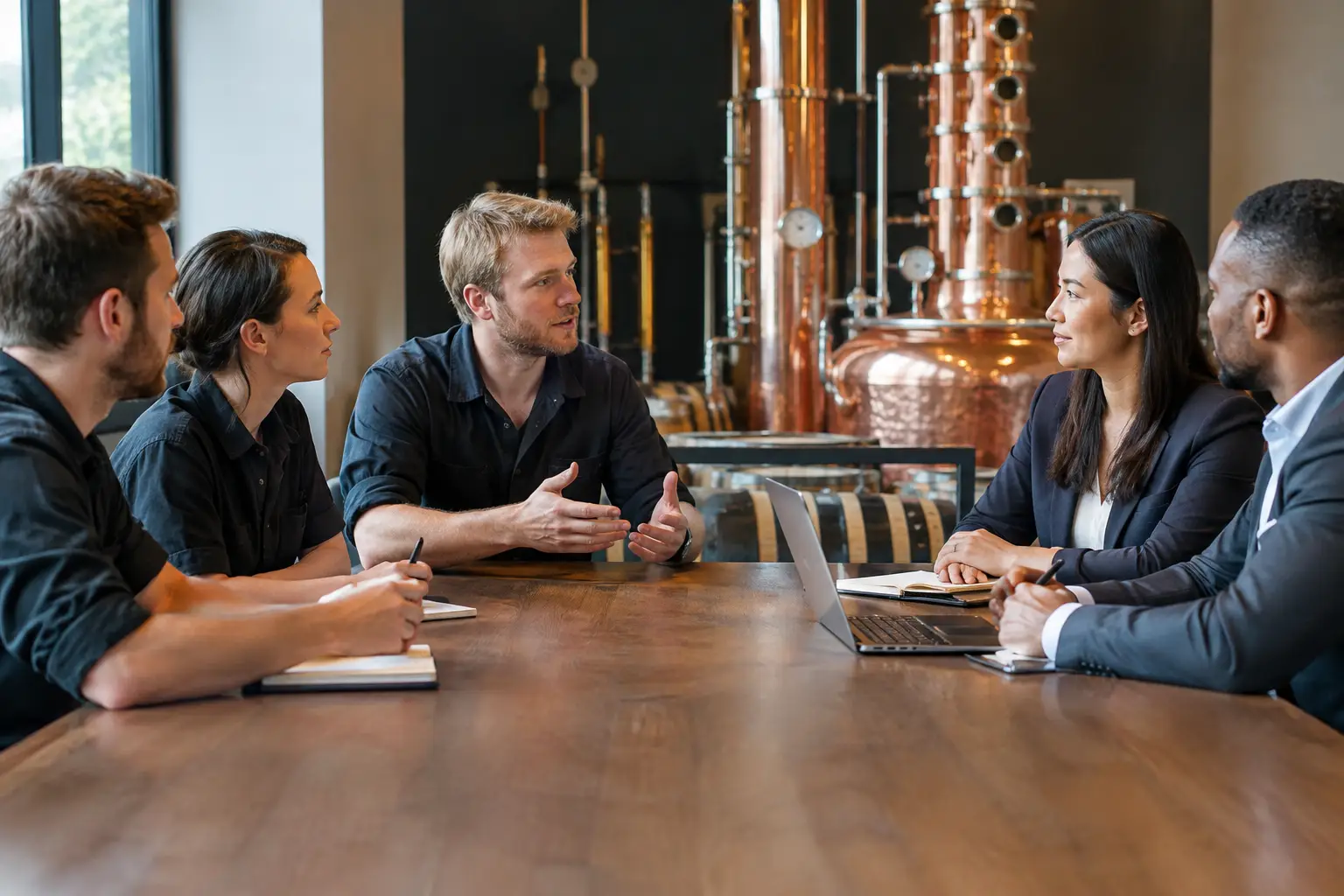
A still can make a fine spirit, but it cannot tell folks why they ought to care. That part takes people: the ones running the distillery every day and the ones carrying its story beyond the tasting room. The distillery team versus specialist agency question is not about who works harder. It is about who can turn real craft, real heritage, and real personality into attention that lasts.
For a legal distillery, a heritage spirits brand, or a public-facing moonshiner personality, marketing is not some shiny side project. It is how a local following becomes a booked-out event, a sold-out merch drop, a stronger distributor conversation, or a name people recognize when they see it on a shelf. The wrong setup can leave good stories sitting in a camera roll while competitors own the conversation.
What Your Distillery Team Knows That Nobody Else Can
Your in-house crew lives the brand. They know when a new run is coming off the still, which batch got the old-timers talking, why the grain bill matters, and what went sideways before it went right. They hear customer questions in the tasting room and catch the stories that would never show up in a formal marketing brief.
That closeness is powerful. A distillery team can create content with immediate access, answer customer comments with authority, and make sure promotions reflect what is actually available. If a new bottle is delayed, an event gets moved, or a limited release is nearly gone, the people on site can respond without playing phone tag.
An internal team also protects the voice of the place. That matters in the moonshine and heritage spirits world. Folks can smell fake backwoods talk from a mile away. A brand built on family recipes, Appalachian roots, farm-grown corn, or a hard-earned local reputation should not sound like it was cooked up in a boardroom three states away.
But being close to the work can create blind spots. The crew may know every detail of the story and still struggle to explain why a first-time customer should care. They may be excellent distillers, operators, salespeople, and hosts, yet have no spare hours for website updates, search strategy, video editing, media outreach, or a consistent social calendar. That is not a failure. It is the reality of keeping a production business moving.
The Hidden Cost of Doing It All In-House
The biggest expense is often not payroll. It is opportunity cost. When the owner is shooting shaky phone clips between deliveries, writing captions at midnight, and trying to figure out why the website is not showing up in search, something else is getting less attention.
A part-time employee can post regularly and still miss the bigger work: brand positioning, content planning, local search visibility, product photography, event coverage, email capture, and turning one good video shoot into weeks of useful material. Random posting may keep the lights on, but it rarely builds a strong digital property.
There is also a talent issue. One person is not usually great at web development, SEO, public relations, photography, video production, community management, and campaign planning. Hiring that full bench internally makes sense for a large operation with steady volume and budget. For many independent distilleries, it does not.
What a Specialist Agency Brings to the Stillhouse
A specialist agency should bring more than polished graphics and a monthly report full of fancy words. It should bring context. In this business, context means understanding the difference between outlaw imagery and irresponsible messaging, between a true heritage story and a costume, and between a fan audience and a buyer audience.
The right outside partner knows that a photo of a copper still, a good tale from the holler, or a familiar face from Moonshiners can draw attention. But they also know attention has to lead somewhere. A website needs to be clear. Search content needs to answer real questions. Social media needs a reason to return. Event coverage should keep working long after the tents come down.
That is where specialty matters. A general agency may know marketing, but it may not know the culture around distilling, country lifestyle, and heritage spirits. It may chase trends that make your brand look like everybody else. A specialist partner can help preserve the grit while giving the business a professional backbone.
For years, Moonshiners put personalities like Tim Smith, Tickle, Mark and Digger, Amanda, Josh, and Howard in front of a national audience. The show made one thing plain: people connect with characters, process, place, and persistence. The distilling world has grown far beyond television, but that truth remains. A strong agency understands that a good brand story is not invented from scratch. It is pulled from the real work and told with respect.
Where Agencies Can Miss the Mark
Hiring an agency does not mean handing over the keys and hoping for magic. A partner without access to the people, products, and daily activity will be left guessing. Then the content gets generic, deadlines drag, and the brand starts sounding borrowed.
An agency can also become expensive if the scope is unclear. Before signing anything, know whether you need a new website, ongoing SEO, monthly content, a video package, event media coverage, public relations support, or a combination. Ask what gets delivered, how often, who owns the assets, and what success looks like after three, six, and twelve months.
The best outside team does not replace the distillery’s voice. It gives that voice a bigger microphone and a better plan.
Distillery Team Versus Specialist Agency: Ask These Questions
The answer depends on the stage of the business and the job at hand. If you have an organized internal marketer with real time, clear approval authority, access to production and events, and the skills to execute, keeping everyday social posts and customer communication in-house can work well.
If your website is stale, your brand looks different on every platform, your photos do not match the quality of your product, or your name is hard to find online, outside help may produce a faster and better result. The same goes for a major launch, a festival, a new tasting room, a documentary-style brand film, or a public figure who needs to turn recognition into a lasting personal brand.
Ask your operation a few honest questions. Do we have enough content every month to stay visible? Can we tell the difference between a post that gets likes and a campaign that supports sales? Are we capturing emails, search traffic, press opportunities, and customer stories? Does somebody own the work, or is marketing everybody’s job when there is time?
If the answer is mostly “when there is time,” that is your answer.
The Strongest Setup Is Usually a Working Partnership
For many brands, the smartest move is not choosing one side forever. It is building a clean partnership. The distillery supplies access, product knowledge, staff participation, quick approvals, and the stories happening on the ground. The specialist agency supplies strategy, production skill, consistency, and an outside view of what the audience needs to hear.
That setup keeps the content honest. Your team can send a quick note about a barrel dump, a new cocktail, a charity ride, or a guest appearance. The agency can shape it into photography, short-form video, website copy, press material, and posts that fit the larger plan. One day in the field can create useful material for months when somebody knows how to organize it.
Moonshiner Gary works best in that middle ground: close enough to understand the people and the culture, equipped to build the media assets that help a name travel. The goal is not to sand down what makes a distillery different. It is to make sure more of the right people get a chance to see it.
A good partner will ask for the truth, not a manufactured legend. Show the early mornings, the hard work, the family history, the failed test batches, the proud pours, and the people who keep the place running. Put a real plan behind that story, keep the communication straight, and give your crew room to do what they do best. That is how a local name earns a longer reach without losing its roots.


Comments are closed.