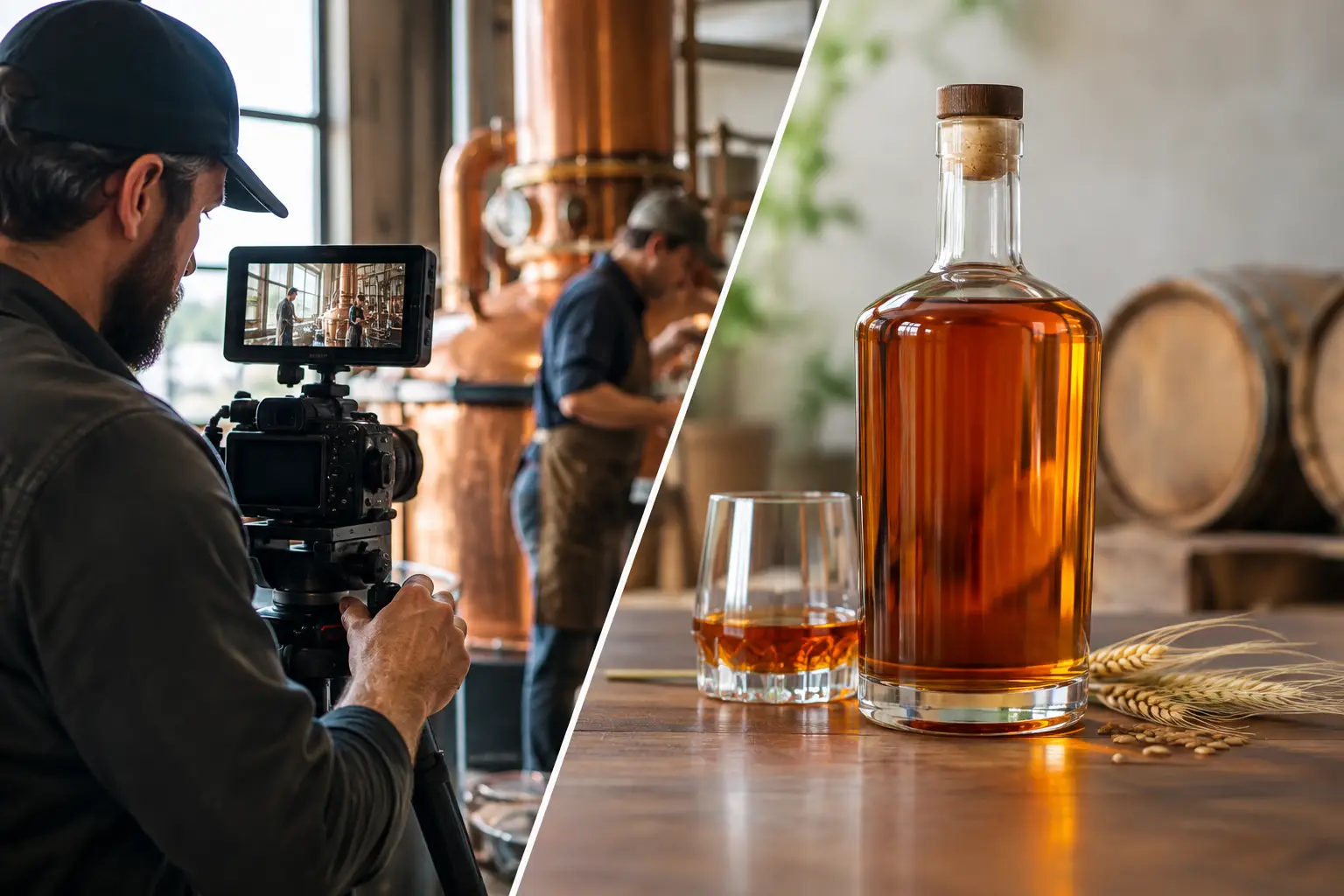
A good shine story starts long before somebody twists off a cap. It starts at the still, in the family recipe, on the back road, or with the person who put years into getting one batch just right. That is why the documentary versus product video question matters so much for distilleries, spirits brands, events, and personalities. Both can make people stop scrolling. Only one may be right for what you need the audience to do next.
A product video can make a bottle look like it belongs on every shelf in America. A documentary can make folks understand why that bottle earned its place. One is built to sell the product in front of the camera. The other is built to sell the truth behind it.
Neither is better across the board. The right choice depends on where your brand stands, what your audience already knows, and whether you need a fast hit of attention or a deeper connection that keeps working after the campaign is over.
Documentary versus product video: the real difference
A product video is focused, intentional, and usually short. It puts the bottle, label, pour, flavor, package, or offer at center stage. It may show close shots of copper, a clean pour over ice, a bartender building a drink, or a good-looking rack of bottles ready for retail. The message is plain: here is what we make, here is why it looks good, and here is why you ought to try it.
A documentary video has a different job. It follows people, places, history, hard work, and the details that cannot be copied by a new label with a big advertising budget. The product is still there, but it is part of a larger story. Maybe it is a third-generation distiller carrying on a family tradition. Maybe it is an old timer explaining why a run was done a certain way. Maybe it is the road to a festival, the work behind a new release, or the folks who make a backwoods event feel like home.
Product video says, “Look at this.”
Documentary says, “Come on in and see why this means something.”
That difference changes the way viewers respond. A clean product spot can drive a quick click, retail interest, or a burst of social engagement. A well-made documentary piece gives people a reason to care about the person and the heritage after the bottle is empty.
When a product video earns its keep
If you have a new release, a seasonal flavor, a fresh label, a special bundle, or a clear call to action, product video is often the right hammer. It gets to the point without asking the viewer for much time. That matters on social media, where folks may give you a couple seconds before they keep moving.
For a legal distillery, product footage can also bring consistency to the whole marketing operation. The same video assets can support a website banner, a retailer pitch, a paid social campaign, an email promotion, and event screens. Good lighting and sharp editing help the product look as strong online as it does sitting on the bar.
The catch is that product video can get generic in a hurry. Copper stills, slow-motion pours, and country music do not automatically make a brand memorable. Everybody in the spirits business can show a bottle. If the footage does not carry a real point of view, viewers may remember the look but forget the name.
That is especially true in heritage spirits. People do not just buy moonshine, whiskey, and backwoods-inspired products because they are thirsty. They buy a piece of a place, a personality, a memory, or a story they want to be part of. Product video needs honest character behind it, even when it only runs 15 or 30 seconds.
When the documentary route is worth the time
Documentary work is the better choice when the story itself is your edge. If your operation has history, recognizable people, a real craft process, a hometown following, or a road-tested reputation, you have material that deserves more than a pretty bottle shot.
Think about why Moonshiners connected with viewers in the first place. The appeal was never just what came out of the still. It was Tim Smith working with tradition and innovation, Tickle bringing his own wild energy, Mark and Digger mixing deep knowledge with mountain humor, and the friendships, arguments, risks, and hard-earned wins that made the work feel real. Over the years, the show gave viewers personalities they wanted to pull for. The shine was the thread that tied it all together.
That is the strength of documentary storytelling for a brand. It puts a face and a heartbeat behind the business. For a small distillery, that can mean the founder explaining what the first legal batch meant. For an event promoter, it can mean following setup from empty field to packed crowd. For a public personality, it can mean showing the work that happens when the cameras are not rolling.
A documentary does require more from everyone involved. You need access, time, honest conversation, and enough patience to let moments happen naturally. You cannot force authenticity by handing somebody a script full of buzzwords. Sometimes the best scene is a quiet one: a hand checking a barrel, an old story told at the shop, or a crew laughing after a long day.
The payoff is trust. When people feel like they know the people behind a brand, they are more likely to follow, share, show up, and tell their friends about it. That is the kind of audience relationship that does not disappear when the next sponsored post hits the feed.
The best answer is often both
For most growing brands, choosing between documentary and product video is not an either-or fight. It is a question of sequence.
Start with the documentary foundation when you need to establish who you are. Capture the founder story, the roots of the operation, the craft, and the people who carry the work forward. Then cut that longer story into smaller pieces that can live across your channels. A strong interview line can become a short social clip. A scene from the stillhouse can support a new-release post. A powerful photo session can keep the look consistent between video campaigns.
Then bring in product-focused footage when it is time to push a specific action. Use it for a bottle launch, a retailer announcement, a festival appearance, or a limited-run flavor. The product video works harder because the audience already has a reason to believe in the people making it.
This approach also keeps your content from feeling like one long commercial. Nobody wants to be sold to every day. Give people the story, the culture, the process, the laughs, and the behind-the-scenes work. When the time comes to say, “Here is the bottle,” they are more likely to listen.
Do not fake the story
The biggest mistake in either format is trying to look more rugged, more historic, or more outlaw than you really are. Moonshine culture has deep roots, and the people who know it can smell fake from a mile down the road. If your distillery is modern and polished, own that. If your strength is a family recipe, tell that story with respect. If your event is loud, rough around the edges, and full of real characters, let it be exactly that.
Authenticity does not mean poor production. You can shoot clean, professional video without sanding every bit of personality off the people in it. In fact, the right production crew knows when to step back and let the moment breathe. At Moonshiner Gary, that kind of work comes from knowing the difference between a staged pose and a real story worth preserving.
Choose the video by the job it needs to do
Before the cameras come out, ask one hard question: what do you need this video to accomplish? If the answer is “sell this bottle this month,” lead with product. If the answer is “help people understand who we are and why we matter,” lead with documentary. If the answer is both, plan the shoot so you capture both kinds of material from the start.
The strongest brands in this business do not trade their roots for reach. They put their roots on camera, tell the truth with some fire in it, and give people a reason to come back for the next story. That is how you keep the shine moving forward without losing what made it worth watching in the first place.


Comments are closed.